Lion's Mane Side Effects: What Research and Users Report

Introduction
Lion's mane side effects are worth understanding before you start, not after. Clinical trials so far suggest Lion's Mane is generally well tolerated, yet online forums are full of people describing upset stomachs, itchy skin or simply feeling "off". This explainer separates what controlled research has found from what users report, explains which reactions mean you should stop, and covers who should take extra care. It also looks at how product quality can play a part, with a short section for brands.
What Are the Side Effects of Lion's Mane?
The most commonly reported Lion's Mane side effects are mild digestive discomfort and skin reactions, while allergic reactions are uncommon but possible. Most published trials report few adverse effects, although they are small and short.
| Effect | Seen in clinical research? | Reported by users? | What to do |
|---|---|---|---|
| Stomach upset, bloating, loose stools | Occasionally, mild | Commonly | Take with food, follow the label serving, stop if it persists |
| Skin rash or itching | Case reports | Sometimes | Stop and speak with a GP |
| Swelling or breathing difficulty | Rare case reports | Rarely | Stop and seek urgent medical help |
| Feeling "weird", headache, sleep changes | Not clearly shown | Sometimes | Track timing, stop if concerned, speak with a GP |
For the bigger picture on safety and regulation, read our pillar guide, is Lion's Mane safe.
What Clinical Research Has Found
Controlled human studies have generally found Lion's Mane well tolerated, with adverse effects uncommon and mostly mild. The catch is that there are not many of these studies, and none follow people for years.
A 2025 systematic review of Hericium erinaceus supplements looked across the published human trials. Reported side effects were infrequent and generally minor, mostly digestive. The authors also highlighted small sample sizes, short durations and large differences between the products tested.
A 2023 randomised controlled trial in healthy young adults tested a Lion's Mane supplement over 28 days and reported no serious adverse events. Still, a few dozen healthy volunteers over a month says little about older adults, people on medication, or long-term use.
In short, research supports short-term tolerability in healthy adults. It does not yet answer every question, which is why individual advice from a GP or pharmacist still matters.
What Users Commonly Report
Users most often describe mild stomach upset, occasional skin itching and, less often, headaches, vivid dreams or a general feeling of being "off". These reports are anecdotal, so they cannot prove Lion's Mane caused the effect.
Forum posts frequently mention discomfort when taking Lion's Mane on an empty stomach or at a higher amount than the label suggests. Some people say taking it with a meal helps. Others describe itchy skin, which may point to sensitivity or an allergy and should not be ignored.
The "feeling weird" reports are hard to interpret. They may reflect coincidence, caffeine from a Lion's Mane coffee, other ingredients in a blend or individual sensitivity. If something feels wrong, stopping is the simplest test, and a GP can help you work out what is going on.
Allergic Reactions: When to Stop

Stop taking Lion's Mane straight away if you notice a rash, hives, swelling or any difficulty breathing. Breathing difficulty or facial swelling needs urgent medical attention.
The Memorial Sloan Kettering herb database notes that abdominal discomfort, nausea and skin rash were reported in a clinical study. Allergic reactions are uncommon, yet people with existing mushroom or mould allergies may be more likely to react.
Who Should Take Extra Care?
People who are pregnant, breastfeeding, taking medication, managing a health condition or allergic to mushrooms should speak with a GP or pharmacist before taking Lion's Mane. Research in these groups is limited or absent.
- Pregnant or breastfeeding: safety has not been established.
- On medication: interactions are not well studied; theoretical concerns have been raised with blood-thinning and blood glucose medicines.
- Mushroom or mould allergies: a higher chance of reacting.
- Before surgery: tell your surgical team about all supplements.
- Children: speak with a doctor first.
Could the Product Be the Problem?
Sometimes a reaction comes from what else is in the product, not the Lion's Mane itself. Fillers, sweeteners, other mushrooms, caffeine or contamination can all play a part.
Many products use mycelium grown on grain, which can leave starch in the final powder. Blends may add other botanicals. Read our comparison of Lion's Mane extract vs whole mushroom powder to understand the differences.
Our Lion's Mane capsules and powder contain only 100% fruiting body extract, with no grain, starch or fillers. RMIT University researchers found no E. coli or coliforms in a sample in April 2025, and AEGIC tested a sample for heavy metals. Pesticides are not yet tested, and results apply to the samples tested. The detail is on our specifications and testing page.
For Brands: Handling Side Effect Questions and Labelling
Brands selling Lion's Mane in Australia should be ready for side effect questions. Hold supplier certificates of analysis, list every ingredient and allergen clearly, avoid therapeutic claims, and have a process for logging and responding to customer reports. Check the TGA October 2024 guidance with a regulatory adviser. Our white label Lion's Mane supply comes with documentation to support this.
Conclusion
Lion's mane side effects appear mostly mild and uncommon in research, with digestive upset the most frequent complaint, but allergies do occur and long-term data is thin. Speak with your GP or pharmacist if unsure, and choose a clean, tested product like our Lion's Mane capsules. Brands can ask about white label supply.
FAQs
Why do I feel weird after taking Lion's Mane?
Some users describe feeling "off" after taking Lion's Mane, but research has not clearly linked this to the mushroom itself. Caffeine in a mushroom coffee, other blend ingredients, an empty stomach or individual sensitivity may play a part. If the feeling continues or worries you, stop taking it and speak with your GP.
Is it bad to take Lion's Mane every day?
Short human studies with daily use have generally reported good tolerability, but there is little data beyond a few months. If you want to take Lion's Mane daily, follow the label serving and check with your GP or pharmacist, particularly if you take medication, have a health condition, or are pregnant or breastfeeding.
Who should not take Lion's Mane?
People with mushroom or mould allergies should avoid Lion's Mane or seek medical advice first. Anyone pregnant, breastfeeding, taking prescription medication, managing a health condition or preparing for surgery should talk to a GP or pharmacist before use. Speak with a doctor before giving any mushroom supplement to a child.
What should you not mix Lion's Mane with?
Clear human interaction data is limited. Some sources raise theoretical concerns with medicines that affect blood clotting or blood glucose. Because every medication and health situation is different, ask your pharmacist to check before combining Lion's Mane with prescription medicines, other supplements or products that contain stimulants.
How long do Lion's Mane side effects last?
Mild digestive effects reported by users often settle within a day or so of stopping or reducing intake, although experiences vary. Any rash, swelling or breathing difficulty is different and needs prompt medical attention. If any symptom continues after you stop taking Lion's Mane, see your GP.
Can Lion's Mane affect sleep?
Some users report vivid dreams or changes in sleep, but clinical research has not clearly shown that Lion's Mane affects sleep. If you take it in a coffee blend, caffeine is a more likely cause. Taking it earlier in the day can help you see whether timing makes a difference.
Source Lion’s Mane extract powder at scale
Australian-grown 10:1 fruiting body extract in 1 kg and 5 kg bags, with named-lab testing and white label supply for growing brands.
Request a sample or quote
Related articles
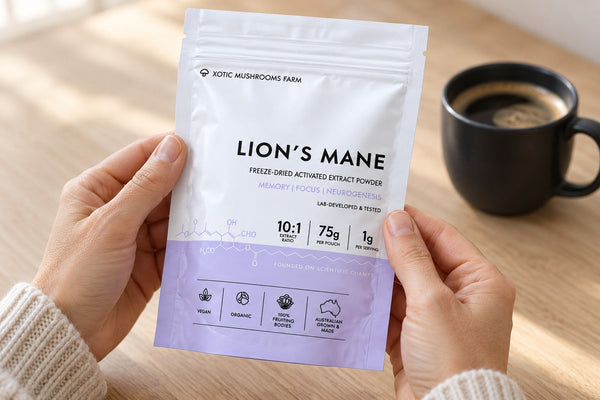 7 October 2026
Best Mushroom Coffee in Australia: What to Look For on the LabelLooking for the best mushroom coffee in Australia? Use this label checklist to compare mushroom type, extract ratio,...
7 October 2026
Best Mushroom Coffee in Australia: What to Look For on the LabelLooking for the best mushroom coffee in Australia? Use this label checklist to compare mushroom type, extract ratio,...
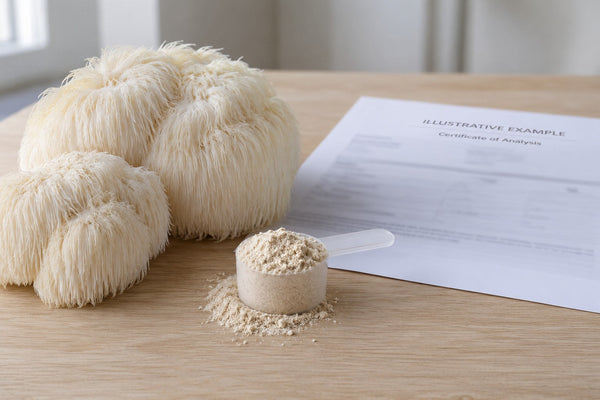 7 October 2026
Mushroom Extract in Australia: What Buyers Should CheckBuying mushroom extract in Australia? Learn how to check the extract ratio, fruiting body source, beta-glucans, extraction method,...
7 October 2026
Mushroom Extract in Australia: What Buyers Should CheckBuying mushroom extract in Australia? Learn how to check the extract ratio, fruiting body source, beta-glucans, extraction method,...
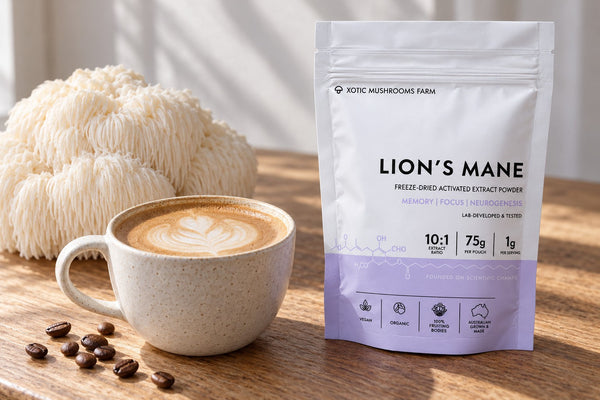 7 October 2026
Mushroom Coffee in Australia: What It Is and How to ChooseA clear guide to mushroom coffee in Australia: what it is, which mushrooms are used, what to check...
7 October 2026
Mushroom Coffee in Australia: What It Is and How to ChooseA clear guide to mushroom coffee in Australia: what it is, which mushrooms are used, what to check...
Get farm and supply updates
New batches, lab results and bulk pricing, a few times a year.