
Mushroom Matcha: What It Is and How to Make It

Mushroom matcha is matcha green tea mixed with a functional mushroom extract, most often Lion's Mane. It has become a popular alternative to mushroom coffee.
This guide explains what mushroom matcha is, how its caffeine compares with coffee, and how to make it at home with a simple recipe.
You will also learn what to look for in each ingredient and what changes if you are developing a mushroom matcha for a brand or café.
What Is Mushroom Matcha?
Mushroom matcha is a drink made by combining powdered matcha green tea with a mushroom extract powder, sold as a ready-made blend or mixed at home. The mushroom adds no green colour or tea flavour; it is a fine extract that dissolves into the matcha.
Matcha is made from shade-grown green tea leaves ground into a powder, so you drink the whole leaf rather than an infusion. Commercial mushroom matcha blends often add several mushroom extracts plus extras such as collagen, sweeteners or creamers.
Lion's Mane (Hericium erinaceus) is the mushroom most commonly paired with matcha. It is traditionally used in East Asian food and wellness practices and is often researched for its beta-glucans and other compounds. Its mild, slightly earthy taste works with the grassy notes of matcha.
Making it yourself lets you pick your matcha grade, choose a single-ingredient extract and control the serve. The explainer on what Lion's Mane extract is covers how extracts differ from dried mushroom powder.
Does Mushroom Matcha Have Caffeine?
Yes, mushroom matcha contains caffeine, but it comes from the matcha; Lion's Mane is not naturally caffeinated. A single-ingredient Lion's Mane extract contains no tea, no coffee and no caffeine.
Matcha is a green tea, and the US National Center for Complementary and Integrative Health confirms that green tea contains caffeine. Because matcha uses the whole ground leaf, the caffeine in a cup depends on how much powder you use and its grade.
Many people choose matcha because a typical cup contains less caffeine than a strong coffee. The US Food and Drug Administration notes that 400 milligrams of caffeine a day is generally not associated with negative effects for most adults, although individual factors can lower that.
The practical takeaway: if you want less caffeine, reduce the matcha, not the mushroom. The Lion's Mane serve stays the same whatever base you use.
Mushroom Matcha vs Mushroom Coffee

The main difference is the base: mushroom matcha uses green tea, while mushroom coffee uses coffee; the mushroom extract can be identical in both. Choose based on taste and how much caffeine you want.
| Feature | Mushroom matcha | Mushroom coffee |
|---|---|---|
| Caffeine source | Matcha green tea | Coffee |
| Flavour | Grassy, vegetal, slightly sweet | Roasted, bitter, rich |
| Preparation | Whisked, no brewing | Brewed or instant |
| Lion's Mane caffeine | None | None |
If you already enjoy coffee, the guide to mushroom coffee explains how blends work and what to check on the label.
How to Make Mushroom Matcha: A Simple Recipe
Whisk matcha and one serve of Lion's Mane extract with a little hot water into a smooth paste, then top up with water or warm milk. It takes about three minutes.
Ingredients (one cup)
- 1 to 2 g matcha powder (about half to one teaspoon)
- 1 g Lion's Mane extract powder (the label serve for Xotic's powder)
- 60 ml hot water, around 75 to 80°C, not boiling
- 180 ml milk or plant milk for a latte, or extra hot water for a plain matcha
- Optional: honey, maple syrup or vanilla
Method
- Sift the matcha and Lion's Mane extract into a bowl or wide cup to remove lumps.
- Add the 60 ml of hot water and whisk in a quick zigzag motion with a bamboo whisk or frother for 20 to 30 seconds until smooth and lightly foamy.
- Warm and froth your milk, or heat more water.
- Pour the milk or water over the matcha, sweeten if you like, and drink straight away.
Iced Mushroom Matcha
Make the paste exactly as above with hot water, because extract dissolves slowly in cold liquid. Pour it over ice and add cold milk. Shaking everything in a sealed jar also works well.
For more milk-based ideas, the Lion's Mane latte recipe and the Lion's Mane cacao drink use the same mixing technique.
Choosing Your Matcha and Mushroom Extract

Choose a fresh, bright green matcha and a fruiting body mushroom extract with a clear ingredient list and published testing. Mixing your own lets you check both separately.
For matcha, a vivid green colour and a smooth, non-bitter taste usually indicate fresher powder. Ceremonial grades suit plain matcha, while culinary grades are fine in lattes.
For the mushroom, look for a fruiting body extract rather than mycelium grown on grain. Xotic's Lion's Mane extract powder is 100% fruiting body extract with no added starch, grain, mycelium or fillers, made with hot water and ethanol dual extraction into a 10:1 extract. It is grown in Thomastown, Victoria, Australia, is vegan, gluten free and non-GMO, and the powder and capsules ship internationally.
Xotic also publishes its Lion's Mane lab results, including a tested extract powder blend with 1% BioPerine that returned 32.2% beta-glucans (Symbio, May 2026). That result is specific to the sample tested, not a guarantee for every batch. If you would rather not mix powders, Lion's Mane capsules contain the same extract.
Making Mushroom Matcha for Your Brand or Café?
A commercial mushroom matcha needs consistent specifications, batch documentation and reliable supply for both ingredients. Ask any mushroom supplier for a certificate of analysis, the extract ratio, minimum order quantities and samples before you formulate.
Xotic supplies white and private label Lion's Mane plus bulk extract in 1 kg and 5 kg packs. White label puts our established powder or capsules under your brand, while private label covers your own blend, such as a matcha formulation, or packaging, usually with higher MOQs and longer lead times. Knowing how to read a COA makes supplier comparisons easier.
Enjoying Mushroom Matcha at Home
Mushroom matcha is simply matcha whisked with a mushroom extract, with all the caffeine coming from the tea.
Try it with Xotic's Lion's Mane extract powder, or choose capsules alongside your usual matcha. Developing a drink for your brand? Ask about white label, private label or bulk supply.
FAQs
1. Is mushroom matcha the same as matcha?
No. Regular matcha is powdered green tea on its own, while mushroom matcha adds a mushroom extract such as Lion's Mane. The matcha provides the colour, flavour and caffeine. The mushroom extract adds a mild, earthy note and the compounds it is often researched for, such as beta-glucans, without changing how you prepare the drink.
2. Does Lion's Mane add caffeine to matcha?
No. Lion's Mane is not naturally caffeinated, and a single-ingredient Lion's Mane extract contains no tea, coffee or caffeine. All the caffeine in mushroom matcha comes from the matcha powder. To reduce caffeine, use less matcha or a smaller cup while keeping the same label serve of mushroom extract.
3. What does mushroom matcha taste like?
Mushroom matcha tastes mostly like matcha: grassy, vegetal and slightly sweet. A good Lion's Mane extract adds only a faint earthy, savoury note that milk and a little sweetener soften. Sifting both powders and whisking them into a paste first gives a smooth texture without grittiness or clumps on the surface.
4. How much Lion's Mane should I add to matcha?
Follow the serving size on your product label. For Xotic's Lion's Mane extract powder, the label serve is 1 g, which mixes easily into one cup of matcha. Extract strengths differ between products, so do not apply one brand's serve to another, and speak with a health professional if you are unsure whether it suits you.
5. Can I make iced mushroom matcha?
Yes. Whisk the matcha and Lion's Mane extract into a paste with a little hot water first, because the extract dissolves slowly in cold liquid. Then pour the paste over ice and add cold milk or water. Shaking everything together in a sealed jar is another quick way to get a smooth result.
6. Is it better to buy a blend or make mushroom matcha myself?
Ready-made blends are convenient, but many combine several mushrooms with extras and do not show how much of each is included. Making it yourself means you choose your matcha grade, use a single-ingredient fruiting body extract and control the serve. It can also work out cheaper per cup if you already buy matcha.
Source Lion’s Mane extract powder at scale
Australian-grown 10:1 fruiting body extract in 1 kg and 5 kg bags, with named-lab testing and white label supply for growing brands.
Request a sample or quote
Related articles
 17 October 2026
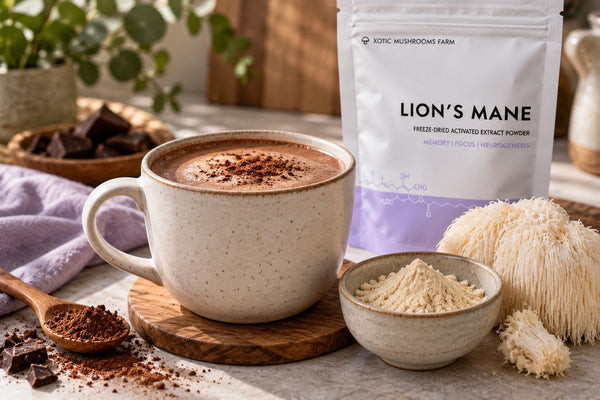
Mushroom Hot Chocolate: What It Is and How to Choose OneMushroom hot chocolate blends cocoa with a functional mushroom extract. Learn what is in it, which label details...
17 October 2026
Mushroom Hot Chocolate: What It Is and How to Choose OneMushroom hot chocolate blends cocoa with a functional mushroom extract. Learn what is in it, which label details...
 17 October 2026
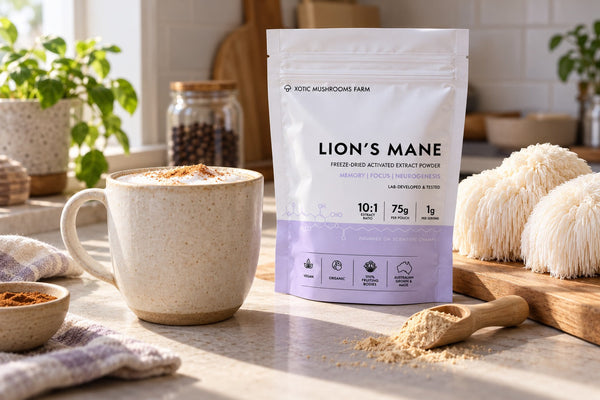
When to Take Lion's Mane: Morning, Afternoon or Night?When to take Lion's Mane comes down to routine. Compare morning, afternoon and night, with coffee or food,...
17 October 2026
When to Take Lion's Mane: Morning, Afternoon or Night?When to take Lion's Mane comes down to routine. Compare morning, afternoon and night, with coffee or food,...
 17 October 2026
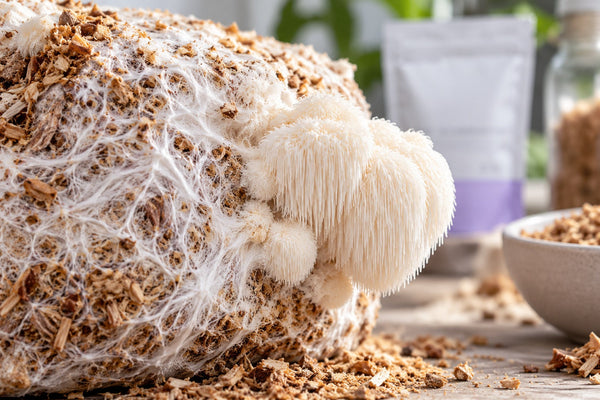
What Is Mycelium, and Why Does It Matter in Supplements?What is mycelium? Learn how this root-like fungal network differs from the mushroom fruiting body and why it...
17 October 2026
What Is Mycelium, and Why Does It Matter in Supplements?What is mycelium? Learn how this root-like fungal network differs from the mushroom fruiting body and why it...
Get farm and supply updates
New batches, lab results and bulk pricing, a few times a year.