Mushroom Powder in Australia: Culinary vs Functional

Introduction
Search for mushroom powder in Australia and you will find porcini seasoning sitting next to Lion's Mane extract, often on the same shelf. They are very different products. Culinary powders are dried, milled mushrooms used for flavour, while functional powders are usually extracts sold in measured serves. This guide explains how each is made, how to use them in your kitchen, what to check on the label and how to compare value, with a short section for cafes and food brands buying in bulk.
What is the difference between culinary and functional mushroom powder?
Culinary mushroom powder is dried, ground mushroom used for flavour, while functional mushroom powder is usually a concentrated extract taken in a small, measured serve. One belongs in the spice drawer, the other alongside your morning coffee.
| Feature | Culinary powder | Functional powder |
|---|---|---|
| Typical species | Porcini, shiitake, button, oyster | Lion's Mane, reishi, cordyceps, turkey tail |
| How it is made | Dried and milled whole mushroom | Often hot-water or dual extracted, then dried |
| Main purpose | Umami flavour and seasoning | Daily routine, measured serve |
| Typical use | Tablespoons in sauces, rubs, stocks | Around 1 g in drinks or food |
| What to check | Flavour, origin, freshness | Part used, extract ratio, lab results |
Some products blur the line. A whole Lion's Mane powder, for example, is dried mushroom rather than an extract, so it sits between the two. The label should tell you which one you are buying.
Culinary mushroom powder: flavour first
Culinary powders are about savoury depth, and the best ones taste strongly of the mushroom they came from. Porcini and shiitake are the most common because they are rich in glutamates, the compounds behind umami.
A spoonful lifts gravies, risottos, soups and dry rubs for steak or roast vegetables. Because you use them generously, price per kilo matters more than price per serve, and freshness matters most of all. Look for a deep aroma and a clear origin.
Culinary powders also make a handy pantry shortcut. Dried mushrooms keep far longer than fresh ones, and a powder spreads their flavour evenly through a dish without the texture some people dislike. That makes them popular with home cooks feeding fussy eaters.
Culinary powders are foods, so they are judged on flavour and food safety rather than on any wellness claim. They are not designed to deliver a concentrated dose of any compound.
Functional mushroom powder: extracts and measured serves

Functional powders are usually extracts made from species that are traditionally used or often researched for wellbeing, and they are taken in small daily serves. Lion's Mane, reishi, cordyceps and turkey tail lead the category.
Extraction draws compounds such as beta-glucans out of the mushroom's tough cell walls, so a small serve carries more of them than the same weight of dried mushroom. Lion's Mane is often researched for cognitive wellbeing and is commonly associated with focus routines, although research is still developing. For a species overview, see our guide to functional mushrooms in Australia.
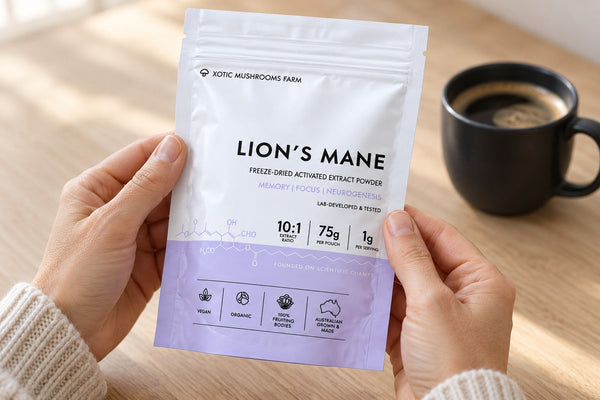
Our Lion's Mane extract powder is a 10:1 fruiting body extract, dual extracted with hot water and ethanol, with a 1 g label serve. That gives 75 serves in a 75 g pouch.
How to use each in your kitchen

Use culinary powder generously for flavour and functional powder sparingly, stirred into drinks or food at the label serve.
- Culinary: season sauces, stocks, rubs, butter and popcorn. Add early so the flavour can bloom.
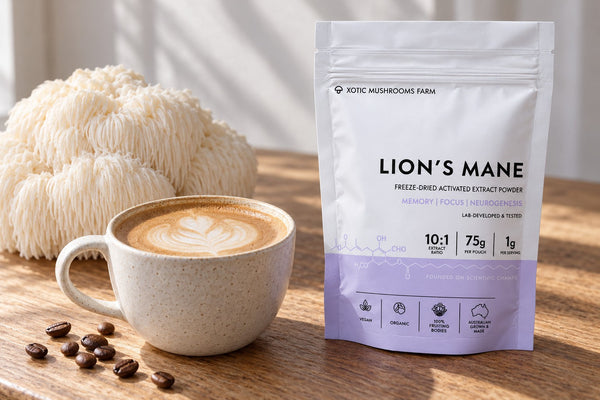
- Functional, in drinks: stir 1 g into coffee, cacao, smoothies or a latte. Our Lion's Mane latte recipe is an easy start.
- Functional, in food: mix into porridge, yoghurt, soups or bliss balls after cooking, rather than frying it hard.
Lion's Mane extract has a mild, earthy taste that disappears into coffee or chocolate. Our guide on how to use Lion's Mane extract powder has more ideas.
Hot drinks are perfectly fine for an extract, since it has already been through hot-water extraction. Stir well, or use a milk frother, because fine powders can clump if they hit liquid all at once.
What to check before you buy mushroom powder in Australia
Check what the powder is, which part of the mushroom it comes from, how it was made and whether it has been tested.
- Product type: culinary, whole functional powder or extract.
- Part used: fruiting body, mycelium or a mix. Mycelium grown on grain can add starch.
- Extract ratio and method: for extracts, for example 10:1 dual extraction.
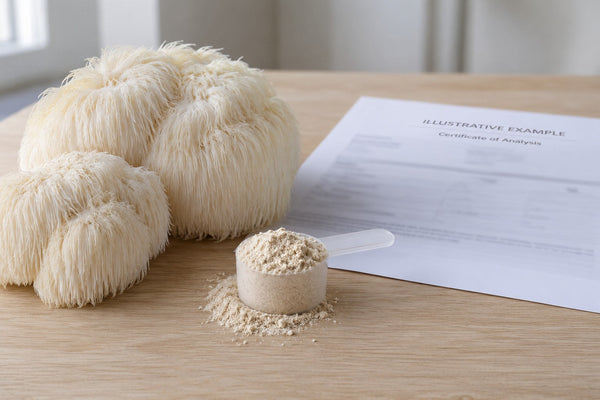
- Testing: a dated certificate of analysis from a named lab.
- Origin: where it was grown and processed.
Value is easier to judge once you know the type. For culinary powder, compare price per 100 g. For functional powder, divide the price by the number of label serves, then make sure you are comparing products with a similar part used and extract ratio.
Our Lion's Mane is grown in Thomastown, Victoria, freeze-dried at minus 82 °C and extracted. A Symbio Laboratories COA (S2162602 [R01], 13 May 2026) measured 32.2% beta-glucans in the tested extract powder blend with 1% BioPerine. This is a sample-specific result, not a guarantee for every finished product. The full picture is on our specifications and testing page.
Buying mushroom powder for a cafe or brand?
Cafes, food makers and supplement brands need a consistent specification, not just a good pouch. Ask for a spec sheet, a COA per batch, minimum order quantities (MOQ), packaging options and a sample to test in your recipes.
For a cafe, a sample lets you check how the powder behaves in milk, espresso and cold drinks before it goes on the menu. For a brand, the COA and spec sheet underpin your own label wording, so request them early in development.
We supply Lion's Mane extract in 1 kg and 5 kg bulk packs and offer white label Lion's Mane for brands building their own range.
Conclusion
Mushroom powder in Australia comes in two main types: culinary powders for flavour and functional powders for a measured daily serve. Know which one you need, then check the part used, ratio and testing. Try our Lion's Mane extract powder in your next coffee, and brands can ask about bulk supply.
FAQs
Are mushroom powders good for you?
Culinary mushroom powders add flavour along with the fibre and nutrients found in dried mushrooms. Functional powders such as Lion's Mane extract are often researched for compounds like beta-glucans and may support a balanced wellness routine. Research is still developing, so treat them as part of a varied diet rather than a replacement for medical advice.
What do you use mushroom powder for?
Culinary mushroom powder seasons sauces, soups, stocks and rubs with savoury umami flavour. Functional mushroom powder is usually stirred into coffee, cacao, smoothies or porridge at a small label serve, such as 1 g. Check the label to see which type you have, since the amounts used are very different.
Is mushroom powder safe to consume?
Mushroom powders sold as food in Australia must meet food safety standards, and most people use them without issue. People with a mushroom allergy, those taking medicines or anyone pregnant or breastfeeding should check with a health professional first. Choose products with a dated lab report covering heavy metals and microbial testing.
Can I cook with Lion's Mane extract powder?
Yes. Lion's Mane extract powder can be stirred into hot drinks, porridge, soups and baked goods. For the best flavour, add it near the end of cooking rather than frying it at high heat. Its mild, earthy taste blends well with coffee and chocolate. Follow the label serve of 1 g.
What is the healthiest mushroom powder?
There is no single healthiest mushroom powder, because culinary and functional powders do different jobs. For a functional powder, look for a fruiting body extract with a stated ratio, a clear extraction method and dated lab results. For cooking, choose a fresh, aromatic powder with a known origin.
How should I store mushroom powder?
Store mushroom powder in a sealed container or resealable pouch, away from heat, light and moisture. A cool pantry shelf is ideal. Avoid leaving a wet spoon in the pouch, since moisture can cause clumping. Check the best before date on the pack and use the powder within that window.
Source Lion’s Mane extract powder at scale
Australian-grown 10:1 fruiting body extract in 1 kg and 5 kg bags, with named-lab testing and white label supply for growing brands.
Request a sample or quote
Related articles
 7 October 2026
Best Mushroom Coffee in Australia: What to Look For on the LabelLooking for the best mushroom coffee in Australia? Use this label checklist to compare mushroom type, extract ratio,...
7 October 2026
Best Mushroom Coffee in Australia: What to Look For on the LabelLooking for the best mushroom coffee in Australia? Use this label checklist to compare mushroom type, extract ratio,...
 7 October 2026
Mushroom Extract in Australia: What Buyers Should CheckBuying mushroom extract in Australia? Learn how to check the extract ratio, fruiting body source, beta-glucans, extraction method,...
7 October 2026
Mushroom Extract in Australia: What Buyers Should CheckBuying mushroom extract in Australia? Learn how to check the extract ratio, fruiting body source, beta-glucans, extraction method,...
 7 October 2026
Mushroom Coffee in Australia: What It Is and How to ChooseA clear guide to mushroom coffee in Australia: what it is, which mushrooms are used, what to check...
7 October 2026
Mushroom Coffee in Australia: What It Is and How to ChooseA clear guide to mushroom coffee in Australia: what it is, which mushrooms are used, what to check...
Get farm and supply updates
New batches, lab results and bulk pricing, a few times a year.