Lion's Mane Extract vs Whole-Mushroom Powder

Introduction
Lion's Mane extract vs powder comes down to processing: whole powder is dried and milled mushroom, while extract has been through a solvent extraction that concentrates compounds and improves dispersion in liquid. This guide compares the two formats on processing, fibre, behaviour in drinks, ratios and testing, then shows which suits capsules, drinks, blends or food, with a short checklist for your own formulation trials. It is written for brands and formulators choosing a format, and for anyone who wants to read a label with confidence.
What is the difference between Lion's Mane extract and powder?
Whole-mushroom powder is the entire dried mushroom ground fine, while extract powder is what remains after the mushroom has been extracted in hot water, ethanol or both and dried again. The names sound similar, but the products behave differently.
Whole powder retains the broad make-up of the dried mushroom: protein, fibre, the tough cell-wall material called chitin, and the polysaccharides bound up inside it. That said, it is not identical to the fresh mushroom, because drying, heat and milling can change composition, for example by reducing moisture-sensitive or heat-sensitive compounds. Extract powder pulls selected compounds out of that tissue and leaves much of the insoluble fibre behind.
Neither is wrong. Whole powder is closer to a food ingredient, while extract is a concentrated functional ingredient. The right choice depends on the finished product, the serve size you want and how the powder needs to behave in use.
Both formats should still start with clearly identified raw material. Ours is 100% Hericium erinaceus fruiting body, grown on our farm in Thomastown, Victoria.
How is each format made?
Whole powder is dried and milled in one pass, while extract adds an extraction and concentration step before final drying. That extra step is where most of the difference in cost and character comes from.
Whole-mushroom powder
Fresh mushrooms are dried, by air, heat or freeze-drying, then milled to a chosen particle size. No fraction is deliberately separated out, so the powder carries much of the nutritional profile of the dried mushroom, including its fibre, although the drying method can affect the final composition.
Extract powder
Dried mushroom is soaked in a solvent. Hot water draws out water-soluble polysaccharides, and ethanol is used for less water-soluble compounds. Our extract is freeze-dried, then dual-extracted in hot water and ethanol at a 10:1 ratio.
You can follow each stage on our farm and process page.
Lion's Mane extract vs powder: side-by-side comparison
Extract is more concentrated and disperses more readily; whole powder is less processed and keeps more of the fibre and protein of the dried mushroom. The table sets out the practical differences.
| Factor | Extract powder | Whole-mushroom powder |
|---|---|---|
| Processing | Dried, extracted, concentrated, dried | Dried and milled |
| Raw material per gram | Higher (for example 10:1) | About 1:1 to dried weight |
| Chitin and insoluble fibre | Largely reduced | Retained |
| Behaviour in drinks | Disperses more readily | Tends to settle |
| Flavour | Concentrated, earthy | Milder, mushroomy |
| Best suited to | Capsules, drinks, stick packs, blends | Cooking, baking, food products |
| Relative cost per kg | Higher | Lower |
For reference, a government laboratory test of our freeze-dried whole mushroom powder recorded protein of 16.7 g/100 g (National Measurement Institute, July 2024). That test covers whole powder, not our extract, which is the kind of detail a good spec sheet should make clear.
Dispersion is not the same as dissolving
When a powder "mixes well", it usually means it disperses: the particles spread evenly through the liquid and stay suspended for a while. Full dissolution means the material goes completely into solution and leaves no visible particles or sediment. Most mushroom powders, extract included, disperse rather than fully dissolve.
Extract generally disperses better than whole powder because much of the insoluble fibre and chitin has been removed, but some fine sediment can still appear, especially in cold or acidic drinks. If your product needs a clear liquid or zero sediment, test that specifically rather than relying on the word "soluble" on a spec sheet.
Ratios, beta-glucans and what the label tells you
An extract ratio tells you how much raw material went in, while a beta-glucan result tells you how much of one compound group was measured; you need both to compare products. Labels often show one and imply the other.
A 10:1 ratio means roughly ten parts of dried starting material made one part of extract. It is not a strength rating. Two 10:1 products can differ widely if one uses mycelium on grain or adds carriers such as maltodextrin.
Beta-glucans are a group of polysaccharides that are often researched in mushrooms. They should be reported with a named laboratory, date and test method, because different methods give different numbers. Total polysaccharide figures can be inflated by starch, so a separate beta-glucan result is more useful.
Our specifications and testing page lists each result with the laboratory, sample and date, and our guide to Lion's Mane extract specifications explains every line.
Which format suits which product?
Extract suits capsules, drinks and blends where a small serve and good dispersion matter, while whole powder suits cooking and food where fibre and texture are welcome. Start from the finished product and work back.
- Capsules: extract fits more raw material into each capsule. Our Lion's Mane capsules hold 300 mg of 10:1 extract each.
- Coffee, lattes and functional drinks: extract disperses more readily and suits a 1 g serve.
- Blends and stick packs: extract keeps fill weights low.
- Baking, soups and savoury food: whole powder adds body and a milder flavour.
Many brands start with one format and add the other later. Because our powder and capsules use the same extract, a range can share one origin story and one set of reports. Our Lion's Mane extract powder comes in 50 g, 75 g, 150 g, 300 g and 1.2 kg packs.
Formulation trial checklist
Before you commit to a format, run a small bench trial with a sample in your actual product base. Record these five points for each format you test.
- Taste: how strong the earthy note is at your intended serve, and whether other flavours mask it.
- Dispersion: how quickly and evenly the powder spreads when stirred, whisked or shaken, and whether it clumps.
- Sediment: how much settles after 5 and 15 minutes, and whether it stirs back in.
- Mixing temperature: results in hot, warm and cold liquid, since behaviour can change noticeably with temperature.
- Serving cost: the ingredient cost per serve in AUD, using your quoted price and planned serve size.
Buying considerations
Before choosing either format, confirm the part used, the processing method, any added carriers and the laboratory evidence behind the claims. These questions protect your brand later.
- Is it fruiting body, mycelium or a blend?
- Which solvent and ratio were used for the extract?
- Are there carriers, starch or grain in the finished powder?
- Which laboratory tested it, when and by what method?
- Do results cover the batch you are buying?
For brands building their own range, our white label Lion's Mane page sets out formats, documentation and the sample process.
Conclusion
Whole powder suits food and cooking; extract suits capsules, drinks and blends where concentration and dispersion matter. Whichever you choose, insist on clear raw material and named lab results, and run your own formulation trial. To compare our 10:1 fruiting body extract against your brief, get in touch and request a sample.
FAQs
Is Lion's Mane extract better than whole powder?
Neither is better in every case. Extract is more concentrated and disperses more readily, so it suits capsules and drinks. Whole powder is less processed and keeps more of the fibre and protein of the dried mushroom, so it suits cooking. The right choice depends on your finished product and serve size.
Can you cook with Lion's Mane extract powder?
Yes, extract powder can be stirred into warm drinks, smoothies, sauces and baked goods. Because it is concentrated, a 1 g serve is typical and the flavour is stronger. For dishes where texture and bulk matter, whole powder is often the more practical choice.
Why does whole Lion's Mane powder settle in drinks?
Whole powder contains insoluble fibre and chitin from the mushroom's cell walls, which do not dissolve in liquid and tend to sink. Extract powder has had much of this material removed during extraction, so it generally disperses more evenly in coffee, tea and other drinks, although it may still leave a little sediment.
Is a 10:1 Lion's Mane extract ten times stronger than powder?
No. A 10:1 ratio means about ten parts of dried starting material made one part of extract. It describes concentration of input, not strength. To compare products fairly, look for measured beta-glucan results from a named laboratory, along with the test method and date.
Does Lion's Mane extract keep the fibre of the mushroom?
Largely no. Extraction separates soluble compounds from the insoluble tissue, so most of the chitin and fibre is left behind. That is why extract is finer and disperses better, and why whole powder remains a better choice if fibre is part of your product story.
Source Lion’s Mane extract powder at scale
Australian-grown 10:1 fruiting body extract in 1 kg and 5 kg bags, with named-lab testing and white label supply for growing brands.
Request a sample or quote
Related articles
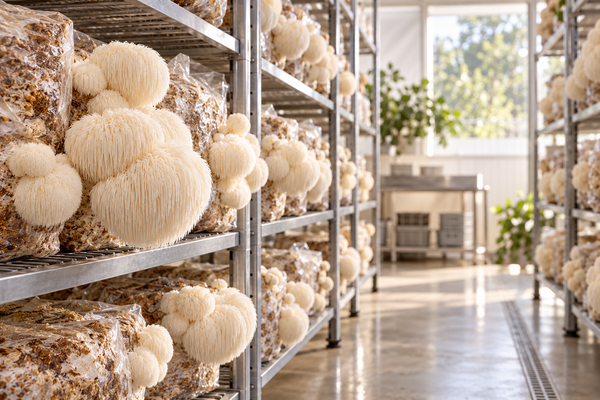 7 October 2026
Australian-Grown Lion's Mane: Why Provenance MattersWhy provenance matters for Australian-grown Lion's Mane: traceability, food standards, a shorter supply chain, and how to check...
7 October 2026
Australian-Grown Lion's Mane: Why Provenance MattersWhy provenance matters for Australian-grown Lion's Mane: traceability, food standards, a shorter supply chain, and how to check...
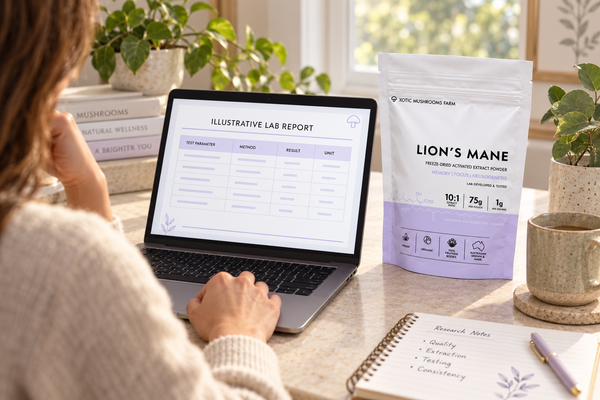 7 October 2026
How to Check a Lion's Mane Product's Lab ResultsA simple checklist for checking Lion's Mane lab results: who tested it, whether it is the same product,...
7 October 2026
How to Check a Lion's Mane Product's Lab ResultsA simple checklist for checking Lion's Mane lab results: who tested it, whether it is the same product,...
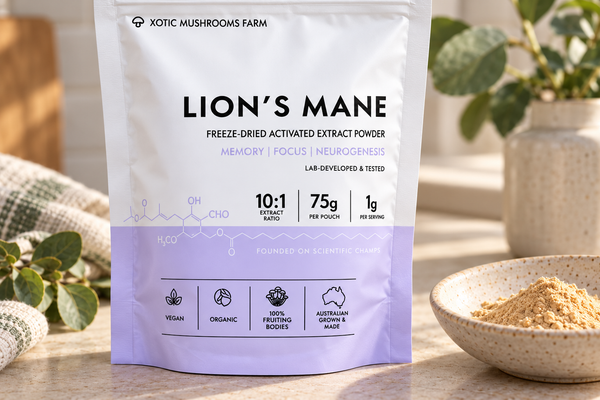 7 October 2026
What "10:1" and "Fruiting Body" Mean on a Lion's Mane LabelWhat does 10:1 mean on a Lion's Mane extract label, and why does fruiting body matter? A short,...
7 October 2026
What "10:1" and "Fruiting Body" Mean on a Lion's Mane LabelWhat does 10:1 mean on a Lion's Mane extract label, and why does fruiting body matter? A short,...
Get farm and supply updates
New batches, lab results and bulk pricing, a few times a year.