

1 of 6
Grow
Lion’s Mane grown on Tasmanian oak hardwood sawdust and Australian soya husk (Master’s Mix) in our Victorian growing rooms.
Our farm & founder
We grow Lion’s Mane in controlled rooms at our farm in Thomastown, Melbourne, on Tasmanian oak hardwood sawdust and Australian soya husk. The fruiting bodies are harvested by hand, freeze-dried and extracted, then packed as powder or capsules.


Meet the people behind your pouch
Xotic Mushrooms is led by founder and head cultivator Jaz Konig. What started as a curiosity about fungi became a full-time focus on carefully grown Lion’s Mane in Australia.
Jaz runs the day-to-day on the farm: substrate preparation, climate, harvest and drying. Our controlled growing rooms give us a hands-on view of each stage, and we share our farm, process and testing record so you can look beyond the front of the pack.

Behind the grow block
Tasmanian oak hardwood sawdust and Australian soya husk: our Master’s Mix provides the growing substrate for our Lion’s Mane.
The substrate is prepared and moistened, then mixed before the mushrooms develop their fruiting bodies. We harvest those fruiting bodies for processing into extract. No grain is added to the extract.
Grow → Harvest → Freeze-dry → Extract → Test → Pack
Lion’s Mane grown on Tasmanian oak hardwood sawdust and Australian soya husk (Master’s Mix) in our Victorian growing rooms.

Fruiting bodies are selected and harvested by hand at the farm. Only the fruiting bodies are used.

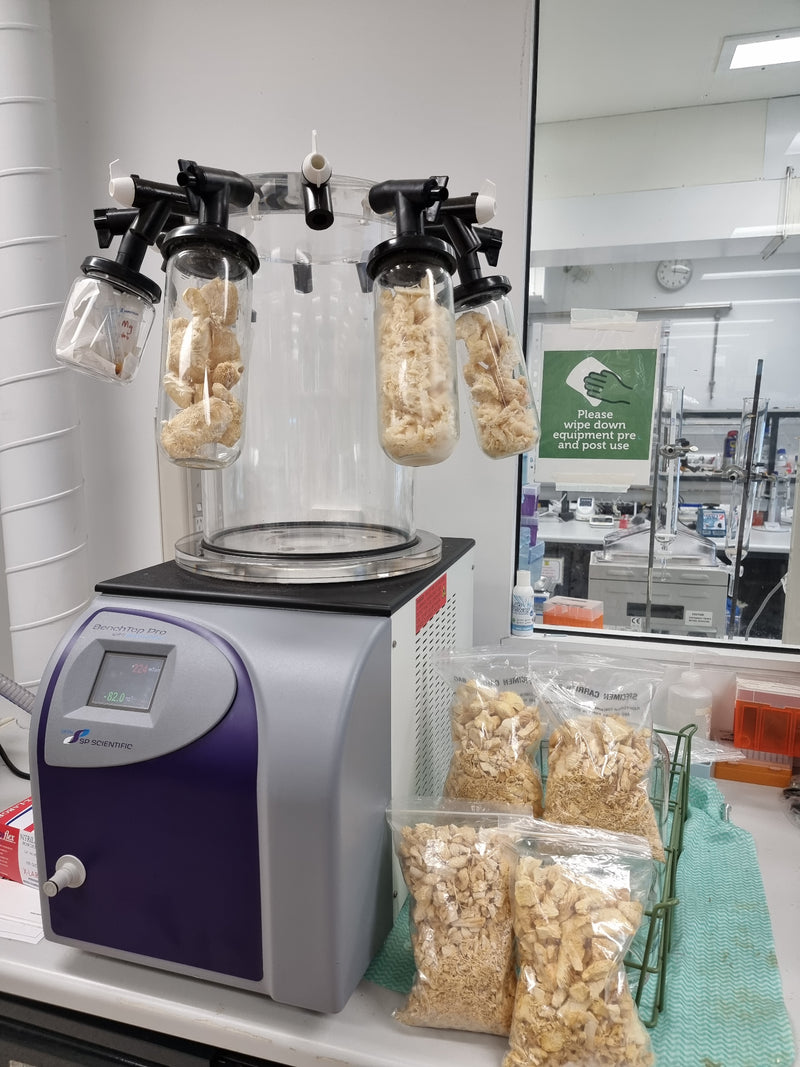
Harvested mushrooms are freeze-dried at −82 °C, then milled. Milling makes a powder; extraction is a separate step.

Hot water and ethanol are used in our dual extraction process to produce a 10:1 extract. About 4 kg of fresh Lion’s Mane goes into every 100 g of extract powder.

Laboratory analysis records beta-glucans and trace elements in submitted extract samples, including the May 2026 Symbio COA (32.2% beta-glucans in a tested blend with 1% BioPerine). Read the testing record

The finished extract is packed as powder for a measured 1 g serving, or filled into 300 mg plant-based capsules.
A useful distinction
It describes the ratio of starting mushroom material to finished extract. It does not mean ten times the benefit, and it is separate from a beta-glucan result in a laboratory sample.
We use the mushroom’s fruiting body to make our 10:1 extract. There is no added grain, starch or mycelium.
Measure 1 g of powder into a drink or food, or take two 300 mg capsules (600 mg) with water.
Shop Lion’s Mane →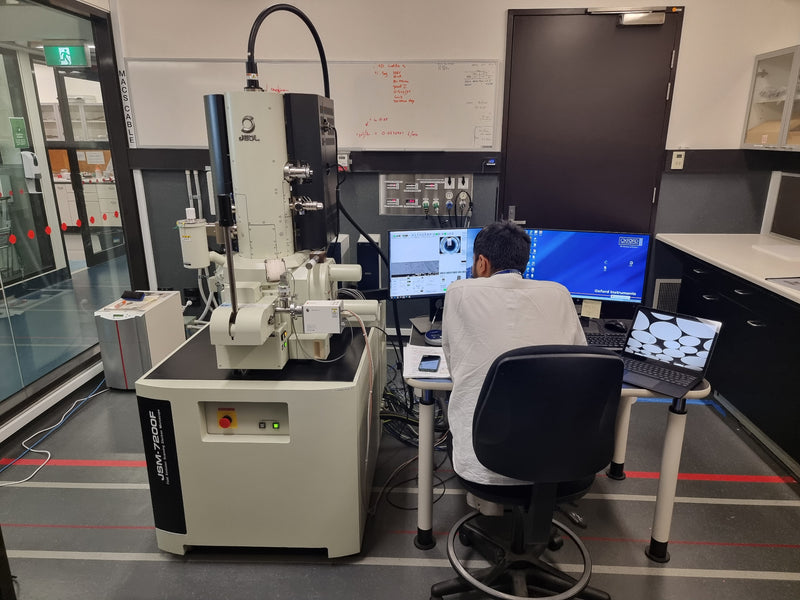
Research & development
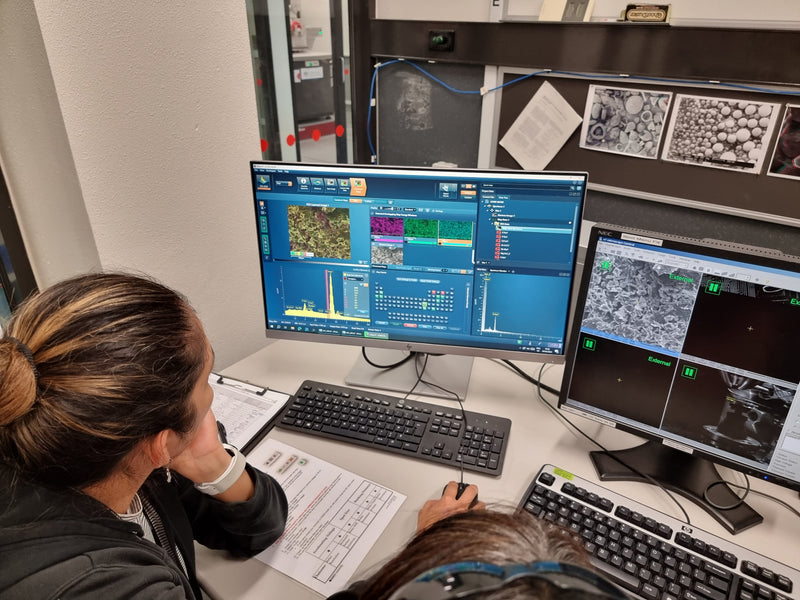
We work with researchers at RMIT University’s School of Science, led by Dr Tien Huynh, to understand our Lion’s Mane in greater detail. Our farm and testing pages document the work completed and the research still underway.
Read the original documents
32.2% beta-glucans in the submitted fruiting-body freeze-dried extract powder blend with 1% BioPerine. Includes results for nine trace elements.
Open the Symbio COA ↗Protein, amino acid and vitamin D2 analysis of a submitted freeze-dried mushroom powder sample. This report covers whole mushroom powder, not the extract.
See the testing record →Researchers freeze-dried and milled Lion’s Mane supplied by our Melbourne farm, then studied its composition and use in oat-based desserts. Gunathilake et al., Foods 14, 4153. Not a clinical trial of our products.
Open the published study ↗Laboratory results apply to the named samples and dates. These documents do not certify every batch or establish health outcomes.
Inside the process
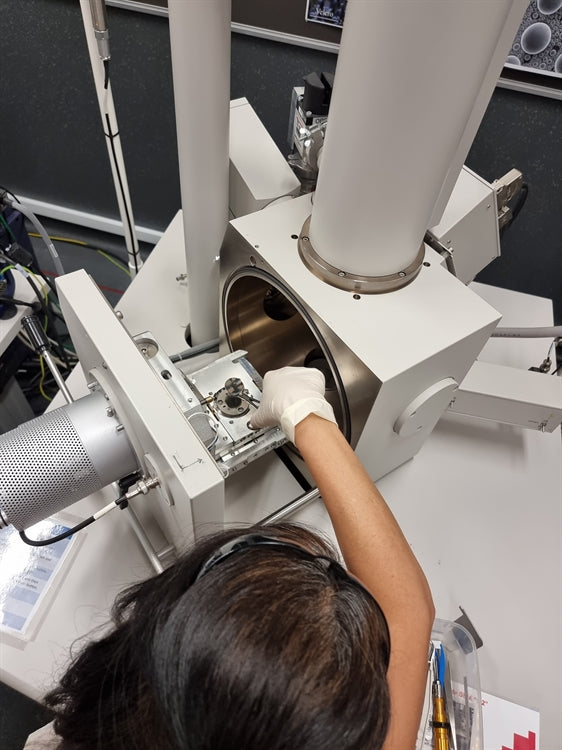
From the grow room to drying equipment and milling, these photographs bring our production process into view.


Choose powder or capsules for your routine, or talk to us about white or private label. Call 0414 056 694.