
Mushroom Hot Chocolate: What It Is and How to Choose One

Mushroom hot chocolate is cocoa or cacao blended with a functional mushroom extract, usually Lion's Mane, reishi or chaga, and drunk just like ordinary hot chocolate.
It has become a popular evening alternative to mushroom coffee, yet the quality gap between products is wide.
This guide explains what goes into it, which label details matter most and how to make a simple version at home. Xotic Mushrooms grows Lion's Mane in Australia and ships its extract powder and capsules internationally, including to the US, UK, Canada and Singapore.
What Is Mushroom Hot Chocolate?
Mushroom hot chocolate is a cocoa drink with a functional mushroom extract stirred through it, so it looks and tastes much like regular hot chocolate. Most ready-made mixes combine cocoa or cacao powder, a sweetener, a creamer or milk powder and one or more mushroom extracts.
Lion's Mane, reishi, chaga and cordyceps are the most common choices. Some blends also add adaptogenic herbs, magnesium or sleep ingredients, which changes the drink considerably, so it pays to read the full ingredient list rather than the front of the pack.
The mushroom component is the part worth paying attention to. A mushroom extract is made by steeping the fruiting body in hot water, and often alcohol, then drying the liquid into a fine, soluble powder. That is quite different from simply grinding dried mushroom, and there is more detail on how Lion's Mane extract is made if you want the full process.
You can buy mushroom hot chocolate as a pre-mixed powder in tubs or sachets, or make your own by adding a measured serve of extract powder to your usual cocoa. Both routes work. They simply give you different levels of control over sugar, serving size and ingredients.
What Does It Taste Like, and Does It Have Caffeine?
A well-made mushroom hot chocolate tastes mostly of chocolate with a mild earthy note, and any caffeine in it normally comes from the cocoa, not the mushroom.
Cocoa naturally contains small amounts of caffeine alongside theobromine, and the FDA lists chocolate among the well-known sources of caffeine. A cup of hot chocolate typically carries far less than a cup of coffee, which is a big part of its appeal as an afternoon or evening drink.
Lion's Mane itself is not naturally caffeinated. Xotic's extract contains no coffee and no caffeine, because it is a single-ingredient mushroom extract. Mushroom coffee blends, by contrast, get their caffeine from the coffee they contain.
Flavour varies by species. Lion's Mane is mild and slightly savoury, so it disappears into chocolate easily. Reishi is noticeably bitter, which suits dark cacao, while chaga adds a woody, earthy depth. If a mix tastes strongly of mushroom, it may contain ground mushroom powder rather than a refined extract.
How to Choose a Mushroom Hot Chocolate

Choose a mushroom hot chocolate by checking which mushroom it uses, whether it is a fruiting body extract, how much is in each serve and how much sugar comes with it. The table below sets out the checks that matter most.
| What to check | What to look for | Why it matters |
|---|---|---|
| Species | The mushroom named clearly, ideally with its Latin name (for example Hericium erinaceus) | Different species have different flavours and research profiles |
| Part of the mushroom | Fruiting body extract stated on the label | Mycelium grown on grain can carry starch that dilutes the product |
| Amount per serve | Milligrams of each mushroom listed, not hidden in a proprietary blend | Shows whether you are getting a meaningful amount |
| Extraction | Extract type and ratio, such as hot water and ethanol or 10:1 | Indicates a concentrated, soluble extract rather than ground powder |
| Testing | Beta-glucan, heavy metal and microbial results available | Lets you verify quality claims |
| Sugar and extras | Grams of sugar per serve and any added melatonin, herbs or fillers | Affects how often you would want to drink it |
Proprietary blends are the most common weak spot. When a label lists five mushrooms inside one combined figure, there is no way to tell how much of each you are getting, and some may be present in very small amounts.
The source material matters just as much. The difference between fruiting body and mycelium products explains why two mixes with the same mushroom name can be very different.
Finally, look for brands that share published lab results. For example, a tested Xotic extract powder blend with 1% BioPerine returned 32.2% beta-glucans (Symbio, May 2026), a sample-specific result rather than a guarantee for every product.
How to Make Mushroom Hot Chocolate at Home

Making your own mushroom hot chocolate gives you full control over sugar, serving size and ingredients, and it takes about five minutes.
- Warm about 250 ml of your preferred milk until steaming, without boiling.
- Whisk one to two teaspoons of cocoa or cacao and your sweetener of choice with a splash of the milk to make a smooth paste.
- Add one label serve (1 g) of Lion's Mane extract powder and stir until dissolved.
- Pour in the rest of the milk and whisk or froth until smooth.
- Taste, then adjust with cinnamon, vanilla or a pinch of salt.
For a richer, spiced version, this Lion's Mane cacao recipe builds on the same method. A fine extract dissolves cleanly, so there is no gritty texture at the bottom of the mug.
Xotic's Lion's Mane extract powder is a 100% fruiting body 10:1 extract with no added starch, grain, mycelium or fillers. A 75 g pouch costs A$85, about A$1.13 per serve. If you would rather keep your drink plain, Lion's Mane capsules contain the same extract.
What Does the Research Say?
Lion's Mane is often researched for cognitive support, but most of the evidence so far is early and comes from laboratory, animal and small human studies.
A recent systematic review of Lion's Mane supplements found the clinical evidence promising in places yet limited overall, with small trials and varied preparations. That is a fair summary of the category as a whole.
Mushroom beta-glucans are also widely studied, although results depend on the species, the extract and the amount used. It is sensible to treat mushroom hot chocolate as an enjoyable daily ritual that may support a balanced routine, rather than as a treatment for anything.
Making a Mushroom Hot Chocolate for Your Brand or Café?

For a café menu or a retail mix, the priorities shift from taste alone to specifications, documentation and supply. You will want a consistent extract ratio, a current COA covering beta-glucans, heavy metals and microbial testing, and a powder that dissolves cleanly in milk.
Xotic supplies 1 kg and 5 kg bulk extract for cafés and manufacturers. Brands can also choose white and private label Lion's Mane: white label puts our established powder or capsules under your brand, while private label covers your own blend, formulation or packaging, usually with higher MOQs and longer lead times. Samples are a sensible first step before you commit.
Choosing a Mushroom Hot Chocolate You Will Enjoy
The best mushroom hot chocolate names its mushroom, uses a fruiting body extract, states the amount per serve and keeps sugar sensible.
To make your own, try Xotic's Lion's Mane extract powder, or choose capsules if you prefer. Brands and cafés can ask about bulk, white label or private label supply.
FAQs
1. Is mushroom hot chocolate good for you?
Mushroom hot chocolate can be a sensible part of a balanced routine, especially if it is low in sugar and uses a clearly labelled fruiting body extract. Lion's Mane is often researched for cognitive support, but the evidence is still early. Treat it as an enjoyable drink that may support your routine, not as a treatment for any condition.
2. Does mushroom hot chocolate have caffeine?
Most mushroom hot chocolate contains a small amount of caffeine from the cocoa itself, along with theobromine. The levels are generally much lower than coffee. Lion's Mane is not naturally caffeinated, and a single-ingredient Lion's Mane extract contains no coffee or caffeine, so any caffeine comes from the chocolate or from added ingredients.
3. Which mushroom is best in hot chocolate?
Lion's Mane is a popular choice because its mild, slightly savoury flavour blends easily into chocolate. Reishi is more bitter and suits dark cacao, while chaga adds an earthy depth. The best choice depends on your taste and goals, but a clearly labelled fruiting body extract matters more than the number of mushrooms in a blend.
4. Can you taste the mushroom in mushroom hot chocolate?
With a good Lion's Mane extract, you will usually taste mostly chocolate, with only a faint earthy note. Reishi and chaga are easier to detect because they are more bitter. A strong mushroom flavour or gritty texture can suggest the mix uses ground mushroom powder rather than a refined, soluble extract.
5. Can I add Lion's Mane powder to any hot chocolate?
Yes, a fine Lion's Mane extract powder can be stirred into almost any hot chocolate, cocoa or cacao drink. Mix one label serve, which is 1 g for Xotic's powder, into a little warm milk first, then add the rest and whisk. Avoid boiling the milk, and adjust sweetness to taste.
6. Is mushroom hot chocolate psychedelic?
No. Mushroom hot chocolate made with functional mushrooms such as Lion's Mane, reishi or chaga is not psychedelic. These are culinary and functional mushrooms with no psilocybin. Products sold openly as mushroom hot cocoa in mainstream shops use these non-psychedelic species, and the label should name each mushroom clearly.
Source Lion’s Mane extract powder at scale
Australian-grown 10:1 fruiting body extract in 1 kg and 5 kg bags, with named-lab testing and white label supply for growing brands.
Request a sample or quote
Related articles
 17 October 2026
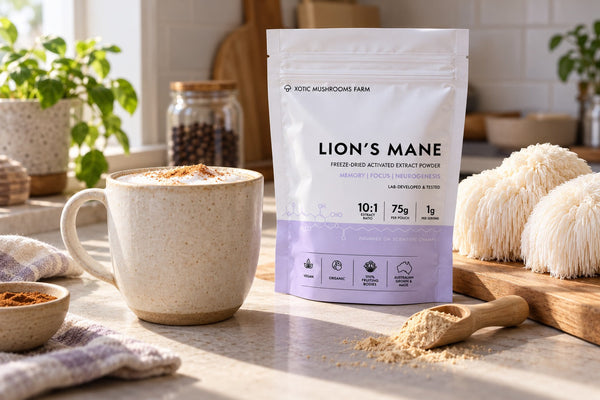
When to Take Lion's Mane: Morning, Afternoon or Night?When to take Lion's Mane comes down to routine. Compare morning, afternoon and night, with coffee or food,...
17 October 2026
When to Take Lion's Mane: Morning, Afternoon or Night?When to take Lion's Mane comes down to routine. Compare morning, afternoon and night, with coffee or food,...
 17 October 2026
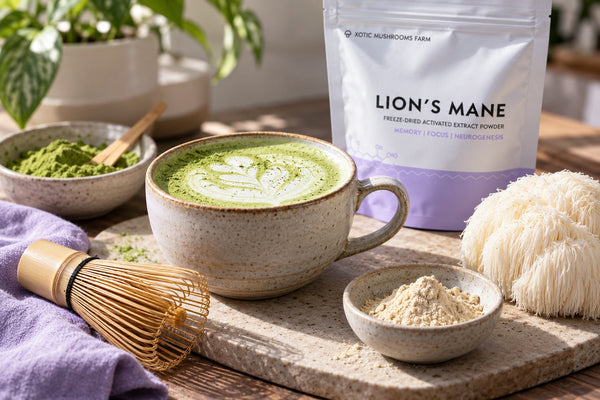
Mushroom Matcha: What It Is and How to Make ItMushroom matcha blends matcha green tea with a mushroom extract such as Lion's Mane. Learn what it is,...
17 October 2026
Mushroom Matcha: What It Is and How to Make ItMushroom matcha blends matcha green tea with a mushroom extract such as Lion's Mane. Learn what it is,...
 17 October 2026
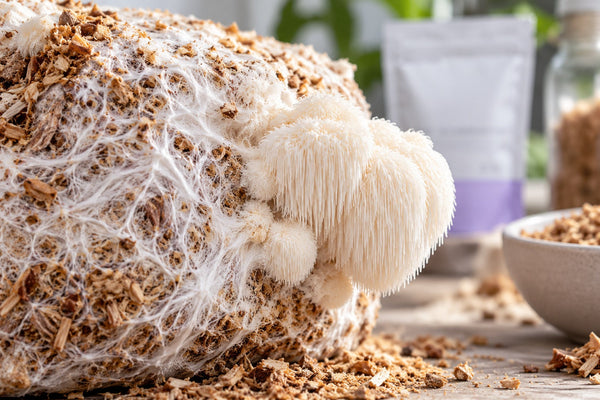
What Is Mycelium, and Why Does It Matter in Supplements?What is mycelium? Learn how this root-like fungal network differs from the mushroom fruiting body and why it...
17 October 2026
What Is Mycelium, and Why Does It Matter in Supplements?What is mycelium? Learn how this root-like fungal network differs from the mushroom fruiting body and why it...
Get farm and supply updates
New batches, lab results and bulk pricing, a few times a year.