Functional Mushrooms in Australia: A Plain-English Guide

Introduction
Interest in functional mushrooms in Australia has grown quickly, and the shelves are now full of powders, capsules and coffee blends with unfamiliar names. This plain English guide explains what functional mushrooms are, introduces the main species, untangles extract, powder and capsule labels, and outlines how these products are regulated here. It also covers what the research does and does not say, and how to choose a quality product, so you can make sense of the category before you spend a dollar.
What Are Functional Mushrooms?
Functional mushrooms are edible or traditionally used mushrooms that people consume for reasons beyond basic nutrition, usually as powders, extracts or capsules rather than as a vegetable on the plate. The term is a marketing and category label, not a scientific or legal one.
Many familiar culinary mushrooms, such as shiitake and Lion's Mane, sit comfortably in both camps: you can cook them fresh or buy them as an extract. Others, like reishi and chaga, are too tough or bitter to eat whole, so they are almost always sold as teas, powders or extracts.
What links them is a shared set of compounds that researchers find interesting, especially beta-glucans, a type of polysaccharide found in mushroom cell walls, along with species specific compounds such as triterpenes in reishi or hericenones and erinacines in Lion's Mane.
You will also see the word "adaptogen" on many labels. It is a popular marketing term for herbs and mushrooms traditionally used to help the body cope with everyday stress. It is not a recognised regulatory category in Australia, so treat it as description rather than a promise.
The Main Functional Mushrooms at a Glance

The five functional mushrooms Australians most often see on labels are Lion's Mane, reishi, cordyceps, turkey tail and chaga. Each has its own history and research focus.
| Mushroom | Latin name | Traditionally used for / often researched for | Common forms |
|---|---|---|---|
| Lion's Mane | Hericium erinaceus | Culinary use; often researched for cognitive and nerve related compounds | Fresh, extract powder, capsules |
| Reishi | Ganoderma lingzhi / lucidum | Traditionally used in Chinese wellness practices for calm and vitality | Extract powder, tea, capsules |
| Cordyceps | Cordyceps militaris | Often researched for energy and exercise performance | Extract powder, capsules |
| Turkey tail | Trametes versicolor | Often researched for its polysaccharides and beta-glucans | Extract powder, capsules, tea |
| Chaga | Inonotus obliquus | Traditionally brewed as a tea in northern Europe and Russia | Tea chunks, extract powder |
Lion's Mane
Lion's Mane is a white, shaggy culinary mushroom with a mild, seafood like taste. It is often researched for compounds called hericenones and erinacines and is commonly associated with focus and cognitive wellness routines. It is the one species Xotic Mushrooms grows and sells.
Reishi
Reishi is a hard, glossy, bitter mushroom with a long history in traditional Chinese practice, where it was valued as a tonic. Because it is woody, it is almost always sold as a hot water or dual extract, usually taken in the evening by those who use it.
Cordyceps
Most cordyceps sold today is Cordyceps militaris, cultivated rather than wild harvested. It is often researched for energy, endurance and exercise performance, which is why it features in pre workout and morning blends.
Turkey Tail
Turkey tail is a thin, banded bracket fungus found on logs worldwide, including in Australia. It is too tough to eat, so it is used as an extract or tea, and it is often researched for its polysaccharide and beta-glucan content.
Chaga
Chaga grows as a dark, crusty mass on birch trees in cold climates. It is traditionally brewed as a tea. Chaga is naturally high in oxalates, so people with kidney concerns should speak with a GP before using it regularly.
For a closer comparison, read how Lion's Mane compares to reishi and cordyceps.
Extracts, Powders and Capsules: What's the Difference?
Whole mushroom powder is simply dried and milled mushroom, an extract has been processed to concentrate compounds, and a capsule is just a convenient container for either. The label should tell you which one you are buying.
Extraction matters because mushroom cell walls are made of chitin, which humans do not digest well. Hot water extraction draws out water soluble compounds such as beta-glucans, while ethanol extraction draws out alcohol soluble compounds such as triterpenes. A dual extraction uses both. Extracts often state a ratio, such as 10:1, which tells you how much raw mushroom went into each unit of finished powder.
The other key label detail is fruiting body versus mycelium. The fruiting body is the mushroom you can see. Mycelium is the root like network, often grown on grain such as rice or oats; when that grain is harvested with the mycelium, it can add starch to the finished powder. Our article on fruiting body vs mycelium explains why this matters.
| Label term | What it means | What to check |
|---|---|---|
| Fruiting body | The mushroom itself | Stated clearly on label |
| Mycelium on grain | Root network plus substrate | Possible starch content |
| Extract ratio, e.g. 10:1 | Raw mushroom per unit of powder | Backed by testing |
| Beta-glucans | Measured polysaccharide content | Lab name and date |
How Functional Mushrooms Are Regulated in Australia
In Australia, functional mushroom products are sold either as foods under the Food Standards Code or as listed complementary medicines regulated by the Therapeutic Goods Administration, and which category applies shapes what the label can claim.
Products sold as foods, such as plain mushroom powders, must meet Food Standards Australia New Zealand requirements and cannot make therapeutic claims. Products sold as listed complementary medicines carry an AUST L number and must hold evidence for the permitted indications they use, as set out by the TGA's complementary medicines framework.
That is why responsible sellers use careful wording such as "traditionally used for" or "may support". Be cautious of any functional mushroom product that claims to treat, cure or prevent a disease. Those claims are not permitted for these products and are a red flag about the seller.
Importation is another factor. Many mushroom powders on the Australian market are imported and repackaged, while a smaller number are grown and processed locally. Neither is automatically better, but locally grown products are often easier to trace back to the farm.
What Does the Research Say?
Research on functional mushrooms is active and promising in places, but much of it is early stage, done in the lab or on animals, and human studies are often small. That is the honest summary.
Lion's Mane, for example, is often researched for compounds linked to nerve growth factor in laboratory settings, and a handful of small human studies have explored cognitive wellness. Cordyceps has been studied in relation to exercise performance, and beta-glucans from several species are widely studied. A search of published reviews on mushroom research shows how broad the field has become.
What the research does not support is the idea that any mushroom is a cure for anything. The quality of a product, its dose and the form used all vary widely between studies and between products on the shelf.
A sensible approach is to treat functional mushrooms as part of a balanced routine, follow the label serving, and talk to your GP or pharmacist if you take medication or have a health condition.
How to Choose a Quality Functional Mushroom Product

A quality functional mushroom product names the species, states fruiting body or mycelium, gives an extract ratio if it is an extract, and is backed by recent independent testing. Use this short checklist:
- Species and Latin name printed on the label.
- Part used: fruiting body, mycelium, or both.
- Form: whole powder or extract, with ratio.
- Testing: beta-glucans, heavy metals and microbial results from a named lab. Our guide on how to check Lion's Mane lab results walks through it.
- Origin: where it was grown and processed.
- Careful claims: no disease or cure language.
As an example of what transparency can look like, our Lion's Mane extract powder is a 10:1 hot water and ethanol fruiting body extract, grown in Thomastown, Victoria, with no starch, mycelium, grain or fillers. A Symbio Laboratories test (S2162602 [R01], 13 May 2026) recorded 32.2% beta-glucans in the tested extract powder blend with 1% BioPerine. This is a sample-specific result, not a guarantee for every finished product.
Buying for a Brand or Business?
Brands, cafes and manufacturers building a functional mushroom product need a full specification sheet, a current COA, clear MOQ and a sample before committing. Xotic supplies Lion's Mane extract in 1 kg and 5 kg bulk packs and offers white label Lion's Mane for Australian brands.
Conclusion
Functional mushrooms in Australia range from culinary Lion's Mane to woody reishi and chaga, sold as foods or listed medicines. Check the species, part used, extraction and testing, and be wary of big claims. If Lion's Mane is your starting point, explore our Australian grown extract powder and capsules. Brands can ask about white label supply.
FAQs
Do functional mushrooms really work?
Research on functional mushrooms is active, and some species are often researched for specific compounds such as beta-glucans, but much of the evidence is early stage and human studies are often small. Results also depend on product quality and form. Treat them as part of a balanced routine, not a fix, and speak to your GP if unsure.
What is the best functional mushroom?
There is no single best functional mushroom, because each species is traditionally used and researched for different things. Lion's Mane is commonly associated with focus routines, cordyceps with energy and exercise, and reishi with evening wind down rituals. The best choice is a well tested product of the species that fits your goals.
Are functional mushrooms legal in Australia?
Yes. Functional mushrooms such as Lion's Mane, reishi, cordyceps, turkey tail and chaga are legal to buy in Australia. They are sold as foods under the Food Standards Code or as listed complementary medicines regulated by the TGA. They are different from psychedelic mushrooms, which are controlled substances.
Where can you buy functional mushrooms in Australia?
You can buy functional mushrooms in Australia from health food stores, pharmacies, online retailers and directly from Australian growers. Buying direct from a grower usually gives you the clearest information about origin, extraction and testing, while stores offer convenience. Whichever you choose, check the label for species, part used and testing.
Are functional mushrooms psychedelic?
No. Functional mushrooms such as Lion's Mane, reishi, cordyceps, turkey tail and chaga do not contain psilocybin and are not psychoactive. They are edible or traditionally used species sold as foods or complementary medicines. Psilocybin mushrooms are a separate group and are tightly controlled in Australia.
Can you take more than one functional mushroom at a time?
Many products combine several functional mushrooms, and people often use more than one. Follow each product's label serving and avoid doubling up on the same species across products. If you take medication, are pregnant or breastfeeding, or manage a health condition, check with your GP or pharmacist before combining supplements.
Source Lion’s Mane extract powder at scale
Australian-grown 10:1 fruiting body extract in 1 kg and 5 kg bags, with named-lab testing and white label supply for growing brands.
Request a sample or quote
Related articles
 7 October 2026
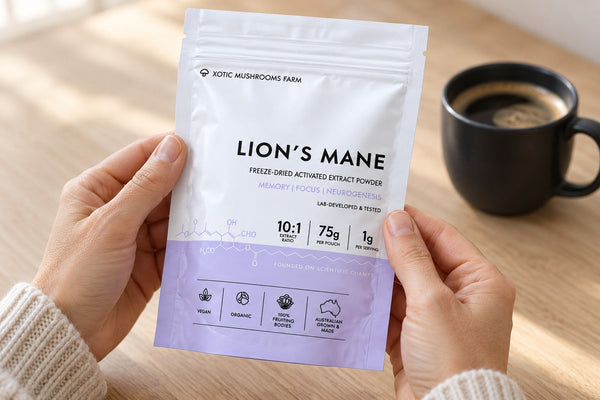
Best Mushroom Coffee in Australia: What to Look For on the LabelLooking for the best mushroom coffee in Australia? Use this label checklist to compare mushroom type, extract ratio,...
7 October 2026
Best Mushroom Coffee in Australia: What to Look For on the LabelLooking for the best mushroom coffee in Australia? Use this label checklist to compare mushroom type, extract ratio,...
 7 October 2026
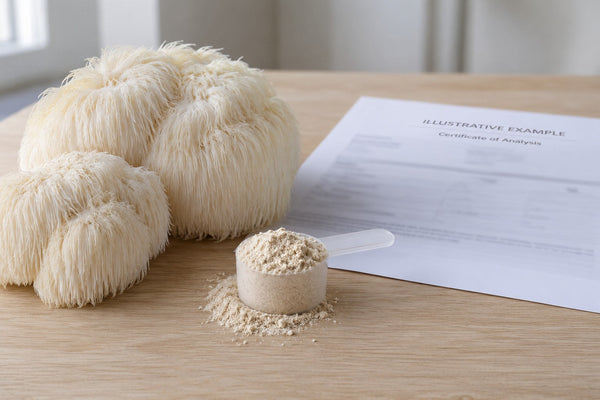
Mushroom Extract in Australia: What Buyers Should CheckBuying mushroom extract in Australia? Learn how to check the extract ratio, fruiting body source, beta-glucans, extraction method,...
7 October 2026
Mushroom Extract in Australia: What Buyers Should CheckBuying mushroom extract in Australia? Learn how to check the extract ratio, fruiting body source, beta-glucans, extraction method,...
 7 October 2026
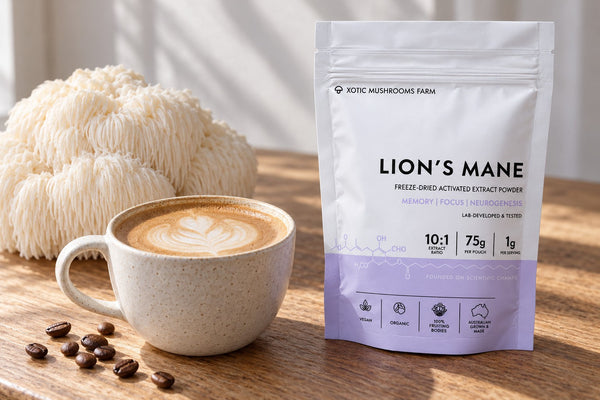
Mushroom Coffee in Australia: What It Is and How to ChooseA clear guide to mushroom coffee in Australia: what it is, which mushrooms are used, what to check...
7 October 2026
Mushroom Coffee in Australia: What It Is and How to ChooseA clear guide to mushroom coffee in Australia: what it is, which mushrooms are used, what to check...
Get farm and supply updates
New batches, lab results and bulk pricing, a few times a year.