Fruiting Body vs Mycelium on Grain: What to Ask a Lion's Mane Supplier

Introduction
The Lion's Mane fruiting body vs mycelium question comes down to which part of the organism is used and what else ends up in the powder. This guide sets out how each is produced, what testing can and cannot show, how the compound profiles differ, and the questions to ask any supplier. In the interest of transparency, Xotic Mushrooms produces a fruiting body extract, so we have aimed to present both sides fairly and cite independent sources.
What is the difference between fruiting body and mycelium?
The fruiting body is the visible mushroom, while mycelium is the thread-like network that grows through the substrate and produces it. Both are genuine parts of Hericium erinaceus.
The fruiting body is the part traditionally harvested and eaten. It forms when mycelium has colonised its substrate and conditions trigger fruiting.
Mycelium is the vegetative stage. Commercially it is grown either in liquid culture (fermentation), where it can be separated from the growth medium, or on solid grain such as rice or oats, often called myceliated grain or mycelium on grain.
The debate is mostly about the second method. When mycelium is grown on grain and the whole mass is dried and milled, the finished powder contains both mycelium and the grain it grew on.
How is each produced?
Fruiting body products start from harvested mushrooms, while mycelium-on-grain products start from inoculated grain that is dried and milled together with the mycelium. The production route shapes the composition of the final powder.
Fruiting body
Mushrooms are grown on a substrate, harvested, dried and then milled or extracted. Ours grows on Tasmanian oak sawdust and Australian soya husk, then is freeze-dried and dual-extracted.
Mycelium on grain
Sterilised grain is inoculated and colonised over several weeks, usually before fruiting. The colonised grain is dried and milled whole, since separating mycelium from grain is impractical.
Production time and cost differ between the routes, but they depend heavily on scale, facility, labour and yield, so broad statements that one route is always cheaper should be treated with caution. Ask suppliers about their own process rather than relying on category generalisations.
You can see our own route on the farm and process page.
What can testing show?
Testing can separate beta-glucans from alpha-glucans, which is one of the most useful checks when comparing fruiting body and mycelium-on-grain products. A total polysaccharide figure alone cannot.
Grain is rich in starch, which is a polysaccharide made of alpha-glucans. A total polysaccharide test counts starch, so a myceliated grain product can report a high polysaccharide figure without a correspondingly high beta-glucan content. Enzymatic methods, such as the mushroom and yeast beta-glucan assay from Megazyme, report total glucan, alpha-glucan and beta-glucan separately.
The method behind that assay is described in McCleary and Draga (2016), Measurement of beta-glucan in mushrooms and mycelial products, Journal of AOAC International. The paper measures total glucan by acid hydrolysis, measures alpha-glucan (starch and glycogen) plus free glucose and glucose from sucrose by a separate enzymatic step, and calculates beta-glucan as the difference. It also found that the choice of hydrolysis method changed results for some species, and that fully enzymatic methods generally gave lower beta-glucan values.
That paper has limits worth stating. It is a method-development study, not a survey of Lion's Mane products, so it does not by itself show how much starch any particular mycelium product contains. Results also depend on the exact procedure a laboratory follows.
Alpha-glucan is not a direct measure of grain
An alpha-glucan result is a useful signal, but it is not automatically a direct measurement of grain content. Under the method definition above, the alpha-glucan figure includes starch and glycogen, and the assay also captures free glucose and glucose from sucrose. Fungi produce their own glycogen, and added carriers such as maltodextrin are also alpha-glucans. So a high alpha-glucan result in a mycelium product is consistent with grain starch, but it could also reflect other sources. Read the assay definition on the report, and ask the supplier what the figure includes.
Results vary by product, so individual testing matters more than category assumptions. Our own results, with laboratory, sample and date, are listed on the specifications and testing page.
Hericenones and erinacines
Hericenones are found mainly in the fruiting body, while erinacines are found mainly in the mycelium, and both are often researched for their potential role in nerve health. This is the strongest argument mycelium producers make.
Laboratory and animal studies have looked at both compound families for their possible interaction with nerve growth factor. Human evidence remains limited, so neither form can claim a proven outcome. Responsible wording is that Lion's Mane is often researched for cognitive and nerve health and may support cognitive wellbeing.
Erinacine content depends heavily on strain and growing conditions, and in grain-grown products it is diluted by the grain. Measuring hericenones and erinacines requires suitable reference standards and validated methods, so ask any supplier which laboratory measured them and how. Measured hericenone content for our extract is to confirm.
Comparison at a glance
| Factor | Fruiting body | Mycelium on grain |
|---|---|---|
| Part used | The mushroom itself | Mycelium plus grain substrate |
| Starch from grain | None from grain | Can be significant; varies by product |
| Main compound family researched | Hericenones | Erinacines |
| Production time and cost | Generally longer; cost depends on scale and process | Generally shorter; cost depends on scale and process |
| Traditional use | Long culinary and traditional history | Modern cultivation method |
| Key test to request | Beta-glucans by named method | Beta-glucans and alpha-glucans, with the assay definition |
Questions to ask any Lion's Mane supplier
Ask suppliers what part is used, what it was grown on, and how it tested for beta-glucans and alpha-glucans, with the laboratory and date. Clear answers should come quickly.
- Is the product fruiting body, mycelium, or a blend, and in what proportion?
- If mycelium, was it grown on grain or in liquid culture?
- Is the grain substrate included in the final powder?
- What are the beta-glucan and alpha-glucan results, by which method, and what does the alpha-glucan figure include?
- Which laboratory tested it, when, and on which batch?
- Are any carriers or fillers added after extraction?
Our guide to Lion's Mane extract specifications covers the rest of the spec sheet.
Conclusion
Both fruiting body and mycelium are genuine Lion's Mane, but mycelium on grain can carry starch that changes what you are paying for. Ask for part used, substrate and separate beta-glucan and alpha-glucan results, and check what each figure includes. If you are comparing suppliers, request our fruiting body sample and reports.
FAQs
Is mycelium Lion's Mane real Lion's Mane?
Yes. Mycelium is a genuine part of Hericium erinaceus, the root-like network that produces the mushroom. The concern is not authenticity but composition: when mycelium is grown on grain and milled together, the finished powder can contain a large share of starch from the grain.
Why does grain matter in a Lion's Mane supplement?
Grain is high in starch, and when mycelium is grown on grain the two cannot practically be separated. Starch can raise total polysaccharide figures without adding beta-glucans, so a product may look strong on a label while containing less of the compounds buyers expect.
Does fruiting body or mycelium contain erinacines?
Erinacines are found mainly in the mycelium, while hericenones are found mainly in the fruiting body. Both are often researched for their potential role in nerve health, though human evidence is limited. Actual content varies by strain, growing method and processing.
How can I check a Lion's Mane product for starch?
Ask the supplier for an enzymatic glucan analysis that reports beta-glucans and alpha-glucans separately, from a named laboratory with a date. Alpha-glucans include starch, but can also include glycogen, sugars or added carriers, so check what the assay counts. A total polysaccharide figure on its own cannot tell you how much of the product is starch.
Is fruiting body Lion's Mane always better than mycelium?
Not automatically. Fruiting body products avoid grain starch and match traditional use, while some liquid-culture mycelium products are well characterised. The fairest way to compare is on part used, substrate, and independent beta-glucan and alpha-glucan results rather than on the category name alone.
Source Lion’s Mane extract powder at scale
Australian-grown 10:1 fruiting body extract in 1 kg and 5 kg bags, with named-lab testing and white label supply for growing brands.
Request a sample or quote
Related articles
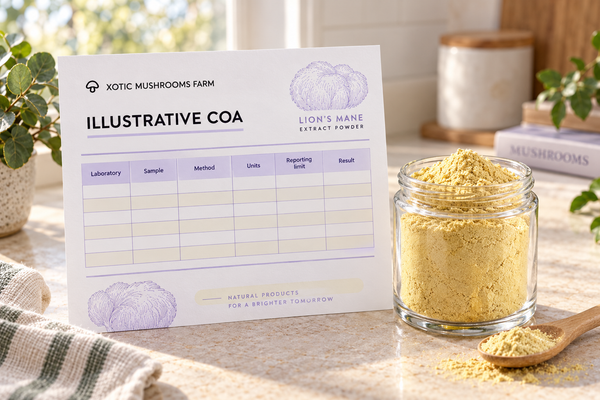 7 October 2026
How to Read a Lion's Mane COA (Certificate of Analysis)Learn how to read a Lion's Mane COA section by section: lab accreditation, batch ID, test methods, units,...
7 October 2026
How to Read a Lion's Mane COA (Certificate of Analysis)Learn how to read a Lion's Mane COA section by section: lab accreditation, batch ID, test methods, units,...
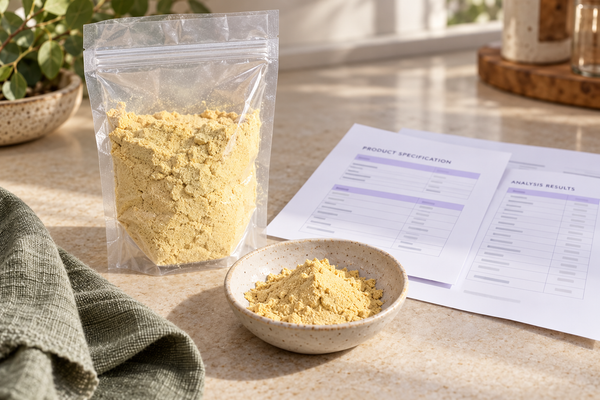 7 October 2026
Lion's Mane Extract Specifications ExplainedLion's Mane extract specifications explained: ratio, beta-glucans and test method, solubility, mesh, moisture, heavy metals and micro, line...
7 October 2026
Lion's Mane Extract Specifications ExplainedLion's Mane extract specifications explained: ratio, beta-glucans and test method, solubility, mesh, moisture, heavy metals and micro, line...
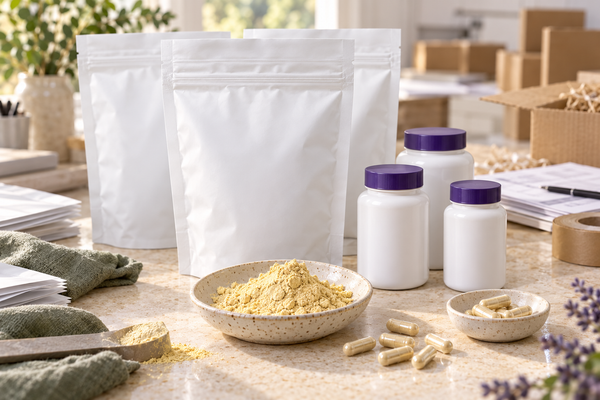 7 October 2026
How White Label Lion's Mane Supply Works: From Sample to First OrderHow white label Lion's Mane supply works, step by step: enquiry, specs and sample, quote, production and dispatch,...
7 October 2026
How White Label Lion's Mane Supply Works: From Sample to First OrderHow white label Lion's Mane supply works, step by step: enquiry, specs and sample, quote, production and dispatch,...
Get farm and supply updates
New batches, lab results and bulk pricing, a few times a year.