Lion's Mane Powder: What It Is, How It's Made and How to Use It

Introduction
Lions mane powder has become one of the most popular ways to add this distinctive mushroom to a daily routine, but not every powder is made the same way. Some are simply dried and milled mushroom, while others are concentrated extracts. This guide explains what Lion's Mane powder is, how it is made from harvest to pouch, what to check before you buy, and simple ways to use it in coffee, smoothies and cooking, drawing on how we grow and extract it ourselves in Victoria.
What Is Lion's Mane Powder?
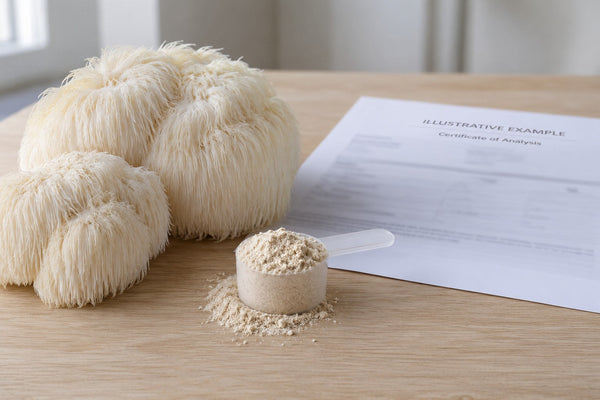
Lion's Mane powder is a dried, finely ground form of the Lion's Mane mushroom (Hericium erinaceus), sold either as whole mushroom powder or as a concentrated extract powder. Both are made from the mushroom, but they are processed differently and suit different uses.
Lion's Mane is an edible mushroom with long white spines that look a little like a lion's mane. It has been traditionally used in East Asian cooking and wellness practices, and it is often researched for compounds such as beta-glucans, hericenones and erinacines. You can browse the published research on Hericium erinaceus to see how active that field is.
| Feature | Whole mushroom powder | Extract powder |
|---|---|---|
| Process | Dried and milled | Dried, then extracted with water and/or ethanol |
| Concentration | 1:1 | Stated ratio, for example 10:1 |
| Solubility | Mostly insoluble fibre | Mixes more easily into drinks |
| Typical use | Cooking, broths, baking | Daily drinks, smoothies, capsules |
Neither form is "wrong". Whole powder keeps all of the mushroom's fibre and protein, while extract is designed to concentrate compounds that are locked inside the mushroom's tough cell walls. For a closer look, read our guide to extract vs whole mushroom powder.
How Lion's Mane Powder Is Made

Lion's Mane powder is made by growing the mushroom, harvesting the fruiting bodies, drying them, and then either milling them into whole powder or extracting them into a concentrated powder. Every step affects the finished product.
Here is how we make our extract powder at Xotic Mushrooms in Thomastown, Victoria:
- Grow: Lion's Mane is grown on Tasmanian oak hardwood sawdust and Australian soya husk, not on grain.
- Harvest: only the fruiting body, the mushroom itself, is harvested. No mycelium or substrate goes into the powder.
- Freeze dry: fresh fruiting bodies are freeze dried at minus 82 °C to remove water gently.
- Extract: a hot water and ethanol dual extraction draws out water soluble compounds such as beta-glucans and alcohol soluble compounds.
- Concentrate and dry: the result is a 10:1 extract made only from fruiting bodies.
Whole mushroom powders skip step four. Some products on the market use mycelium grown on grain instead of fruiting bodies, which can carry starch from the grain into the powder. Ours contains no starch, mycelium, grain or fillers. You can see the full journey on our farm and process page.
What to Look for in a Lion's Mane Powder
A good Lion's Mane powder states whether it is whole or extract, uses fruiting body, gives an extract ratio, and is backed by recent lab testing. These four details tell you more than any marketing copy.
Testing is where many products go quiet. Our specifications and testing page lists a Symbio Laboratories result of 32.2% beta-glucans in the tested extract powder blend with 1% BioPerine (Symbio S2162602 [R01], 13 May 2026), a sample-specific result rather than a guarantee for every finished product, an AEGIC result of 24.5 g/100 g on an earlier sample with heavy metals and nutrition, and RMIT University microbial results showing E. coli and coliforms not detected. Results apply to the samples tested.
For a full shopping checklist covering origin, certifications and price, see our guide to buying Lion's Mane in Australia.
How to Use Lion's Mane Powder

The easiest way to use Lion's Mane powder is to stir the label serving into a drink you already have each day, such as coffee, tea, a smoothie or hot chocolate. Extract powder dissolves more readily than whole powder.
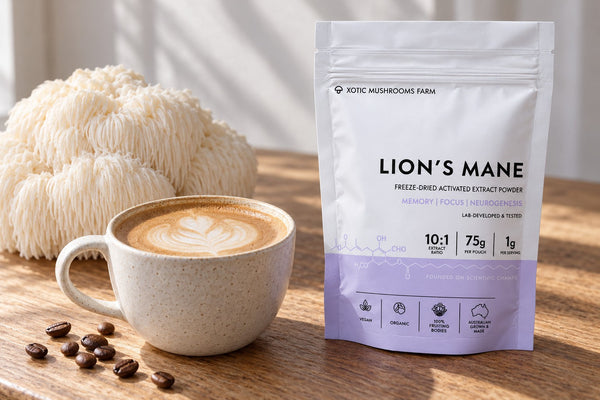
- Coffee: stir into a latte or long black. Our Lion's Mane latte recipe is a good starting point.
- Smoothies: blend with banana, oats and milk to mask the earthy taste.
- Cacao or tea: works well in hot cacao or chai.
- Cooking: whole powder suits soups, broths and sauces.
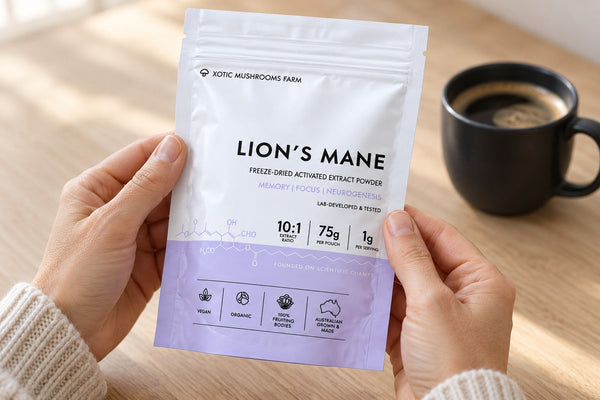
Our label serving for extract powder is 1 g, which gives 75 serves from a 75 g pouch. Follow the serving on your product's label. For more ideas, read how to use Lion's Mane extract powder, or see our Lion's Mane extract powder in 50 g to 1.2 kg pouches.
Buying for a Brand or Business?
If you are formulating a coffee blend, capsule or cafe menu item, you need a specification sheet, current COA, MOQ and a sample first. We supply 1 kg and 5 kg bulk packs and white label Lion's Mane.
Conclusion
Lion's Mane powder comes as whole mushroom powder or concentrated extract, and how it is grown, dried and extracted shapes what you get. Look for fruiting body, a stated ratio and recent testing, then add it to a drink you enjoy. Explore our Australian grown extract powder, and brands can ask about bulk and white label supply.
FAQs
What does Lion's Mane powder taste like?
Lion's Mane powder has a mild, earthy, slightly savoury taste. Extract powder tends to be a little more concentrated in flavour than whole powder, but at a 1 g serve it blends easily into coffee, cacao, smoothies or chai. Stronger flavoured drinks hide it best, so start with something you already enjoy.
Is Lion's Mane powder the same as Lion's Mane extract?
Not always. Whole Lion's Mane powder is dried and milled mushroom, while extract powder has been processed with hot water, ethanol or both to concentrate compounds such as beta-glucans. Extracts usually state a ratio, such as 10:1. Check the label, because "powder" can describe either product.
Can you put Lion's Mane powder in coffee?
Yes. Coffee is one of the most popular ways to use Lion's Mane powder. Stir the label serving into a brewed coffee or latte and mix well. Extract powder dissolves more easily than whole powder. Lion's Mane is commonly associated with focus routines, which is why many people pair it with their morning coffee.
How much Lion's Mane powder should I use per serve?
Follow the serving size on your product's label, because concentration differs between whole powders and extracts. For our Lion's Mane extract powder, the label serving is 1 g, which gives 75 serves from a 75 g pouch. If you have a health condition or take medication, check with your GP before starting.
Is Lion's Mane safe to take daily?
Lion's Mane is an edible mushroom that is generally well tolerated when used at label servings, though some people report mild digestive discomfort. Avoid it if you have a mushroom allergy. If you are pregnant, breastfeeding, take medication or manage a health condition, speak with your GP or pharmacist before daily use.
Is Lion's Mane powder legal in Australia?
Yes. Lion's Mane is an edible culinary mushroom that is legal to grow, sell and buy in Australia, and it is not psychoactive. Products that make therapeutic claims fall under Therapeutic Goods Administration rules, so buy from sellers who describe their product carefully and publish clear labelling.
Source Lion’s Mane extract powder at scale
Australian-grown 10:1 fruiting body extract in 1 kg and 5 kg bags, with named-lab testing and white label supply for growing brands.
Request a sample or quote
Related articles
 7 October 2026
Best Mushroom Coffee in Australia: What to Look For on the LabelLooking for the best mushroom coffee in Australia? Use this label checklist to compare mushroom type, extract ratio,...
7 October 2026
Best Mushroom Coffee in Australia: What to Look For on the LabelLooking for the best mushroom coffee in Australia? Use this label checklist to compare mushroom type, extract ratio,...
 7 October 2026
Mushroom Extract in Australia: What Buyers Should CheckBuying mushroom extract in Australia? Learn how to check the extract ratio, fruiting body source, beta-glucans, extraction method,...
7 October 2026
Mushroom Extract in Australia: What Buyers Should CheckBuying mushroom extract in Australia? Learn how to check the extract ratio, fruiting body source, beta-glucans, extraction method,...
 7 October 2026
Mushroom Coffee in Australia: What It Is and How to ChooseA clear guide to mushroom coffee in Australia: what it is, which mushrooms are used, what to check...
7 October 2026
Mushroom Coffee in Australia: What It Is and How to ChooseA clear guide to mushroom coffee in Australia: what it is, which mushrooms are used, what to check...
Get farm and supply updates
New batches, lab results and bulk pricing, a few times a year.