
How to Check a Lion's Mane Product's Lab Results

"Lab tested" is printed on plenty of packs, but Lion's Mane lab results are only useful if you know what to look for.
This guide gives you a simple five-point checklist: who did the testing, whether the report matches the product, how recent it is, what was actually tested, and the red flags that suggest you should ask more questions.
It is written for everyday buyers. If you want the detailed, line-by-line version, our guide to reading a certificate of analysis goes further.
1. Who did the testing?
Look for the name of an independent laboratory, not just the words "lab tested". A real report names the lab, gives a report or certificate number and usually shows the lab's address.
Independent, third-party labs have no stake in the result, which makes their reports more useful than a brand's own internal checks. In Australia, many testing labs hold NATA accreditation, which shows they have been assessed for the specific tests they run.
If a brand says its product is tested but will not name the lab, that is worth noting. It does not prove anything is wrong, but it means you cannot check the claim.
2. Is it the same product?
Make sure the report describes the product you are buying, in the same form. A test on whole mushroom powder does not tell you about an extract. A test on a blend does not describe a single-ingredient product. A test on capsules from one brand does not cover another brand that uses a similar name.
Read the sample description on the report and compare it with the pack. Words like "extract", "fruiting body" and "mycelium" should line up, and knowing what 10:1 and fruiting body mean on a label makes the match easier to spot.
Also check whether the result is for a specific batch or a representative sample. Both are common, but they mean different things.
3. How recent is it?

Check the date on the report and ask whether newer results exist. Growing conditions, raw materials and processes can change over time, so a report from several years ago tells you about that sample on that date.
An older report is not automatically a problem, particularly if the brand is open about it. What matters is that the date is shown clearly and the brand is honest about how its testing relates to what is on the shelf today.
4. What was tested?
A lab report only covers the tests listed on it, so read the list of analytes. For Lion's Mane, common tests include:
- Beta-glucans: a marker often measured in mushroom extracts. Results depend heavily on the test method used.
- Heavy metals: usually lead, cadmium, mercury and arsenic, reported in mg/kg.
- Microbiology: counts such as E. coli, coliforms, yeasts and moulds.
- Pesticides: not always included, so check rather than assume.
If something you care about is not on the list, it was not tested in that report. It is fair to ask the brand whether it has other results.
Red flags to watch for
Most warning signs are about missing information rather than bad numbers. Be cautious when you see:
- "Lab tested" or "third-party tested" with no lab name or report.
- Results with no units or test method.
- A report for a different product, form or brand.
- No date, or only very old results with no explanation.
- Cropped screenshots instead of a full report.
- Big percentage claims with no lab report behind them.
- Lab results used to suggest a product treats or cures a condition.
A lab report shows what is in a sample. It is not evidence about what a product does for your health, and no honest brand should present it that way.
What our results cover
We publish our lab results, labs and dates, and we are clear about their scope. Our extract has been tested by independent Australian laboratories for markers including beta-glucans and heavy metals, and our whole mushroom powder has been tested by a government laboratory for nutritional values.
Those results relate to the samples and dates shown on the page. We do not yet issue per-batch certificates; that is our next step. Pesticides have not yet been tested, and we say so plainly.
Our powder and Lion's Mane capsules are made from 100% Hericium erinaceus fruiting body as a 10:1 extract, grown on our farm in Thomastown, Victoria. Knowing how to read a Lion's Mane COA line by line makes any report easier to check.
Conclusion
Checking Lion's Mane lab results takes a few minutes: find the lab, match the product, check the date, read what was tested and watch for red flags.
Brands that are open about the limits of their testing are usually the ones worth trusting. If anything is unclear, ask before you buy.
FAQs
1. What does third-party tested mean for Lion's Mane?
Third-party tested means an independent laboratory, not the brand itself, analysed a sample of the product. A genuine claim should be backed by a report naming the lab, the sample, the date and the tests run. Without those details, the phrase on its own does not tell you very much.
2. Should every batch of Lion's Mane be tested?
Per-batch testing gives the most direct link between a report and the product you receive, but many brands test representative samples instead. What matters most is honesty about scope. A good brand will tell you whether its results relate to your batch or to a sample tested on a specific date.
3. Can I ask a brand for its lab results?
Yes. It is reasonable to ask any supplement brand for its lab results or certificate of analysis. A brand confident in its testing will usually share the report or point you to where it is published, and will explain which product and date the results relate to.
4. What should a Lion's Mane lab test include?
Common tests include beta-glucans, heavy metals such as lead, cadmium, mercury and arsenic, and microbiology such as E. coli and yeasts and moulds. Some reports also cover pesticides or nutrition. A report only covers the tests listed, so check the list before drawing conclusions.
5. Does a lab report show that Lion's Mane works?
No. A lab report shows what is in a sample, such as beta-glucan content or heavy metal levels. It is not evidence of any health effect. Lion's Mane is often researched for cognitive support, but lab results should be read as quality information only.
Source Lion’s Mane extract powder at scale
Australian-grown 10:1 fruiting body extract in 1 kg and 5 kg bags, with named-lab testing and white label supply for growing brands.
Request a sample or quote
Related articles
 17 October 2026
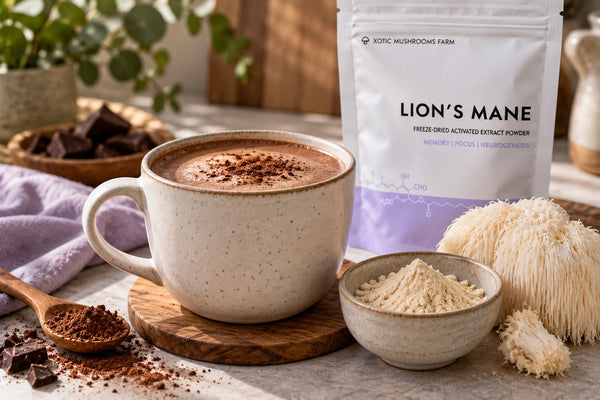
Mushroom Hot Chocolate: What It Is and How to Choose OneMushroom hot chocolate blends cocoa with a functional mushroom extract. Learn what is in it, which label details...
 17 October 2026
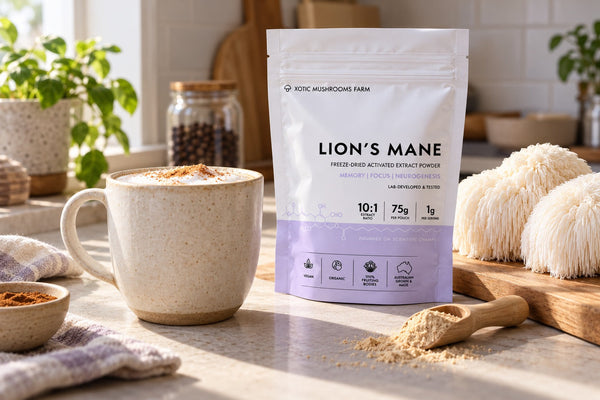
When to Take Lion's Mane: Morning, Afternoon or Night?When to take Lion's Mane comes down to routine. Compare morning, afternoon and night, with coffee or food,...
 17 October 2026
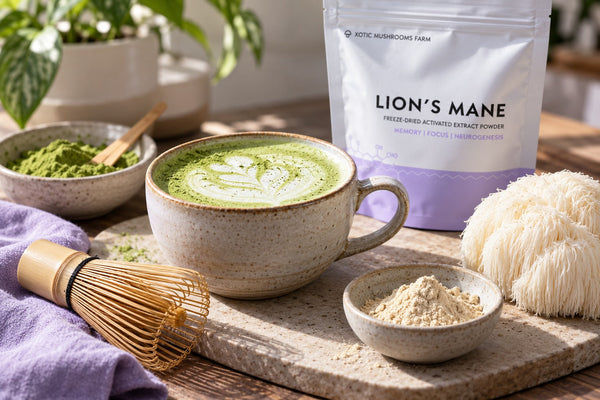
Mushroom Matcha: What It Is and How to Make ItMushroom matcha blends matcha green tea with a mushroom extract such as Lion's Mane. Learn what it is,...
Get farm and supply updates
New batches, lab results and bulk pricing, a few times a year.
More from Resources
- What "10:1" and "Fruiting Body" Mean on a Lion's Mane Label
- How to Use Lion's Mane Extract Powder in Coffee, Tea and Smoothies
- Lion's Mane Extract vs Whole-Mushroom Powder
- What Is Lion's Mane Extract? A Buyer's Guide
- Behind the Scenes of Lion’s Mane Extract Production
- How Lion’s Mane Compares to Reishi and Cordyceps