Mushroom Coffee in Australia: What It Is and How to Choose

Introduction
Mushroom coffee has moved from niche health stores to supermarket shelves and cafe menus. The trouble is that two products sharing the same label can be completely different underneath. This guide to mushroom coffee in Australia explains what it actually is, which mushrooms are used, what the research does and does not say, and how to read a label with confidence. We also cover making your own at home, plus a short section for cafes and coffee brands thinking about adding a mushroom blend.
What Is Mushroom Coffee?
Mushroom coffee is regular coffee blended with powdered extract from functional mushrooms such as Lion's Mane, reishi or chaga. It is not coffee made from mushrooms, and it does not taste like a mushroom risotto. The coffee does most of the flavour work, while the mushroom extract adds a mild, earthy note.
You will find it in three main formats in Australia. Instant blends combine freeze-dried or spray-dried coffee with mushroom extract in one sachet or tub. Ground blends mix mushroom powder into ground coffee for plunger, pour-over or espresso. Coffee alternatives drop the coffee altogether and use roasted grains, cacao or chicory with mushrooms, which suits people who want less caffeine.
A fourth option is simply adding a scoop of mushroom extract powder to the coffee you already drink. That route gives you full control over the coffee and the mushroom, and it is the approach many regular coffee drinkers end up preferring.
Whichever format you choose, the quality of the mushroom component matters more than the marketing. A blend can carry a hero ingredient name on the front while containing only a small amount of mushroom per serve, so the label is where the real story sits.
Which Mushrooms Are Used in Mushroom Coffee?

Lion's Mane is the most common mushroom in Australian mushroom coffee, often joined by reishi, chaga, cordyceps or turkey tail. Each brings a slightly different flavour and positioning.
- Lion's Mane (Hericium erinaceus): mild and slightly sweet. It is often researched for its relationship with cognitive function and is popular in morning focus blends.
- Reishi: bitter and woody. It is traditionally used in East Asian practice as a calming tonic, so it often appears in evening or caffeine-free blends.
- Chaga: earthy with a vanilla note, commonly associated with antioxidant content.
- Cordyceps: savoury, frequently positioned around energy and exercise.
- Turkey tail: mild, usually part of multi-mushroom mixes.
Single-mushroom coffees make it easier to know what you are getting, while multi-mushroom blends spread the serve across several species, which can mean less of each. For a closer comparison, see how Lion's Mane compares to reishi and cordyceps.
Lion's Mane is also the mushroom we grow ourselves, in Thomastown, Victoria, on Tasmanian oak hardwood sawdust and Australian soya husk. That local supply chain is unusual in a category where most mushroom ingredients are imported.
Is Mushroom Coffee Good for You?
Mushroom coffee can be a reasonable part of a balanced routine, but the evidence for specific benefits is still emerging and depends heavily on how much mushroom each serve contains. It should be seen as a food choice, not a treatment.
Research on Lion's Mane is growing. A 2023 trial in healthy adults, published in Nutrients via PubMed Central, looked at acute and chronic effects on cognition and mood, with mixed and modest results. Much of the remaining research is laboratory or animal work, so careful language such as may support is appropriate.
The coffee part still matters. Most mushroom coffees contain caffeine, sometimes less than a standard cup because mushroom powder takes up part of the serve. Food Standards Australia New Zealand has practical guidance on caffeine intake for adults. Lion's Mane itself contains no caffeine.
The main downsides are cost, taste for some people, and uncertainty about how much mushroom is really in a blend. People with mushroom allergies, those who are pregnant or breastfeeding, and anyone taking medication should check with a doctor first. Our guide to whether Lion's Mane is safe covers this in more depth.
Pre-Mixed Blend or Add Your Own Extract?
Pre-mixed blends win on convenience, while adding your own extract to your usual coffee wins on control, transparency and often value per serve. The right choice depends on how much you care about your coffee and how much mushroom you want.
| Factor | Pre-mixed mushroom coffee | Your coffee plus extract powder |
|---|---|---|
| Convenience | One scoop or sachet | Two steps, still quick |
| Coffee quality | Set by the brand, often instant | Any coffee you like, including espresso |
| Mushroom amount | Fixed, sometimes small or undisclosed | You choose, guided by the label serving |
| Transparency | Varies by brand | Single ingredient, easier to check |
| Caffeine | Fixed per serve | Fully adjustable, including decaf |
| Flexibility | Coffee only | Also works in tea, cacao and smoothies |
Many Australians are particular about their coffee, which is why the add-your-own approach is popular here. It keeps your favourite beans and brewing method, and the mushroom becomes an addition rather than a compromise.
Our Lion's Mane extract powder is designed for exactly this, with a label serving of 1 g that dissolves into hot coffee, tea or milk.
How to Choose Mushroom Coffee in Australia
Choose mushroom coffee by reading the label for the mushroom part used, the extract type and ratio, the amount per serve and published testing. Front-of-pack claims tell you very little on their own.
- Fruiting body or mycelium: fruiting body is the mushroom itself. Mycelium grown on grain can carry a lot of starch. Our guide to Lion's Mane extract vs whole mushroom powder explains the difference.
- Extract or plain powder: extracts are concentrated, often stated as a ratio such as 10:1.
- Milligrams per serve: look for a stated amount of each mushroom, not just a proprietary blend.
- Beta-glucans: a tested beta-glucan figure is a useful quality marker.
- Testing and origin: a COA, heavy metal and microbial testing, and a clear country of origin.
- Fillers and additives: check for added sugar, creamers, gums or flavours.
We publish our results on our specifications and testing page, including a Symbio Laboratories COA (S2162602 [R01], 13 May 2026) showing 32.2% beta-glucans in the tested extract powder blend with 1% BioPerine (a sample-specific result, not a guarantee for every finished product), AEGIC heavy metal testing and RMIT University microbial testing. Results apply to the samples tested.
How to Make Mushroom Coffee at Home

Making mushroom coffee at home takes under a minute: brew your usual coffee, stir in the label serving of extract powder, then add milk if you like.
- Brew your coffee as normal, whether espresso, plunger, pour-over or instant.
- Add 1 g of Lion's Mane extract powder (the label serving) to the cup.
- Stir well, or mix the powder with a splash of hot water first to avoid clumps.
- Top with steamed or cold milk, plant milk or extra water.
For a cafe-style version, follow our Lion's Mane latte recipe. Our guide on how to use Lion's Mane extract powder in coffee, tea and smoothies has more ideas, including iced and caffeine-free options.
Prefer no taste at all? Lion's Mane capsules (label serving 2 x 300 mg) let you keep your coffee exactly as it is.
For Cafes and Coffee Brands
Cafes and coffee brands can add a mushroom blend to their range using a consistent, documented extract rather than building one from scratch. The key questions are supply reliability, flavour impact and compliant menu wording.
A fine extract powder that dissolves cleanly suits both barista use and pre-mixed retail blends. Ask any supplier for a COA, the extract ratio, fruiting body confirmation and bulk formats. We supply Lion's Mane extract in 1 kg and 5 kg bulk formats, plus white label options.
Keep menu and pack copy to wording such as may support, and avoid disease or treatment claims. Learn more on our white label Lion's Mane page.
Conclusion
Mushroom coffee in Australia ranges from convenient instant blends to simply adding extract to your own brew. Read the label for fruiting body, extract ratio and testing, and choose the format that fits your routine. Try our Australian-grown Lion's Mane extract powder in your next coffee. Cafes and brands can enquire about bulk and white label supply.
FAQs
Is mushroom coffee good for you?
Mushroom coffee can fit into a balanced diet, but the evidence for specific benefits is still developing. Lion's Mane is often researched for cognitive function, with modest results in human trials so far. How much mushroom each serve contains matters a lot, so check the label rather than relying on front-of-pack claims.
What is the downside to mushroom coffee?
The main downsides are price, an earthy flavour some people dislike, and blends that disclose little about how much mushroom they contain. Some people notice mild stomach upset with any new food. If you have a mushroom allergy, take medication or are pregnant, speak with your doctor before trying it.
Does mushroom coffee have caffeine?
Most mushroom coffee contains caffeine from the coffee, though often a little less than a standard cup because mushroom powder replaces part of the serve. The mushrooms themselves, including Lion's Mane, contain no caffeine. Coffee alternatives made with cacao or roasted grains can be caffeine free.
Does mushroom coffee taste like mushrooms?
Not really. The coffee dominates the flavour, and good extract powder adds only a mild, earthy note. Lion's Mane is one of the gentler-tasting options, while reishi can be noticeably bitter. Adding milk or a little cacao softens any earthiness for people who are sensitive to it.
Can I add Lion's Mane to my normal coffee?
Yes. Stir the label serving of Lion's Mane extract powder, which is 1 g for our powder, into your usual coffee. It dissolves best in hot liquid, and mixing it with a splash of hot water first avoids clumps. This keeps your favourite beans and brewing method unchanged.
Where can I buy mushroom coffee in Australia?
Mushroom coffee is sold online, in health food stores, some supermarkets and a growing number of cafes. If you would rather build your own, you can buy Australian-grown Lion's Mane extract powder online from Xotic Mushrooms, with free shipping in Australia on orders over A$100.
Source Lion’s Mane extract powder at scale
Australian-grown 10:1 fruiting body extract in 1 kg and 5 kg bags, with named-lab testing and white label supply for growing brands.
Request a sample or quote
Related articles
 7 October 2026
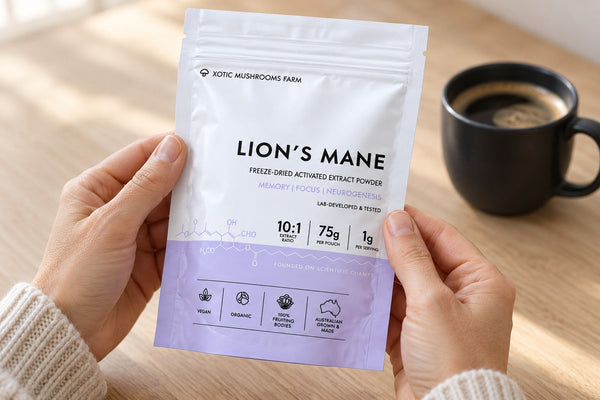
Best Mushroom Coffee in Australia: What to Look For on the LabelLooking for the best mushroom coffee in Australia? Use this label checklist to compare mushroom type, extract ratio,...
7 October 2026
Best Mushroom Coffee in Australia: What to Look For on the LabelLooking for the best mushroom coffee in Australia? Use this label checklist to compare mushroom type, extract ratio,...
 7 October 2026
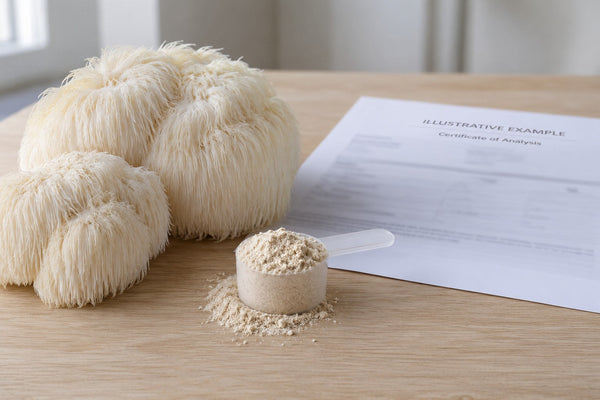
Mushroom Extract in Australia: What Buyers Should CheckBuying mushroom extract in Australia? Learn how to check the extract ratio, fruiting body source, beta-glucans, extraction method,...
7 October 2026
Mushroom Extract in Australia: What Buyers Should CheckBuying mushroom extract in Australia? Learn how to check the extract ratio, fruiting body source, beta-glucans, extraction method,...
 7 October 2026
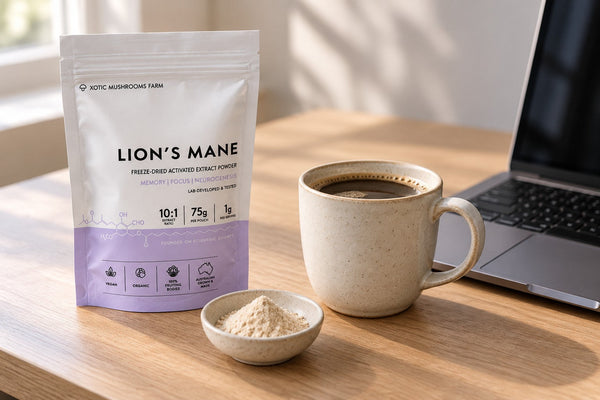
Does Lion's Mane Make You High?Does lion's mane make you high? No. Here is what people actually notice, plus drug tests, driving, work...
7 October 2026
Does Lion's Mane Make You High?Does lion's mane make you high? No. Here is what people actually notice, plus drug tests, driving, work...
Get farm and supply updates
New batches, lab results and bulk pricing, a few times a year.