Is Lion's Mane Psychedelic? No, and Here's Why

Introduction
Lion's Mane shares the word mushroom with psilocybin species, so it is no surprise people ask whether it will change how they think or feel. Is lion's mane psychoactive? No. It contains no psilocybin or psilocin, and it is eaten as a culinary mushroom around the world. This guide explains how Lion's Mane differs from so-called magic mushrooms, which compounds it actually contains, and where it sits under Australian law, so you can buy and use it with clear expectations.
Is Lion's Mane Psychoactive?
No, Lion's Mane (Hericium erinaceus) is not psychoactive or psychedelic, because it contains none of the compounds that cause hallucinations. It does not alter perception, produce visuals or create a high. People cook it like any other gourmet mushroom, and its texture is often compared to crab or lobster.
The confusion is mostly about language. Search engines, social feeds and shop shelves group very different fungi under the single label of functional mushrooms, and some brands lean on psychedelic-style artwork. That makes it easy to assume all mushroom products sit in the same category, when they do not.
Research interest adds to the mix. Lion's Mane is often researched for its role in cognitive function, which some readers mistake for a mind-altering effect. A 2023 human trial published in Nutrients via PubMed Central looked at acute and chronic effects on mood and cognition in healthy adults, and participants were not reported to experience anything resembling intoxication.
If you want the wider picture on tolerability, allergies and who should check with a doctor first, see our companion guide, is Lion's Mane safe.
How Lion's Mane Differs From Psilocybin Mushrooms

Lion's Mane and psilocybin mushrooms are different species with different chemistry, and only psilocybin species act on the brain's serotonin 5-HT2A receptors to cause a psychedelic experience. Psilocybin is converted by the body into psilocin, which is the compound behind altered perception.
Lion's Mane belongs to a different family altogether. It grows as a tooth fungus on hardwood, with cascading white spines rather than a cap and gills. It is cultivated commercially for food, and the fruiting body is the part most often eaten and extracted.
| Feature | Lion's Mane (Hericium erinaceus) | Psilocybin mushrooms |
|---|---|---|
| Psilocybin or psilocin | None | Yes |
| Causes a high or hallucinations | No | Yes |
| Main compounds | Beta-glucans, hericenones, erinacines | Psilocybin, psilocin |
| Typical use | Culinary mushroom, food-grade extracts | Controlled substance |
| Status in Australia | Sold as a food | Prohibited outside authorised prescribing |
The practical takeaway is simple: a pure Lion's Mane product behaves like a food ingredient, not a drug.
What Compounds Are in Lion's Mane?
Lion's Mane contains polysaccharides such as beta-glucans plus two groups of compounds called hericenones and erinacines, none of which are psychoactive. These are the reason the mushroom is studied, and they are unrelated to psilocybin.
Beta-glucans are a type of fibre found in many mushrooms, oats and yeasts. They are commonly associated with general wellbeing and are a useful quality marker for extracts. Hericenones occur mainly in the fruiting body, while erinacines are found mostly in the mycelium. Both are often researched for their relationship with nerve growth factor in laboratory and animal studies, which is early-stage work rather than proof of effects in people.
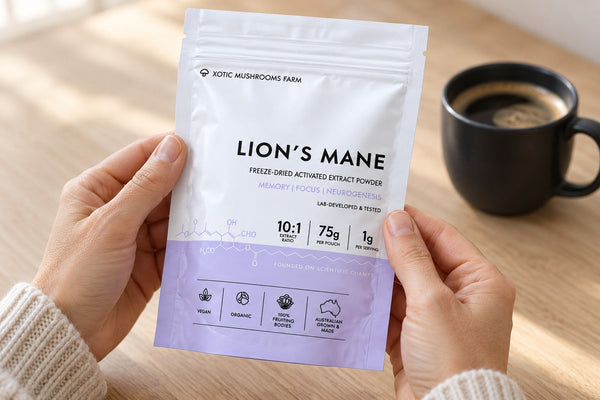
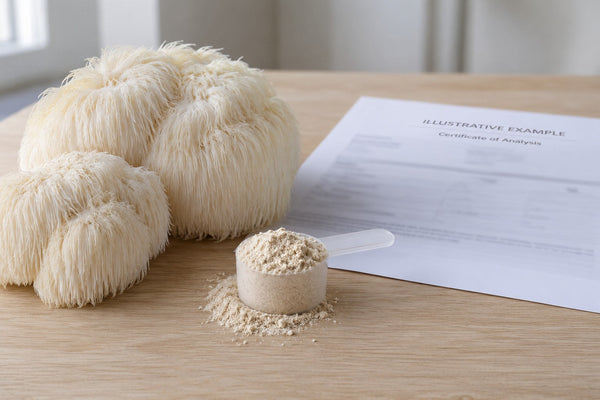
Our own Lion's Mane extract powder is made from 100% fruiting body, grown in Thomastown, Victoria and dual extracted at a 10:1 ratio. A Symbio Laboratories certificate (S2162602 [R01], 13 May 2026) recorded 32.2% beta-glucans in the tested extract powder blend with 1% BioPerine, a sample-specific result rather than a guarantee for every finished product, and the full results are on our specifications and testing page. Results apply to the sample tested.
Lion's Mane also contains no caffeine, so it does not produce a stimulant buzz either. For a fuller introduction to the ingredient, read what Lion's Mane extract is.
Is Lion's Mane Legal in Australia?
Yes, Lion's Mane is legal to buy, grow and eat in Australia, while psilocybin remains a controlled substance. Lion's Mane is sold as a food and in listed supplements, and it is grown commercially here, including on our own farm in Victoria.
Psilocybin is a different story. It is listed in the Poisons Standard, and since 1 July 2023 the Therapeutic Goods Administration has allowed only specially authorised psychiatrists to prescribe it for specific conditions. Outside that narrow pathway, possessing or supplying it is illegal under state and territory law.
Because Lion's Mane contains no scheduled substances, it does not fall under those controls. Shoppers should still check that a product lists Hericium erinaceus as the only mushroom, since some blends combine several species.
What Brands Should Avoid Claiming

Brands selling Lion's Mane should never imply it is psychedelic, mind-altering or a legal alternative to psilocybin. That framing misleads shoppers and creates regulatory risk under Australian advertising rules for therapeutic goods.
Steer clear of trip-style imagery, words like microdose or high, and any wording that suggests treating mental health conditions. Use careful language such as may support or traditionally used for, and back quality claims with documents such as a COA.
If you are building a range, our white label Lion's Mane program supplies Australian-grown fruiting body extract with published testing.
Conclusion
Lion's Mane is not psychoactive. It contains no psilocybin, works through entirely different compounds and is sold legally as a food in Australia. If you want a clean, single-ingredient option, explore our Australian-grown Lion's Mane extract powder and capsules. Brands planning a compliant product can ask about white label supply.
FAQs
Does lion's mane make you feel high?
No. Lion's Mane does not produce a high, euphoria or altered perception because it contains no psilocybin, psilocin or other intoxicating compounds. Most people notice nothing dramatic at all. It is a culinary mushroom, and extracts are taken as a food supplement rather than for any mind-altering effect.
Can lion's mane cause hallucinations?
No. Hallucinations from mushrooms are caused by psilocin acting on serotonin receptors, and Lion's Mane contains none. Its main compounds are beta-glucans, hericenones and erinacines, which are studied for very different reasons. If a product causes unusual effects, check the label for other ingredients and speak with a doctor.
Is lion's mane a magic mushroom?
No. Magic mushroom is a common name for psilocybin species, which are biologically and chemically different from Lion's Mane. Lion's Mane is a white tooth fungus that grows on hardwood and is eaten as a gourmet food. The two share a category name only, not their effects or legal status.
Is lion's mane legal in Australia?
Yes. Lion's Mane is legal to buy, grow and eat in Australia and is sold as a food and supplement ingredient. Psilocybin, by contrast, is a controlled substance that only authorised psychiatrists can prescribe under TGA rules introduced in July 2023. Lion's Mane is not covered by those controls.
Is lion's mane addictive?
There is no evidence that Lion's Mane is addictive. It does not contain psychoactive or stimulant compounds, and it has no caffeine. People generally take it as part of a routine, like a food. If you have a medical condition or take medication, check with your doctor before adding any new supplement.
Can I take lion's mane before work or driving?
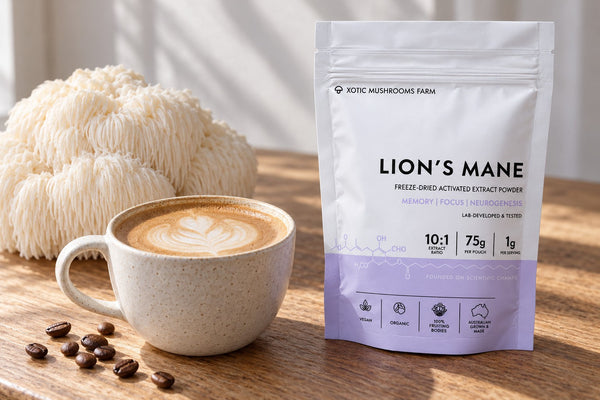
Lion's Mane is not psychoactive, so it is not known to impair alertness the way intoxicating substances do. Many people add it to a morning coffee. As with any new food or supplement, see how you personally respond first, follow the label serving and stop if you notice anything unexpected.
Source Lion’s Mane extract powder at scale
Australian-grown 10:1 fruiting body extract in 1 kg and 5 kg bags, with named-lab testing and white label supply for growing brands.
Request a sample or quote
Related articles
 7 October 2026
Best Mushroom Coffee in Australia: What to Look For on the LabelLooking for the best mushroom coffee in Australia? Use this label checklist to compare mushroom type, extract ratio,...
7 October 2026
Best Mushroom Coffee in Australia: What to Look For on the LabelLooking for the best mushroom coffee in Australia? Use this label checklist to compare mushroom type, extract ratio,...
 7 October 2026
Mushroom Extract in Australia: What Buyers Should CheckBuying mushroom extract in Australia? Learn how to check the extract ratio, fruiting body source, beta-glucans, extraction method,...
7 October 2026
Mushroom Extract in Australia: What Buyers Should CheckBuying mushroom extract in Australia? Learn how to check the extract ratio, fruiting body source, beta-glucans, extraction method,...
 7 October 2026
Mushroom Coffee in Australia: What It Is and How to ChooseA clear guide to mushroom coffee in Australia: what it is, which mushrooms are used, what to check...
7 October 2026
Mushroom Coffee in Australia: What It Is and How to ChooseA clear guide to mushroom coffee in Australia: what it is, which mushrooms are used, what to check...
Get farm and supply updates
New batches, lab results and bulk pricing, a few times a year.