
Mushroom Coffee vs Regular Coffee: Caffeine, Taste and Cost

Mushroom coffee vs regular coffee is a common question for anyone who wants a gentler morning cup without giving up the ritual.
The honest answer is that the biggest differences are caffeine, taste and price, not some dramatic health switch.
This comparison covers each factor side by side, explains what you are paying for, and shows a cheaper third option: your usual coffee with a measured serve of mushroom extract.
Mushroom Coffee vs Regular Coffee at a Glance
Mushroom coffee usually has less caffeine, a slightly earthier taste and a higher price per cup than regular coffee, while neither is automatically "healthier". The table sums up the main differences.
| Factor | Regular coffee | Mushroom coffee |
|---|---|---|
| Caffeine | About 113 to 247 mg per 12 oz brewed cup | Often around 45 to 70 mg per serve, from the coffee portion only |
| Taste | Full coffee flavour, roast dependent | Milder, earthier, sometimes slightly bitter |
| Format | Beans, ground, pods or instant | Mostly instant powder or ground blends |
| Cost per cup | Usually lowest when brewed at home | Usually higher, as you pay for the mushroom share |
| Extra ingredients | None, unless you add them | Mushroom extracts, often fillers, flavours or sweeteners |
| Control over dose | Full control | Fixed by the blend |
If caffeine is your main concern, mushroom coffee can help simply because there is less coffee in each scoop. If flavour and value matter most, regular coffee still wins.
Caffeine: Why Mushroom Coffee Has Less
Mushroom coffee has less caffeine because the coffee is diluted with mushroom powder, not because mushrooms cancel caffeine out. Functional mushrooms such as Lion's Mane are not naturally caffeinated.
The FDA's caffeine guidance puts a 12 ounce cup of regular brewed coffee at roughly 113 to 247 mg, and cites 400 mg a day as an amount not generally associated with negative effects for most adults. By comparison, Ochsner Health dietitians found popular blends ranging from about 45 to 70 mg per serve.
So the switch can lower your intake, but you could achieve the same thing with a smaller or weaker cup of regular coffee. What mushroom coffee adds is the mushroom extract itself, which is where label quality matters.
Taste and Texture
Most mushroom coffee tastes like a milder, earthier instant coffee rather than anything strongly mushroom flavoured. Lion's Mane is fairly neutral, while reishi and chaga bring more bitterness.
Because many blends are instant, the body is lighter than a fresh espresso or pour over. Brands often add cacao, cinnamon or coconut milk powder to round out the flavour, which changes the taste more than the mushrooms do.
If you love the flavour of specialty coffee, you may find blends flat. Adding a neutral extract to your own brew keeps the coffee you already like.
Cost per Cup

Regular coffee brewed at home is almost always the cheapest option, and pre-mixed mushroom coffee usually costs noticeably more per cup. You are paying for the mushroom extract, the blending and the branding.
A fairer comparison is the cost of the mushroom portion on its own. Our 75 g Lion's Mane extract powder pouch is A$85 for 75 serves, about A$1.13 per serve. Added to coffee you already buy, that tells you exactly what the mushroom part costs, with no fillers in the price.
Check the number of serves per pouch and the mushroom amount per serve when you compare any blend. A cheap pouch with a tiny mushroom dose is not good value.
Ingredients and What You Are Really Getting
Regular coffee is one ingredient, while mushroom coffee can contain several, and the mushroom share is often small. The full list of mushroom coffee ingredients usually includes a coffee base, one or more mushroom extracts, carriers and flavour add-ins.
Three label details tell you most of what you need. First, look for fruiting body rather than mycelium grown on grain, since grain can make up part of the powder. Second, check for an extract ratio such as 10:1. Third, look for published testing on beta-glucans, heavy metals and microbes.
Multi-mushroom blends may list five or more species, each in very small amounts. A single species at a stated dose is easier to judge.
Side Effects and Who Should Be Careful
For most people the main side effects of either drink come from caffeine, such as jitters or poor sleep if they have too much. Lower caffeine may suit some coffee drinkers, though it is not a treatment for any condition.
Mushrooms add their own considerations. Some people find them hard on digestion, and anyone with a mushroom allergy should avoid them. Our notes on Lion's Mane side effects cover what is known. If you take medication, are pregnant or breastfeeding, or have a health condition, check with your doctor or pharmacist first.
The Third Option: Your Coffee Plus Lion's Mane Extract
You can keep your regular coffee and add a measured serve of Lion's Mane extract, which gives you control over caffeine, taste and dose. This is often the best value way to try mushroom in your morning cup.
Xotic Mushrooms is Australian-grown and ships its Lion's Mane extract powder and capsules internationally. Our Lion's Mane extract powder is 100% fruiting body extract with no added starch, grain, mycelium or fillers, made with hot water and ethanol dual extraction into a 10:1 extract. It contains no coffee and no caffeine. Stir in the 1 g label serve, or follow these tips on using Lion's Mane extract powder in drinks and food.
Not a coffee drinker? A Lion's Mane cacao is a caffeine-light alternative. Lion's Mane capsules hold the same extract if you would rather skip the taste, though powder is cheaper per serve.
Serving mushroom coffee in your café or brand?
Businesses need consistent specs, a COA for each batch, clear MOQs and samples before launch. Xotic offers white and private label Lion's Mane: white label places our established powder or capsules under your brand, private label covers your own blend, formulation or packaging (usually higher MOQs and longer lead times), and bulk extract comes in 1 kg and 5 kg.
Conclusion: Which Should You Choose?
Regular coffee wins on flavour and price. Mushroom coffee offers less caffeine and added mushroom, but quality varies widely.
For the most control, keep your coffee and add Lion's Mane extract powder or capsules. Developing a drink for your brand? Ask us about white label supply.
FAQs
1. Is mushroom coffee better than regular coffee?
Neither is better for everyone. Mushroom coffee usually has less caffeine and adds mushroom extract, which some people prefer. Regular coffee has more flavour, more caffeine and a lower price per cup. The right choice depends on how much caffeine you want, the taste you enjoy and the quality of the mushroom ingredients listed on the label.
2. Does mushroom coffee have less caffeine than regular coffee?
Usually, yes. Popular blends often contain around 45 to 70 mg per serve, compared with about 113 to 247 mg in a 12 ounce cup of brewed coffee. The difference comes from dilution, because mushrooms are not naturally caffeinated. A mushroom extract with no coffee in it contains no caffeine at all.
3. What is the downside of mushroom coffee?
The main downsides are cost, flavour and uncertain quality. Pre-mixed blends usually cost more per cup, many taste flatter than fresh coffee, and the mushroom dose can be small. Labels using proprietary blends or mycelium grown on grain make it harder to know how much actual mushroom you are getting for the price.
4. Is mushroom coffee easier on the stomach?
Some people find a lower caffeine drink gentler, but there is limited evidence that mushroom coffee itself is easier on the stomach. Mushrooms can also upset digestion in some people. If you experience reflux or stomach discomfort with coffee, speak with your doctor or pharmacist about what may suit you before changing your routine.
5. Why is mushroom coffee more expensive than regular coffee?
You are paying for mushroom extract, extra processing, blending and branding on top of the coffee itself. Quality extracts take time to grow, harvest, dry and concentrate. Comparing the cost of the mushroom portion on its own, such as a single-ingredient extract added to your own coffee, gives a clearer picture of value.
6. Can I mix mushroom extract into regular coffee?
Yes. Stirring a measured serve of mushroom extract powder into your usual coffee is a simple way to make your own mushroom coffee. You keep full control over the caffeine, the brew and the dose. Xotic's Lion's Mane extract powder has a 1 g label serve and contains no coffee or caffeine.
Source Lion’s Mane extract powder at scale
Australian-grown 10:1 fruiting body extract in 1 kg and 5 kg bags, with named-lab testing and white label supply for growing brands.
Request a sample or quote
Related articles
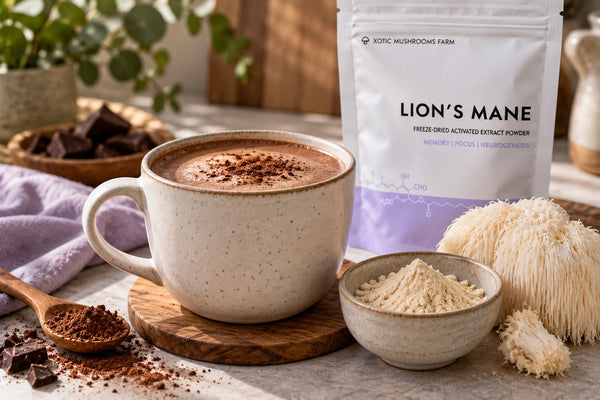 17 October 2026
Mushroom Hot Chocolate: What It Is and How to Choose OneMushroom hot chocolate blends cocoa with a functional mushroom extract. Learn what is in it, which label details...
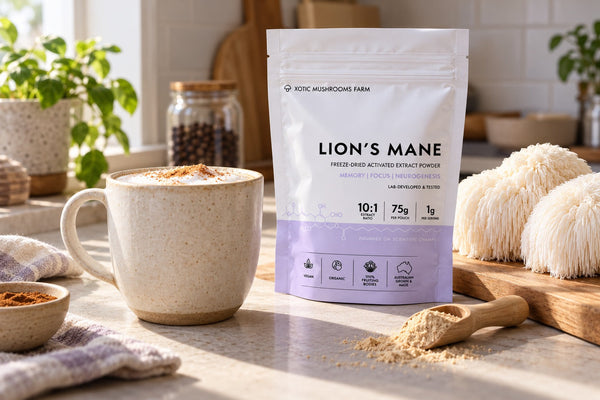 17 October 2026
When to Take Lion's Mane: Morning, Afternoon or Night?When to take Lion's Mane comes down to routine. Compare morning, afternoon and night, with coffee or food,...
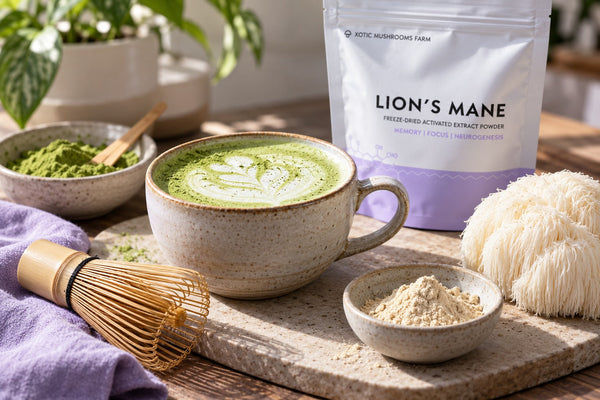 17 October 2026
Mushroom Matcha: What It Is and How to Make ItMushroom matcha blends matcha green tea with a mushroom extract such as Lion's Mane. Learn what it is,...
Get farm and supply updates
New batches, lab results and bulk pricing, a few times a year.
More from Resources
- Beta-Glucans Explained: What They Are and Why They're Measured
- How Much Lion's Mane Is Too Much?
- Nootropic Mushrooms: What They Are and Where Lion's Mane Fits
- Does Mushroom Coffee Have Caffeine?
- What's Actually in Mushroom Coffee? Ingredients Explained
- How Much Lion's Mane Powder per Serve? Reading the Label