
What's Actually in Mushroom Coffee? Ingredients Explained

Mushroom coffee sounds exotic, but most blends are built from a short list of mushroom coffee ingredients: ordinary coffee, one or more mushroom extracts, and a few carriers or flavourings.
The detail that matters is on the label. Which part of the mushroom was used, how it was extracted, and what else fills the scoop all change what you are paying for.
This explainer walks through each ingredient group, shows you how to read a label, and covers a simple way to make your own blend at home.
The Short Answer: Four Ingredient Groups
Almost every mushroom coffee contains four things: a coffee base, mushroom extract or powder, a carrier or filler, and optional flavour add-ins. The ratio between them varies widely, and the mushroom share is often smaller than the packaging suggests.
| Ingredient group | Typical examples | What to check |
|---|---|---|
| Coffee base | Instant or ground arabica | Caffeine per serve |
| Mushroom extracts | Lion's mane, chaga, reishi, cordyceps, turkey tail | Fruiting body or mycelium, extract ratio, amount per serve |
| Carriers and fillers | Maltodextrin, grain, rice flour | Whether they are listed and how much |
| Flavour add-ins | Cacao, cinnamon, coconut milk powder, sweeteners | Added sugar and allergens |
A plain mushroom coffee may stop at the first two groups. Latte-style and "superfood" versions usually lean harder on the last two, which is where calories, sugar and price per serve start to climb.
Knowing these four groups makes it much easier to compare products side by side, because you can ask the same questions of every pouch.
The Coffee Base and Where the Caffeine Comes From
The caffeine in mushroom coffee comes from the coffee, not the mushrooms. Functional mushrooms such as Lion's Mane are not naturally caffeinated, so any buzz you feel is from the coffee portion of the blend.
Most brands use instant arabica because it dissolves quickly and keeps the product shelf stable. Some sell ground blends for a filter or French press. Because the coffee is often cut with mushroom powder, a serve can contain less caffeine than a regular cup, and Ochsner Health dietitians note that many blends land well below a standard brewed coffee.
That lower figure is a product of dilution rather than anything the mushroom does. If you add a mushroom extract to your usual coffee, the caffeine stays exactly where it was. For context, the FDA's caffeine guidance cites 400 mg a day as an amount not generally associated with negative effects for most healthy adults.
The Mushrooms Most Blends Use

The mushrooms in most blends are culinary and functional species, usually Lion's Mane, chaga, reishi, cordyceps and turkey tail. None of these is psychedelic, and Lion's Mane is not psychoactive at all.
- Lion's Mane (Hericium erinaceus): often researched for focus and cognitive wellbeing, and the most common "brain" mushroom in coffee.
- Chaga: traditionally used as a tea in northern Europe and Russia; earthy and slightly bitter.
- Reishi: traditionally used in East Asian practice and commonly associated with evening calm; noticeably bitter.
- Cordyceps: commonly associated with energy and exercise positioning.
- Turkey tail: often researched for its polysaccharides, including beta-glucans.
Multi-mushroom blends spread a small total dose across five or more species, so each one may be present in very small amounts. A single-mushroom product makes it easier to know exactly how much of each you are getting. Healthline's overview of mushroom coffee also points out that much of the research on these species is early and lab or animal based.
Fruiting Body, Mycelium and Extract Ratio on the Label
The most important label detail is whether the mushroom is fruiting body or mycelium, and whether it is an extract or plain powder. These terms decide how much actual mushroom material is in each scoop.
The fruiting body is the mushroom you can see and cook. Mycelium is the root-like network, and it is often grown on grain such as oats or rice. When mycelium is sold "on grain", the grain is harvested with it, so part of the powder can be starch rather than mushroom. The trade-offs are covered in more depth in fruiting body vs mycelium Lion's Mane.
An extract ratio such as 10:1 tells you the mushroom has been concentrated rather than simply dried and milled. Extraction method matters too. Hot water extraction targets polysaccharides such as beta-glucans, while a dual extraction adds an ethanol step to capture other compounds. A clear explanation of what Lion's Mane extract is helps when you compare labels.
Finally, look for testing. A brand confident in its product will publish beta-glucan, heavy metal and microbial results, or send them on request.
Fillers, Sweeteners and Other Add-ins
Fillers and add-ins are not always bad, but they should be listed clearly so you know what you are paying for. Maltodextrin and rice flour help powders flow and dissolve. Grain can arrive via mycelium products, which matters if you avoid gluten.
Latte and creamer styles often add coconut milk powder, cacao, cinnamon, natural flavours or sweeteners such as coconut sugar, monk fruit or stevia. These change the taste and the nutrition panel more than the mushroom does.
Watch for "proprietary blend" wording. It lets a brand list ingredients without saying how much of each is inside, so a blend could lead with a mushroom name while containing very little of it. Some products also add adaptogenic herbs, collagen or MCT oil, which turns a coffee into a broader supplement.
How to Read a Mushroom Coffee Label

A good label tells you the species, the part used, the amount per serve and the caffeine content. Use this quick checklist before you buy:
- Find each mushroom species and its amount in milligrams per serve.
- Check for "fruiting body" or "mycelium", and whether grain is mentioned.
- Look for an extract ratio or a beta-glucan figure.
- Note the caffeine per serve and compare it with your usual cup.
- Scan for fillers, sweeteners and allergens.
- Ask whether lab results are published.
If several of these are missing, the product may still taste fine, but you cannot judge what the mushroom portion is doing.
Making Your Own With a Single-Ingredient Extract
The simplest mushroom coffee is your usual coffee plus a measured serve of a single-ingredient mushroom extract. You control the caffeine, the brew and the dose, and you know exactly what went in.
Xotic Mushrooms grows Lion's Mane in Australia and ships its extract powder and capsules internationally. Our Lion's Mane extract powder is 100% fruiting body extract with no added starch, grain, mycelium or fillers. The fruiting bodies are freeze-dried and processed into a 10:1 extract using hot water and ethanol dual extraction, and the label serve is 1 g. It contains no coffee and no caffeine, so it adds mushroom without changing your caffeine intake.
Stir it into brewed coffee, or try a Lion's Mane latte with frothed milk. Prefer not to taste it at all? Lion's Mane capsules contain the same extract, although the powder works out cheaper per serve.
Our published lab results include beta-glucan, heavy metal and microbial testing. One tested powder blend with 1% BioPerine returned 32.2% beta-glucans, a sample-specific result rather than a guarantee for every batch.
Making a mushroom drink for your brand or café?
Businesses need more than a label. Ask suppliers for full specifications, a COA for each batch, MOQs and samples. Xotic offers white and private label Lion's Mane: white label puts our established powder or capsules under your brand, private label covers your own blend, formulation or packaging (usually higher MOQs and longer lead times), and bulk extract is available in 1 kg and 5 kg.
Conclusion: Read the Label, Then Choose
Mushroom coffee is coffee plus mushroom, with fillers and flavour deciding the rest. The label tells you which part of the mushroom you are getting and how much.
For a clean option, add Lion's Mane extract powder or capsules to your own routine. Building a drink for your brand? Talk to us about white label supply.
FAQs
1. What are the main ingredients in mushroom coffee?
Most mushroom coffee contains a coffee base, usually instant arabica, plus one or more mushroom extracts such as Lion's Mane, chaga, reishi or cordyceps. Many blends also include carriers like maltodextrin and flavour add-ins such as cacao, cinnamon, coconut milk powder or sweeteners. The label should list each mushroom and the amount per serve.
2. Does mushroom coffee have caffeine?
Yes, if it contains coffee. The caffeine comes entirely from the coffee portion, because functional mushrooms like Lion's Mane are not naturally caffeinated. Blends often contain less caffeine than a standard brewed cup simply because the coffee is diluted with mushroom powder. A pure mushroom extract with no coffee contains no caffeine at all.
3. Is mushroom coffee actually healthy?
Mushroom coffee can be a reasonable choice if you enjoy it and want less caffeine, but it is not a health treatment. Functional mushrooms are often researched for wellbeing, and much of that research is early. How healthy a blend is depends on its sugar, fillers, caffeine and the quality of the mushroom extract it uses.
4. What is the downside of mushroom coffee?
The main downsides are cost, taste and uncertainty. Many blends cost more per cup than regular coffee, some taste earthy or bitter, and multi-mushroom products may contain very small amounts of each species. Labels that use proprietary blends or mycelium on grain can make it hard to know how much mushroom you are actually getting.
5. Can I take mushroom coffee with medication?
Speak with your doctor or pharmacist before adding mushroom coffee if you take prescription medication, are pregnant or breastfeeding, or have a health condition. Both the caffeine and some mushroom species may interact with certain medicines. A health professional can review the specific ingredients on the label and advise on what suits you.
6. Is mushroom coffee gluten free?
Not always. Mushroom mycelium is often grown on grains such as oats or rice, and the grain can remain in the final powder. Some blends also add grain-based fillers. Check for a gluten free statement and fruiting body wording. Xotic's Lion's Mane extract is fruiting body only, vegan, gluten free and non-GMO.
Source Lion’s Mane extract powder at scale
Australian-grown 10:1 fruiting body extract in 1 kg and 5 kg bags, with named-lab testing and white label supply for growing brands.
Request a sample or quote
Related articles
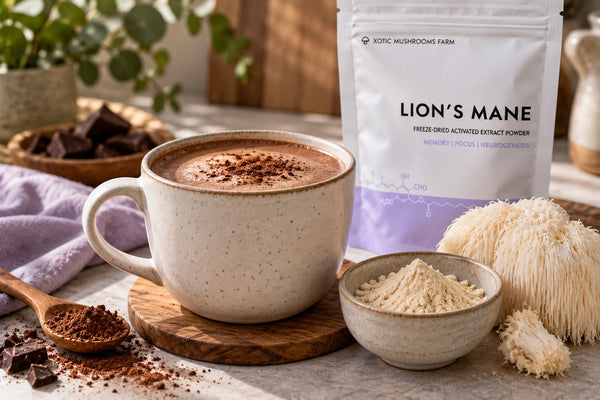 17 October 2026
Mushroom Hot Chocolate: What It Is and How to Choose OneMushroom hot chocolate blends cocoa with a functional mushroom extract. Learn what is in it, which label details...
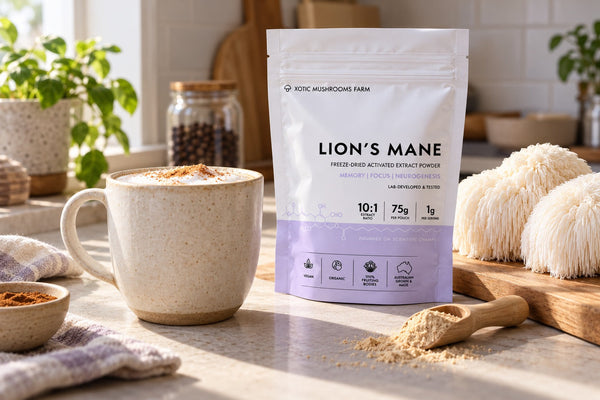 17 October 2026
When to Take Lion's Mane: Morning, Afternoon or Night?When to take Lion's Mane comes down to routine. Compare morning, afternoon and night, with coffee or food,...
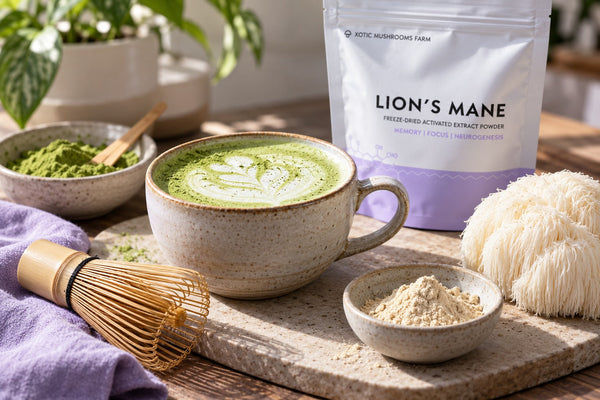 17 October 2026
Mushroom Matcha: What It Is and How to Make ItMushroom matcha blends matcha green tea with a mushroom extract such as Lion's Mane. Learn what it is,...
Get farm and supply updates
New batches, lab results and bulk pricing, a few times a year.
More from Resources
- How Much Lion's Mane Powder per Serve? Reading the Label
- Mycelium Powder vs Fruiting Body Powder: What Shoppers Should Know
- Mushroom Tea: What It Is and How to Make It (the Non-Psychedelic Kind)
- Best Mushroom Coffee in Australia: What to Look For on the Label
- Mushroom Extract in Australia: What Buyers Should Check
- Mushroom Coffee in Australia: What It Is and How to Choose