What "10:1" and "Fruiting Body" Mean on a Lion's Mane Label

Introduction
Two phrases turn up on almost every Lion's Mane 10:1 extract pack: the ratio and the words "fruiting body". This short guide explains what each one means on the label, what it does not tell you, and the other words worth checking before you buy. For the bigger picture on what an extract is, see our guide to what Lion's Mane extract is. Here we stay focused on the label.
What does 10:1 mean on a Lion's Mane label?
A 10:1 extract ratio means roughly 10 parts of dried mushroom went into making 1 part of finished extract powder. The extraction process draws compounds out of the mushroom, and the liquid is then dried back into a concentrated powder.
That concentration is why extract servings are small. Our own Lion's Mane extract powder is a 10:1 extract with a suggested serving of 1 g, and our capsules contain 300 mg of the same 10:1 extract each.
A ratio is a description of the process, not a measured result. It tells you how much raw material went in, which is useful, but it is not the same as a lab number.
What the ratio does not tell you
Two products can both say 10:1 and still be quite different, because the ratio says nothing about what was extracted or how. It does not tell you which part of the mushroom was used, whether the starting material was mixed with grain, which solvent was used, or what the finished powder actually contains.
It also is not a strength rating you can compare across brands. A higher number sounds stronger, but without lab results showing what is in the powder, the ratio alone cannot prove that.
That is why label wording and lab results work together. Our short guide on how to check a Lion's Mane product's lab results covers the second half.
What does fruiting body mean?

The fruiting body is the mushroom itself, the part you can see and pick. For Lion's Mane, that is the white, shaggy cluster of spines. The mycelium is the root-like network that grows through the substrate before the mushroom forms.
Labels matter here because mycelium is often grown on grain such as rice or oats, and the grain can end up in the finished powder. A label that says "mycelium" or "myceliated grain" describes a different product from one made only from fruiting bodies.
Our products are made from 100% Hericium erinaceus fruiting body, grown on our farm in Thomastown, Victoria. If a label does not say which part was used, it is fair to ask the seller. Brands sourcing in bulk can find a more technical comparison in our fruiting body vs mycelium supplier guide.
Other label words worth checking
A few more words on the back of the pack help you understand what you are buying.
| Label wording | What it means | What to check |
|---|---|---|
| Hericium erinaceus | The botanical name for Lion's Mane | That it is listed as the ingredient |
| Extract vs powder | Extract is concentrated; powder is usually ground whole mushroom | Which one the pack contains |
| Mycelium or myceliated grain | Root network, often grown on grain | Whether grain is part of the product |
| Fillers or other ingredients | Anything added besides the mushroom | The full ingredient list |
| Serving size | The amount per serve | That it matches the format (1 g for our powder) |
If the difference between extract and ground mushroom is new to you, our comparison of Lion's Mane extract vs whole mushroom powder explains it simply.
Conclusion
On a Lion's Mane label, 10:1 describes how concentrated the extract is, and fruiting body tells you which part of the mushroom was used. Neither replaces lab results, but together they tell you a lot. Read the full ingredient list, check the serving size and ask the seller when something is unclear.
FAQs
Is a 10:1 Lion's Mane extract stronger than a 1:1 product?
A 10:1 extract is more concentrated by weight than unextracted mushroom powder, because about 10 parts of dried mushroom go into each part of extract. However, a ratio describes the process, not a measured result, so it cannot prove what the powder contains. Lab results are the better way to compare products.
Is fruiting body better than mycelium?
They are different materials rather than simply better or worse. The fruiting body is the mushroom itself, while mycelium is the root network and is often grown on grain that can remain in the product. If you want a product made only from the mushroom, look for fruiting body on the label.
Why is a Lion's Mane extract serving so small?
Extract powders are concentrated, so a small amount represents more raw mushroom than the same weight of ground mushroom powder. Our suggested serving for our 10:1 extract powder is 1 g, and each of our capsules contains 300 mg of the same extract. Always follow the serving shown on the label.
Can two 10:1 Lion's Mane products be different?
Yes. The ratio does not say which part of the mushroom was used, whether grain was included, which extraction method was used or what the finished powder contains. Two products with the same ratio can differ on all of these points, so check the ingredient list and any published lab results.
What does Hericium erinaceus mean on a label?
Hericium erinaceus is the botanical, or scientific, name for Lion's Mane mushroom. Seeing it on the ingredient list confirms the species used. Check that it appears alongside the part of the mushroom used, such as fruiting body, so you know exactly what the product contains.
Source Lion’s Mane extract powder at scale
Australian-grown 10:1 fruiting body extract in 1 kg and 5 kg bags, with named-lab testing and white label supply for growing brands.
Request a sample or quote
Related articles
 7 October 2026
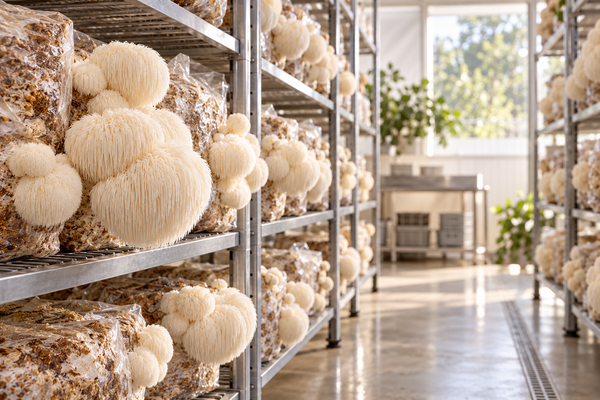
Australian-Grown Lion's Mane: Why Provenance MattersWhy provenance matters for Australian-grown Lion's Mane: traceability, food standards, a shorter supply chain, and how to check...
7 October 2026
Australian-Grown Lion's Mane: Why Provenance MattersWhy provenance matters for Australian-grown Lion's Mane: traceability, food standards, a shorter supply chain, and how to check...
 7 October 2026
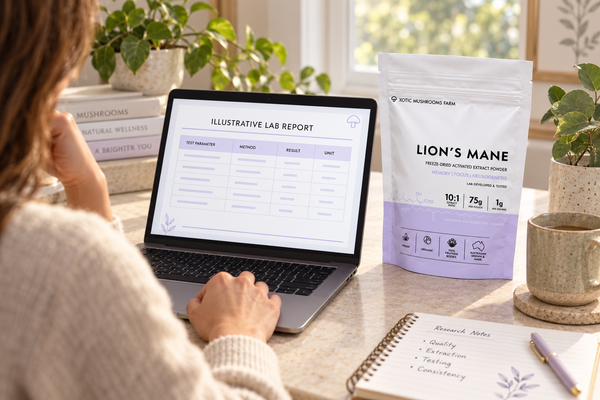
How to Check a Lion's Mane Product's Lab ResultsA simple checklist for checking Lion's Mane lab results: who tested it, whether it is the same product,...
7 October 2026
How to Check a Lion's Mane Product's Lab ResultsA simple checklist for checking Lion's Mane lab results: who tested it, whether it is the same product,...
 7 October 2026
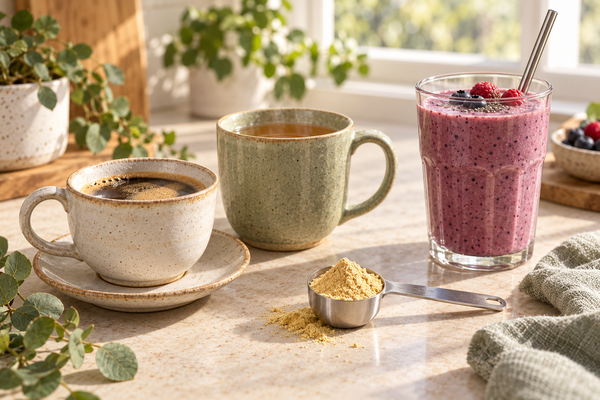
How to Use Lion's Mane Extract Powder in Coffee, Tea and SmoothiesHow to use Lion's Mane extract powder in coffee, tea and smoothies: a 1 g serving, mixing tips...
7 October 2026
How to Use Lion's Mane Extract Powder in Coffee, Tea and SmoothiesHow to use Lion's Mane extract powder in coffee, tea and smoothies: a 1 g serving, mixing tips...
Get farm and supply updates
New batches, lab results and bulk pricing, a few times a year.