Behind the Scenes of Lion’s Mane Extract Production

Lion’s Mane extract is often presented as a simple ingredient, but the production process behind it is detailed and controlled. From sourcing raw material to final packaging, each stage influences quality, stability, and consistency.
For supplement brands, understanding how extract powders are produced helps clarify what separates reliable products from inconsistent ones.
A well-managed process ensures the final product performs as expected, both in formulation and in everyday use.
Raw Material Sourcing and Selection
The process begins with sourcing high-quality Lion’s Mane mushrooms, as raw material quality directly influences the final extract. Clean, well-grown mushrooms form the foundation of a consistent and reliable product.
At Xotic Mushrooms, sourcing locally within Australia allows for tighter control over growing conditions, harvesting, and supply consistency. This reduces variability that can occur when materials are sourced from multiple regions.
Careful selection ensures the mushrooms meet defined standards for extraction, including freshness, cleanliness, and structural integrity. By maintaining strict sourcing criteria, the production process starts with a stable and dependable base.
Cleaning, Drying, and Preparation
Before extraction, the raw mushrooms undergo controlled cleaning and drying processes to remove impurities and reduce moisture content. Proper cleaning ensures that unwanted materials do not affect the extraction process or final product quality.
Drying is carefully managed to preserve the integrity of key compounds while preventing degradation caused by excess heat or prolonged exposure. Once dried to the appropriate moisture level, the mushrooms are milled or reduced in size to create a uniform material.
This preparation step is critical for ensuring consistent extraction, allowing the process to run efficiently and produce reliable results across batches.
Extraction Methods and Processing

The extraction stage is where raw Lion’s Mane is transformed into a functional ingredient, with each method influencing potency, consistency, and overall product performance.
1. Water Extraction
Water extraction is used to isolate key compounds such as beta-glucans, which are essential for functional mushroom formulations. The process involves heating the mushroom material under controlled conditions to extract water-soluble components.
Careful temperature and time control ensure consistency while preserving compound integrity, resulting in an extract that is reliable, usable, and suitable for a wide range of supplement applications.
2. Dual Extraction
Dual extraction combines both water and alcohol processes to capture a broader spectrum of compounds from Lion’s Mane. This method allows manufacturers to extract both water-soluble and alcohol-soluble components, creating a more complete extract profile.
It is commonly used in higher-quality formulations where improved consistency, compound diversity, and product positioning are important for delivering a well-rounded and effective final product.
3. Filtration and Concentration
After extraction, the liquid undergoes filtration to remove solid residues and impurities, ensuring a cleaner extract. The filtered liquid is then concentrated to increase the level of active compounds and improve consistency.
This step is critical for standardisation, allowing the extract to meet defined quality parameters before being converted into a stable powder suitable for manufacturing and formulation use.
4. Drying and Powder Conversion
Once concentrated, the extract is converted into a powder form. This is typically done using controlled drying methods that preserve the integrity of active compounds.
The goal is to produce a fine, stable powder that maintains solubility and consistency.
Careful control during this stage ensures the extract remains easy to handle, store, and use in different product formats.
5. Quality Control and Testing

Quality control is applied throughout the production process. Each batch is monitored to ensure it meets defined standards for consistency and safety.
Third-party lab testing is used to verify key parameters such as composition and microbial levels.
This step ensures the final product aligns with both internal quality standards and external compliance requirements.
6. Maintaining Consistency Across Batches
Consistency is one of the most important aspects of extract production. Variability in raw materials, processing conditions, or handling can affect the final product.
Controlled processes and standardised methods help reduce these variations.
Maintaining consistency ensures that each batch performs the same way in formulations, supporting reliable product outcomes.
7. Packaging and Storage After Production
Once the extract powder is produced, it is packaged to protect against moisture, oxygen, and environmental exposure.
Proper packaging helps maintain flowability, prevent clumping, and preserve active compounds.
Storage conditions are also important, as temperature and humidity can affect stability over time.
The Role of Xotic Mushrooms in Controlled Production

At Xotic Mushrooms, Lion’s Mane extract production is built around control, consistency, and practical manufacturing expertise. From sourcing to final output, every stage is managed to reduce variability and ensure reliable product performance across batches.
Raw materials are carefully selected and processed using controlled extraction methods designed to preserve key compounds while maintaining usability in different product formats. This structured approach helps ensure the extract behaves consistently in formulation, whether used in powders, capsules, gummies, or custom blends.
Stability is considered throughout the entire process, not just at the end. Factors such as moisture control, particle consistency, and packaging alignment are addressed early to prevent common issues like clumping, degradation, or inconsistency during storage and transport.
Testing and documentation further support production quality. With third-party lab verification and clear process controls, products are developed to meet both performance expectations and compliance requirements, giving brands confidence in what they are bringing to market.
This level of control allows brands to scale without compromising quality. By working with a manufacturing partner that understands formulation, stability, and repeatability, businesses can build Lion’s Mane products that remain consistent, reliable, and ready for long-term growth.
Conclusion: From Raw Mushroom to Reliable Extract
Lion’s Mane extract production involves multiple controlled steps, each contributing to the final product’s quality and consistency.
From sourcing to extraction and packaging, every stage plays a role in how the extract performs.
Understanding this process helps brands make informed decisions and work with manufacturers who prioritise reliability and long-term product performance.
Source Lion’s Mane extract powder at scale
Australian-grown 10:1 fruiting body extract in 1 kg and 5 kg bags, with named-lab testing and white label supply for growing brands.
Request a sample or quote
Related articles
 7 October 2026
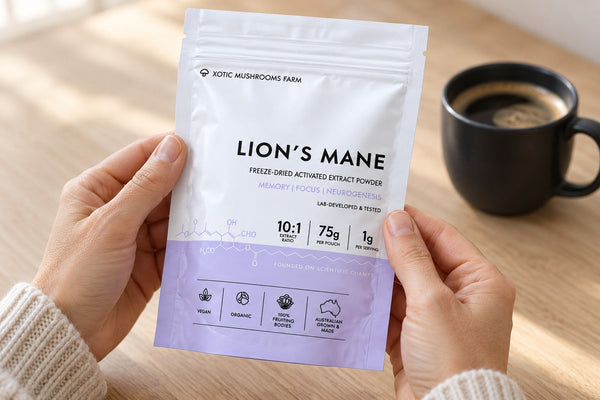
Best Mushroom Coffee in Australia: What to Look For on the LabelLooking for the best mushroom coffee in Australia? Use this label checklist to compare mushroom type, extract ratio,...
7 October 2026
Best Mushroom Coffee in Australia: What to Look For on the LabelLooking for the best mushroom coffee in Australia? Use this label checklist to compare mushroom type, extract ratio,...
 7 October 2026
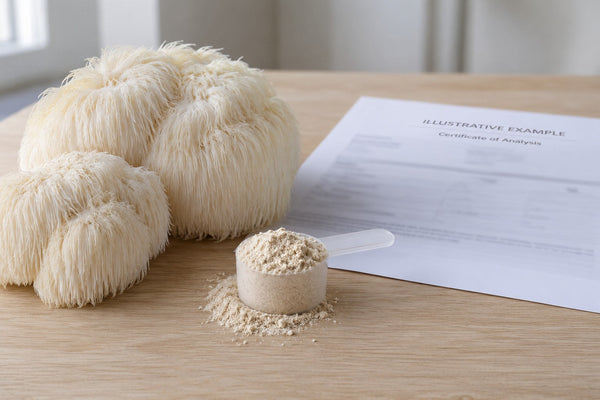
Mushroom Extract in Australia: What Buyers Should CheckBuying mushroom extract in Australia? Learn how to check the extract ratio, fruiting body source, beta-glucans, extraction method,...
7 October 2026
Mushroom Extract in Australia: What Buyers Should CheckBuying mushroom extract in Australia? Learn how to check the extract ratio, fruiting body source, beta-glucans, extraction method,...
 7 October 2026
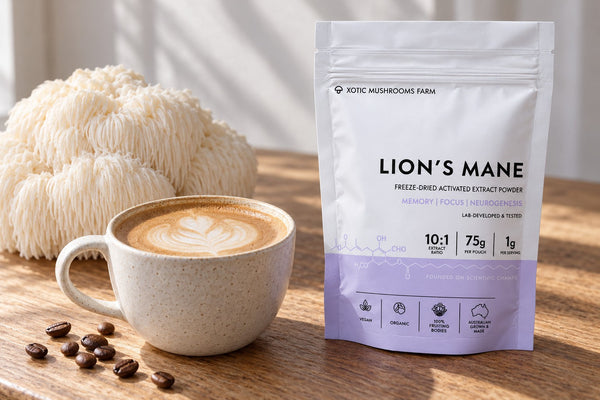
Mushroom Coffee in Australia: What It Is and How to ChooseA clear guide to mushroom coffee in Australia: what it is, which mushrooms are used, what to check...
7 October 2026
Mushroom Coffee in Australia: What It Is and How to ChooseA clear guide to mushroom coffee in Australia: what it is, which mushrooms are used, what to check...
Get farm and supply updates
New batches, lab results and bulk pricing, a few times a year.