How to Read a Lion's Mane COA (Certificate of Analysis)

Introduction
A Lion's Mane COA is the single most useful document a white label buyer can ask for, but only if you know how to read it. This guide walks through each section of a certificate of analysis in the order a quality manager would check it: the lab, the sample, the methods, the units, the limits and the results. We also cover heavy metals, microbiology and beta-glucan methods, then finish with an illustrative example and the red flags worth raising before you build a product around an ingredient.
What is a COA for Lion's Mane extract?
A COA is a laboratory report that states what was tested in a specific sample, how it was tested, and what the results were. For Lion's Mane extract powder it usually covers identity or composition markers such as beta-glucans, contaminants such as heavy metals, and microbiological counts.
The key word is specific. A COA describes one sample on one date. It is evidence about that sample, not a blanket guarantee about every kilogram a supplier will ever ship. Reading it well means checking how closely that sample matches the product you are actually buying.
For a brand owner, the COA is also the document your own customers, retailers and regulators may eventually ask you for. Understanding it now saves awkward conversations later.
Who did the testing: lab name and accreditation
Start with the laboratory, because every other number depends on its competence and independence. Look for the lab's full name, address and an accreditation reference. In Australia that is commonly NATA accreditation to ISO/IEC 17025, the international standard for testing laboratories.
Accreditation is granted for specific tests, not for everything a lab does. A lab can be accredited for heavy metals by ICP-MS but not for a particular beta-glucan assay. Where the report marks tests as accredited or not accredited, note which is which.
Also check independence. An in-house test from a manufacturer can be useful for routine control, but an independent third-party lab carries more weight for due diligence.
Sample ID and batch: is it the product you are buying?
Match the sample description on the COA to the exact product, format and batch you are being offered. Check the product name, the sample or batch number, the sampling date and the report date.
Small differences matter. A report on whole mushroom powder does not describe an extract. A report on a blend with another ingredient does not describe the pure extract. A result from two years ago tells you about that sample, not today's stock.
Ask the supplier directly whether the COA is for the same batch you will receive or for a representative sample. Both are legitimate, but you need to know which, and your product claims should reflect it.
Test methods and units
Every result should name the method used and the unit it is reported in. Methods are often referenced by a standard number or a lab method code. Without a method, a result cannot be compared or repeated.
Units are where most misreadings happen. Common units on a mushroom extract COA include:
- g/100 g: grams per 100 grams, the same as a percentage. Used for beta-glucans, protein and moisture.
- mg/kg: milligrams per kilogram, the same as parts per million (ppm). Used for heavy metals.
- µg/kg: micrograms per kilogram, parts per billion. Used for very low-level contaminants.
- CFU/g: colony-forming units per gram. Used for microbiological counts.
Converting carefully matters: 0.1 mg/kg is 100 µg/kg, and a percentage is a very different scale from ppm.
Limits vs results, LOD and "not detected"
A result only means something when you compare it with a limit, and a "not detected" only means something when you know the detection limit. Many COAs show a specification or limit column next to the result. If they do not, you need to supply the relevant limit yourself, for example from the Australia New Zealand Food Standards Code or your target market's rules.
The limit of detection (LOD) or limit of reporting (LOR) is the lowest level the method can reliably detect or report. A result shown as "<0.01 mg/kg" or "ND" means the analyte was below that level, not that it is absolutely zero.
When comparing two COAs, check that the LORs are similar. A "not detected" at a high LOR is weaker evidence than a numeric result at a low one.
Heavy metals and microbiology
Heavy metals and microbial counts are the safety core of most mushroom COAs. Mushrooms can take up elements from their growing substrate, so buyers usually expect results for lead, cadmium, mercury and arsenic at minimum, often as part of a wider panel of trace elements.
Microbiology typically covers total plate count, yeasts and moulds, E. coli, coliforms and pathogens such as Salmonella. Check whether each test was presence or absence in a stated sample size (for example "not detected in 25 g") or a count per gram.
Also note what is missing. If pesticides, allergens or other analytes are not on the report, they were not tested in that report. Ask rather than assume.
Beta-glucan method: why the number depends on the test
Beta-glucan results are only comparable when the method is the same. Some assays are designed specifically to measure beta-glucans from yeast and mushrooms, while broader "polysaccharide" tests can capture starches and other carbohydrates and give a higher figure that says less about the mushroom itself.
Check the method name on the COA, and be cautious when a supplier quotes a polysaccharide percentage with no method attached. If you are comparing two suppliers, ask whether both used the same assay.
For more on how ratio, form and markers fit together, see our guide to Lion's Mane extract specifications.
An annotated example COA

The table below is an illustrative example only. The figures are invented to show the layout and are not real results for any Xotic Mushrooms product.
| Analyte | Method | Unit | Limit | Result | How to read it |
|---|---|---|---|---|---|
| Beta-glucans | Yeast and mushroom enzymatic assay | g/100 g | Report | XX.X | Compare only with results from the same method |
| Lead (Pb) | ICP-MS | mg/kg | Your limit | 0.0X | Check against your market's limit |
| Mercury (Hg) | ICP-MS | mg/kg | Your limit | <0.01 | Below the LOR, not zero |
| E. coli | Standard plate method | CFU/g | Your limit | <10 | Below the reporting limit |
| Salmonella | Presence or absence | per 25 g | Not detected | Not detected | Note the sample size |
Red flags and questions to ask
Most COA problems show up as missing information rather than bad numbers. Watch for these:
- No lab name, accreditation or report number.
- No method or unit next to a result.
- A sample description that does not match the product or format.
- Old dates with no newer data.
- Polysaccharide figures quoted without a method.
- Edited or cropped documents rather than the full report.
Good suppliers will answer questions about sample scope plainly. At Xotic Mushrooms we publish our current results, labs and dates on our specifications and testing page, and we are clear that those results relate to the samples and dates shown. Per-batch certificates are our next step. If you are a consumer checking a finished product, our shorter lab results checklist covers the essentials.
Conclusion
Reading a Lion's Mane COA comes down to a simple order: lab, sample, method, unit, limit, result. Check each, ask about anything missing, and match the report to the product you will sell. To review our documentation or talk through a white label Lion's Mane project, get in touch with our team.
FAQs
What is a Lion's Mane COA?
A Lion's Mane COA, or certificate of analysis, is a laboratory report showing what was tested in a specific sample of Lion's Mane product, which methods were used and what the results were. It typically covers composition markers such as beta-glucans, heavy metals and microbiology, and it applies to the sample and date stated on the report.
Does one COA cover every batch?
Not necessarily. A COA applies to the sample identified on it. Some suppliers test every batch, while others test representative samples at intervals. Ask your supplier which applies, check the sample or batch number against your order, and make sure any claims on your own label reflect the scope of the testing you actually hold.
What does "not detected" mean on a COA?
"Not detected" or ND means the analyte was below the method's limit of detection or reporting. It does not mean the level is absolutely zero. Always check the stated limit, because a not detected result at a low limit is stronger evidence than the same wording at a higher one.
Why do beta-glucan results differ between suppliers?
Beta-glucan figures depend heavily on the test method. Assays designed for yeast and mushroom beta-glucans give different numbers from broad polysaccharide tests, which can include starch and other carbohydrates. Results are only comparable when the same method was used, so check the method name before comparing percentages across suppliers.
Which heavy metals should a Lion's Mane COA include?
Buyers usually expect at least lead, cadmium, mercury and arsenic, reported in mg/kg with the method stated. Many labs test a wider panel of trace elements. Compare each result with the limits that apply in your target market, and ask for a full report rather than a summary if any element is missing.
What accreditation should the testing lab have?
Look for an independent laboratory accredited to ISO/IEC 17025 for the specific tests reported. In Australia this is usually shown as NATA accreditation. Accreditation is test-specific, so check whether each result on the report falls within the lab's accredited scope.
Source Lion’s Mane extract powder at scale
Australian-grown 10:1 fruiting body extract in 1 kg and 5 kg bags, with named-lab testing and white label supply for growing brands.
Request a sample or quote
Related articles
 7 October 2026
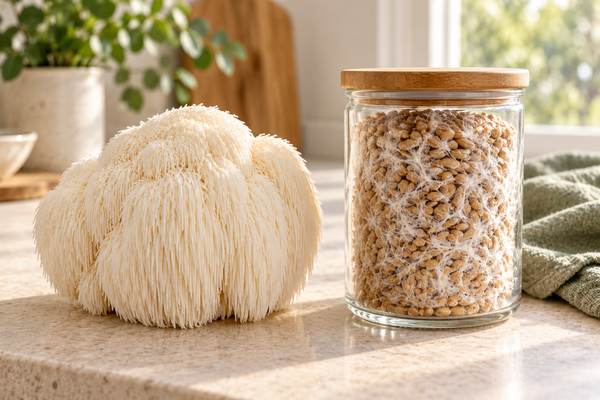
Fruiting Body vs Mycelium on Grain: What to Ask a Lion's Mane SupplierLion's Mane fruiting body vs mycelium on grain: a neutral look at how each is made, what testing...
7 October 2026
Fruiting Body vs Mycelium on Grain: What to Ask a Lion's Mane SupplierLion's Mane fruiting body vs mycelium on grain: a neutral look at how each is made, what testing...
 7 October 2026
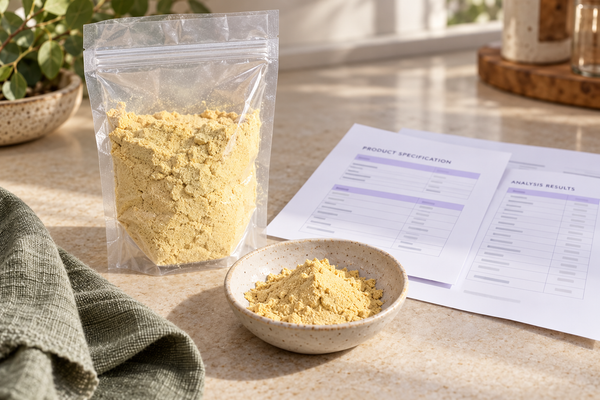
Lion's Mane Extract Specifications ExplainedLion's Mane extract specifications explained: ratio, beta-glucans and test method, solubility, mesh, moisture, heavy metals and micro, line...
7 October 2026
Lion's Mane Extract Specifications ExplainedLion's Mane extract specifications explained: ratio, beta-glucans and test method, solubility, mesh, moisture, heavy metals and micro, line...
 7 October 2026
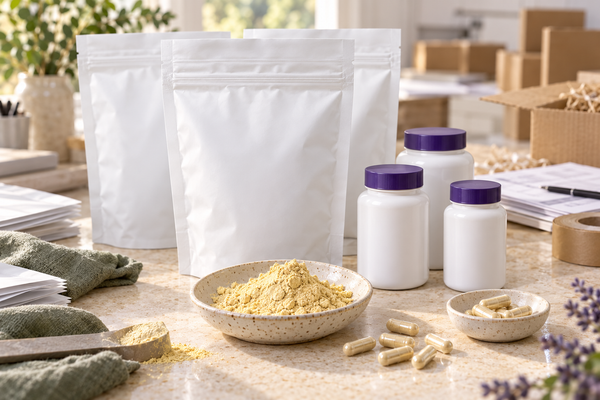
How White Label Lion's Mane Supply Works: From Sample to First OrderHow white label Lion's Mane supply works, step by step: enquiry, specs and sample, quote, production and dispatch,...
7 October 2026
How White Label Lion's Mane Supply Works: From Sample to First OrderHow white label Lion's Mane supply works, step by step: enquiry, specs and sample, quote, production and dispatch,...
Get farm and supply updates
New batches, lab results and bulk pricing, a few times a year.