
What Is the ARTG? A Plain Guide for Supplement Brands

If you are building a supplement brand in Australia, you will hear about the ARTG early. So what is ARTG, and why does it matter before you print a single label?
This guide explains the register in plain English: listed and registered medicines, AUST numbers, the sponsor's role and how claims shape everything.
It is general information for brands, not legal advice. For decisions about a specific product, work with a qualified regulatory consultant.
What Is the ARTG?
The ARTG, or Australian Register of Therapeutic Goods, is the public database of therapeutic goods that can be legally supplied in Australia. It is maintained by the Therapeutic Goods Administration (TGA), the Commonwealth regulator for medicines and medical devices.
According to the TGA's page about the Australian Register of Therapeutic Goods, each entry holds details such as the product name, formulation, sponsor and manufacturer. In practice, if a product is a therapeutic good and is not covered by a specific access scheme, it generally needs an ARTG entry before it is imported, supplied or exported.
The key word is "therapeutic". The TGA regulates medicines, medical devices and biologicals, and that includes complementary medicines such as vitamins, herbal products and some nutritional supplements. It does not regulate food. The TGA makes this distinction clear in its short explainer on what the TGA does and doesn't regulate.
That is why the first question for any brand is not "how do I get on the ARTG?" but "is my product a therapeutic good at all?" The answer depends on ingredients, form, presentation and claims, which we cover below.
Listed vs Registered Medicines: AUST L, AUST L(A) and AUST R
Medicines on the ARTG sit in risk-based tiers, and each tier carries a different AUST number on the label. Lower risk products are listed; higher risk products are registered after a full premarket assessment.

| Tier | Label number | Risk and claims | TGA assessment |
|---|---|---|---|
| Listed medicine | AUST L | Low-risk permitted ingredients, low-level indications only | Not individually assessed before supply; sponsor self-certifies |
| Assessed listed medicine | AUST L(A) | Low-risk ingredients with intermediate-level indications | Efficacy assessed by the TGA |
| Registered medicine | AUST R | Higher-risk ingredients or higher-level claims | Premarket assessment of quality, safety and efficacy |
The TGA explains on its listed medicines page that listed products are low-risk, non-prescription medicines that can only contain low-risk ingredients and make low-level health claims. A calcium supplement with bone health claims is its own example.
Registered complementary medicines are a step up. They may contain higher-risk ingredients or make higher-level claims, and the TGA assesses them before they reach the market. Its guidance on registered complementary medicines gives an iron product making an anaemia claim as an example.
Every medicine on the ARTG must show its AUST number on the label. The TGA's page on AUST numbers on medicine labels notes that AUST R and AUST L(A) products are assessed for efficacy, while AUST L products are not.
Who Is the Sponsor?
The sponsor is the Australian person or company legally responsible for a product on the ARTG. The sponsor applies for the entry, holds the evidence and carries the ongoing compliance obligations.
For a listed medicine, the sponsor certifies that the product meets the safety, quality and efficacy requirements, including holding evidence for every indication it uses. The TGA can review listed medicines at any time after they reach the market, so this paperwork needs to be ready from day one.
Sponsor obligations usually include using an appropriately licensed or certified manufacturer, meeting labelling and advertising rules, keeping records and reporting certain problems. These duties sit with the brand that puts its name on the entry.
This is a useful distinction for B2B buyers. An ingredient supplier is not automatically the sponsor of your finished product. A supplier can provide specifications, certificates of analysis and testing data, but the regulatory pathway, the claims and the sponsor role belong to whoever brings the finished product to market.
Indications, Ingredients and Claims
What you say about a product matters as much as what is in it. On the ARTG, indications (the health claims a medicine makes) help decide which tier applies and what evidence is required.
Listed medicines can only use indications drawn from the TGA's permitted list, and only ingredients the TGA has approved for use in listed medicines. Those permissible ingredient rules are updated from time to time, so a regulatory consultant should check the current determinations against your formula.
Claims also work in the other direction. A product sold as a food can be drawn into therapeutic goods regulation if it is presented with therapeutic claims, such as claims to prevent, treat or cure a condition. The TGA's guidance to know how food and medicine are regulated explains this overlap, known as the food-medicine interface.
For mushroom brands, this is the practical heart of the matter. The same ingredient can sit in very different regulatory positions depending on dose form, labelling, marketing copy and intended use.
How to Check an ARTG Entry
You can search the ARTG online by product name, AUST number, ingredient or sponsor. The TGA links to its public ARTG search from the main register page.

Start with the AUST number on the label, then confirm that the product name, sponsor and ingredients in the entry match the pack. A mismatch, or a product that looks like a medicine with no AUST number, is worth questioning.
What This Means for Your Brand
Settle your product's regulatory pathway before you finalise formulation, labels or marketing. Changing a claim after launch costs far less than rebuilding packaging or a whole range.

Useful questions to take to a regulatory consultant include:
- Classification: is this product a food or a therapeutic good in its intended form and presentation?
- Pathway: if it is a therapeutic good, is it listed, assessed listed or registered?
- Claims: which indications or food claims, if any, can we lawfully use?
- Sponsor and manufacture: who will be the sponsor, and which manufacturer meets the requirements?
Your ingredient supplier should support that review with documents. At Xotic Mushrooms we share our Lion's Mane specifications and testing with brands. Knowing how to read a Lion's Mane COA will also make those conversations faster. Our extract is supplied as an ingredient and finished white label product; it is not described as ARTG listed, and your consultant should confirm the right pathway for your own product.
If you are weighing formats, the differences between private label Lion's Mane supplements and white label are worth understanding, since a custom formula can change the regulatory picture.
Conclusion: Know the Register Before You Launch
The ARTG is the register for therapeutic goods, not a badge every supplement needs. Whether your product belongs on it depends on its form, ingredients and claims.
Get regulatory advice early, then talk to us about white and private label Lion's Mane, specifications and samples for your range.
FAQs
1. What does ARTG stand for?
ARTG stands for the Australian Register of Therapeutic Goods. It is the public database, run by the Therapeutic Goods Administration, of medicines, medical devices and biologicals that can be legally supplied in Australia. Each entry records details such as the product name, formulation, sponsor and manufacturer, and medicines on the register carry an AUST number on their label.
2. What is the difference between AUST L and AUST R?
AUST L identifies a listed medicine: low-risk ingredients, low-level claims and no individual TGA assessment before supply, with the sponsor self-certifying compliance. AUST R identifies a registered medicine, which may contain higher-risk ingredients or make higher-level claims and is assessed premarket for quality, safety and efficacy. AUST L(A) sits between them, with efficacy assessed.
3. Does every supplement need to be on the ARTG?
No. Only products that are therapeutic goods generally need an ARTG entry. Many products sold as foods are regulated under the Food Standards Code instead. Classification depends on ingredients, form, presentation and claims, so a regulatory consultant should assess each specific product rather than relying on how similar products are sold.
4. Who can be a sponsor on the ARTG?
A sponsor is the Australian person or company that applies for and is legally responsible for a product's ARTG entry. The sponsor holds evidence for the product's claims, meets manufacturing, labelling and advertising obligations and keeps records. An ingredient supplier is not automatically the sponsor of a brand's finished product.
5. How do I check if a product is on the ARTG?
Use the TGA's public ARTG search, accessible from its ARTG information page. Search by product name, AUST number, ingredient or sponsor, then check that the entry's details match the product label. A medicine-like product with no AUST number on its label may warrant closer questions.
6. Does "TGA approved" mean the same as ARTG listed?
Not exactly. "Listed" refers to AUST L medicines, which are not individually assessed by the TGA before supply. Registered and assessed listed medicines are evaluated for efficacy. Brands should describe a product's regulatory status accurately and avoid implying TGA endorsement, as advertising rules apply to therapeutic goods.
Source Lion’s Mane extract powder at scale
Australian-grown 10:1 fruiting body extract in 1 kg and 5 kg bags, with named-lab testing and white label supply for growing brands.
Request a sample or quote
Related articles
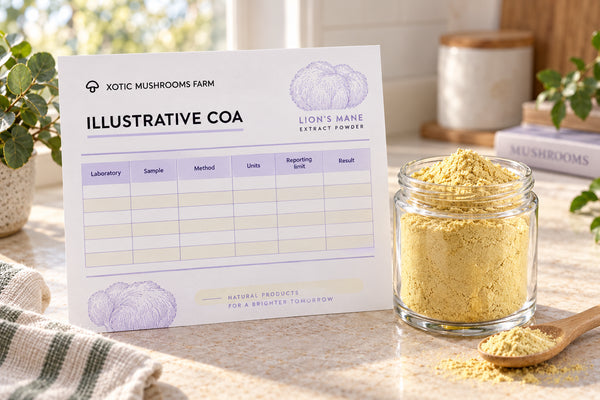 7 October 2026
How to Read a Lion's Mane COA (Certificate of Analysis)Learn how to read a Lion's Mane COA section by section: lab accreditation, batch ID, test methods, units,...
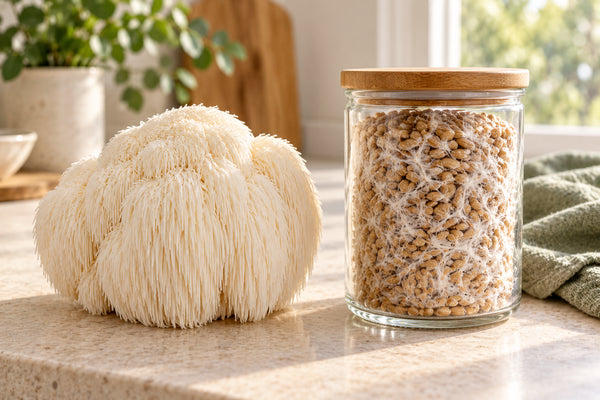 7 October 2026
Fruiting Body vs Mycelium on Grain: What to Ask a Lion's Mane SupplierLion's Mane fruiting body vs mycelium on grain: a neutral look at how each is made, what testing...
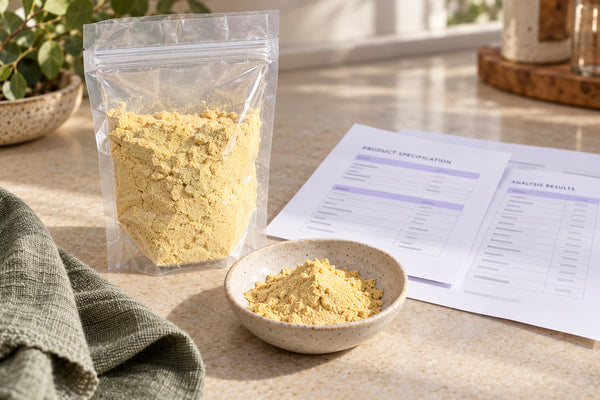 7 October 2026
Lion's Mane Extract Specifications ExplainedLion's Mane extract specifications explained: ratio, beta-glucans and test method, solubility, mesh, moisture, heavy metals and micro, line...
Get farm and supply updates
New batches, lab results and bulk pricing, a few times a year.
More from White Label & Bulk Supply
- How White Label Lion's Mane Supply Works: From Sample to First Order
- Packaging Considerations for Lion’s Mane Extract
- Shelf Stability of Lion’s Mane Extract Powder
- Custom Formulation Options for Lion’s Mane Products
- Importing and Sourcing Lion’s Mane Extract in Australia
- COAs and Testing for Lion’s Mane Extract Products