Lion's Mane Extract Specifications Explained

Introduction
Lion's Mane extract specifications describe what an ingredient is, how it was made and how it tested, so buyers can compare suppliers on evidence rather than marketing. This guide walks through each line of a typical spec sheet: identity and extract ratio, beta-glucans and test method, solubility, mesh, moisture, contaminants, and the storage and traceability items QA teams increasingly ask for. For each, we explain what it means, what to ask, and what Xotic Mushrooms publishes today, including where results are still to come.
What is on a Lion's Mane extract spec sheet?
A Lion's Mane extract spec sheet usually covers identity, extraction, active compounds, physical properties, contaminants and storage, each with a value and a method or source. The table below summarises each parameter and where ours stands.
| Parameter | What it tells you | Xotic Mushrooms |
|---|---|---|
| Botanical name and part used | Species and whether fruiting body or mycelium | Hericium erinaceus, 100% fruiting body |
| Extraction method and ratio | Solvent and input concentration | Freeze-dried, hot-water and ethanol dual extraction, 10:1 |
| Beta-glucans | Measured polysaccharide group, by named method | Results on the Specs page, with lab, date and method |
| Solubility | How the powder behaves in liquid | To confirm |
| Particle size or mesh | Fineness of the powder | Particle size analysis at 70, 200 and 300 micron completed (Jan 2026); spec value to confirm |
| Moisture | Stability and shelf life | To confirm |
| Water activity | How much water is available for microbial growth | To confirm |
| Residual solvent | Ethanol left after extraction and drying | To confirm |
| Heavy metals | Contaminant screening | Nine trace elements analysed (Symbio, May 2026; AEGIC, Nov 2024) |
| Microbiology | Hygiene and safety screening | E. coli and coliforms not detected (below the method's limit of detection), April 2025 screening |
| Pesticides | Residue screening | Not yet tested |
| Storage conditions | How to keep the powder stable | To confirm |
| Shelf life | How long the specification holds | To confirm |
| Batch identification | Traceability from pack to production run | To confirm |
Full detail is on our specifications and testing page, along with a downloadable spec sheet.
Specification limit, typical value and measured result
Three kinds of number appear on spec sheets and lab reports, and mixing them up is one of the most common buyer mistakes.
- Specification limit: the minimum or maximum the supplier commits to for every batch, for example "moisture not more than X%". This is the number a contract or quality agreement should reference.
- Typical value: an average or representative figure from past production. It shows what to expect, but it is not a guarantee for any single batch.
- Measured sample result: what one laboratory found in one sample on one date. It is real evidence, but it only describes that sample.
When a supplier quotes a figure, ask which of the three it is. Our published results are measured sample results, each tied to a laboratory, sample and date.
Identity and extract ratio
Identity confirms you are buying the right species and part of the mushroom, while the ratio tells you how much raw material went into the extract. Both are basic, but both are often vague on competing labels.
Part used
Look for an explicit statement of fruiting body, mycelium or a blend. Mycelium grown on grain can carry starch into the powder. Ours is fruiting body only, with no starch, grain or mycelium fillers.
Extract ratio
A 10:1 ratio means about ten parts of dried starting material made one part of extract. It is not a measure of strength. As a separate fresh-weight example, about 4 kg of fresh Lion's Mane goes into every 100 g of our powder, because fresh mushrooms are mostly water.
Beta-glucans and test method
A beta-glucan figure is only meaningful when the laboratory, sample, date and test method are stated alongside it. Different methods can produce very different numbers from the same powder.
Beta-glucans are a group within total polysaccharides. A total polysaccharide figure can include starch and other sugars, which is why a separate beta-glucan result is more useful for comparing products. A widely used approach is the mushroom and yeast beta-glucan method from Megazyme.
Our extract has been tested for beta-glucans by Symbio Laboratories (May 2026) and AEGIC Analytical Services (November 2024) using the mushroom and yeast method. The AEGIC historical sample recorded 24.5 g/100 g; the Symbio certificate is linked on our Specs page. Each result applies to the sample and date tested, not to every batch.
When comparing suppliers, ask which method was used, whether the lab is accredited for that method, and whether the figure is a specification limit, a typical value or a single measured sample.
Physical specifications
Physical specifications such as solubility, particle size, moisture and water activity determine how a powder handles in production and how it behaves in the finished product. They matter as much to formulators as compound content does.
Solubility
Extracts generally disperse better than whole powder because insoluble fibre is reduced. Ask whether solubility is stated as fully soluble, dispersible, or with a measured percentage. Our formal solubility value is to confirm.
Particle size and mesh
Mesh describes fineness: a higher mesh number means finer powder. Finer powders suit capsule filling and drinks. We completed particle size analysis at 70, 200 and 300 micron in January 2026; the specified mesh is to confirm.
Moisture and water activity
Moisture affects caking, microbial stability and shelf life. Water activity is a related but different measure: it shows how much of that water is free to support microbial growth, so two powders with similar moisture can behave differently. Ask for a maximum moisture value and a water activity figure. Our moisture and water activity specifications are to confirm.
Contaminants: heavy metals, microbiology, residual solvent and pesticides
Contaminant testing checks for heavy metals, microbial hazards and residues, and should come from an independent laboratory with stated limits. These are the results retailers and regulators most often ask to see.
Heavy metals
Mushrooms can absorb metals from their substrate, so lead, cadmium, arsenic and mercury are core checks. Our extract has had nine trace elements analysed by Symbio (May 2026) and AEGIC (November 2024), with values and reporting limits in the reports. The AEGIC report is available on request.
Microbiology
Typical panels include total plate count, yeast and mould, E. coli, coliforms and Salmonella. Our extract recorded E. coli and coliforms as not detected (below the method's limit of detection) in an April 2025 screening. "Not detected" never means zero; it means below the lowest level the method can reliably measure, so ask for that limit alongside the result. A full microbial panel is to confirm.
Residual solvent
Where ethanol is used in extraction, buyers may ask how much remains in the finished powder after drying. Ask for a residual solvent result or specification. Ours is to confirm.
Pesticides
Pesticide residues are commonly screened in botanical ingredients. We have not yet tested for pesticides, and screening at an accredited laboratory is on our roadmap.
Storage, shelf life and batch identification
These items do not describe the powder itself, but they determine whether the specification still holds when the product reaches your customer, and whether a problem can be traced.
- Storage conditions: recommended temperature, humidity and light protection, and the packaging the stability data was based on. To confirm.
- Shelf life: the period the supplier commits the specification will hold under those storage conditions, and what data supports it. To confirm.
- Batch identification: how batches are numbered and whether a batch code links each pack back to production records and any certificate of analysis. To confirm.
Questions to ask any Lion's Mane supplier
The most useful questions focus on scope, method and documentation rather than headline numbers. Use these with any supplier, including us.
- Which laboratory tested each parameter, and when?
- Which test method was used for beta-glucans?
- Is this figure a specification limit, a typical value or a single sample result?
- Do results apply to the batch I am buying, or to a historical sample?
- Are there carriers, starch or grain in the finished powder?
- What are the limits for heavy metals and microbiology, and the method's limit of detection?
- What are the storage conditions, shelf life and batch coding?
- Can I see the full reports, not just a summary?
For the full buying process, see our guide to how white label Lion's Mane supply works.
Conclusion
A good spec sheet answers what the ingredient is, how it was made, how it tested and how it should be stored, with a lab, date and method behind every number. If your QA team needs our full reports, request the reports and a sample and tell us which batch you are quoting.
FAQs
What test method is used for Lion's Mane beta-glucans?
A common approach is the enzymatic mushroom and yeast beta-glucan method, which measures beta-glucans separately from starch. Different methods can produce different results from the same powder, so always check which method a supplier used, which laboratory ran it, and the date of the test.
Is the extract ratio a measure of potency?
No. An extract ratio such as 10:1 describes how much dried starting material went into the finished extract. It does not measure the amount of any compound or the strength of the product. A measured beta-glucan result from a named laboratory is a better basis for comparison.
What is the difference between a specification and a test result?
A specification limit is what the supplier commits to for every batch. A typical value is a representative average. A test result is what one lab measured in one sample on one date. Ask which one you are looking at before comparing suppliers.
What mesh size is typical for Lion's Mane extract powder?
Mesh size varies by supplier and application. Finer powders are generally preferred for capsule filling and drinks, while coarser powders can suit food uses. Ask suppliers for their specified mesh or micron range and whether particle size has been independently measured.
Which heavy metals should a Lion's Mane extract be tested for?
Lead, cadmium, arsenic and mercury are the core heavy metals to check, since mushrooms can absorb metals from their growing substrate. Ask for the measured values, the reporting limits and the laboratory that ran the analysis.
Is every batch of Lion's Mane extract tested?
It depends on the supplier. At Xotic Mushrooms, published results apply to the named sample and date, and per-batch certificates of analysis are the next step on our testing roadmap. Ask any supplier which reports apply to the batch you are actually buying.
Source Lion’s Mane extract powder at scale
Australian-grown 10:1 fruiting body extract in 1 kg and 5 kg bags, with named-lab testing and white label supply for growing brands.
Request a sample or quote
Related articles
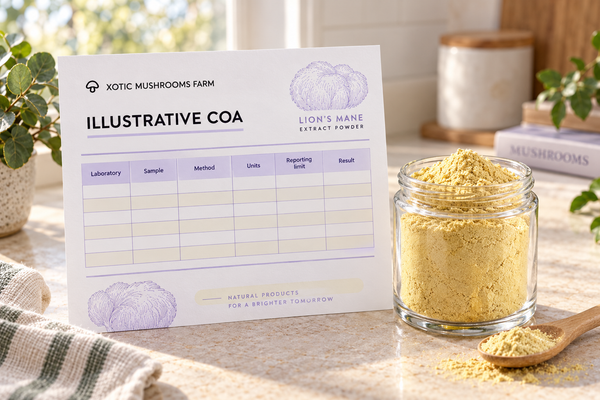 7 October 2026
How to Read a Lion's Mane COA (Certificate of Analysis)Learn how to read a Lion's Mane COA section by section: lab accreditation, batch ID, test methods, units,...
7 October 2026
How to Read a Lion's Mane COA (Certificate of Analysis)Learn how to read a Lion's Mane COA section by section: lab accreditation, batch ID, test methods, units,...
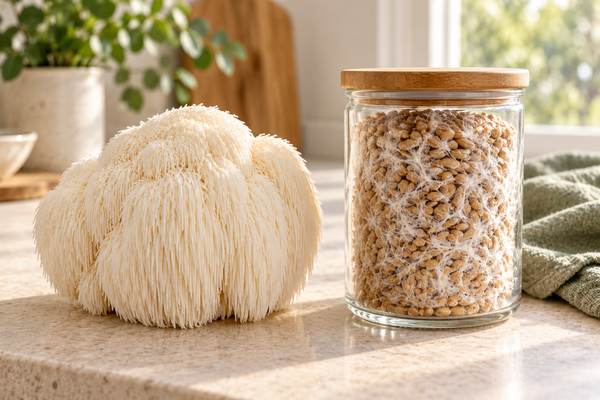 7 October 2026
Fruiting Body vs Mycelium on Grain: What to Ask a Lion's Mane SupplierLion's Mane fruiting body vs mycelium on grain: a neutral look at how each is made, what testing...
7 October 2026
Fruiting Body vs Mycelium on Grain: What to Ask a Lion's Mane SupplierLion's Mane fruiting body vs mycelium on grain: a neutral look at how each is made, what testing...
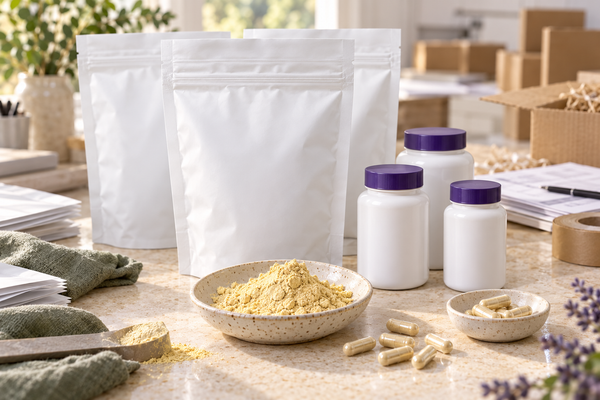 7 October 2026
How White Label Lion's Mane Supply Works: From Sample to First OrderHow white label Lion's Mane supply works, step by step: enquiry, specs and sample, quote, production and dispatch,...
7 October 2026
How White Label Lion's Mane Supply Works: From Sample to First OrderHow white label Lion's Mane supply works, step by step: enquiry, specs and sample, quote, production and dispatch,...
Get farm and supply updates
New batches, lab results and bulk pricing, a few times a year.