Why Brands Choose Extract Powder Over Capsules

As Lion’s Mane continues to gain traction across cognitive support, daily wellness, and functional beverage markets, brands are faced with a critical product development decision: powder or capsule? While capsules dominate traditional supplement aisles, extract powders are increasingly becoming the preferred format for emerging and scaling brands.
Format selection is not a cosmetic choice. It directly affects cost structure, margin flexibility, supply chain complexity, and scalability. For white label operators and growth-focused supplement companies, extract powder often presents structural advantages that capsules cannot match.
This article examines the commercial reasoning behind that shift and why extract powder has become a strategic format for many Lion’s Mane brands.
Powder Versus Capsule: Structural Format Differences
Capsules require multiple production layers beyond extraction. After producing the extract powder, manufacturers must operate encapsulation machinery, source capsule shells, conduct additional weight verification, and perform post-encapsulation quality checks. Each layer adds cost, equipment dependency, and potential bottlenecks.
Extract powder, by contrast, eliminates encapsulation infrastructure entirely. Once drying, concentration, and laboratory validation are complete, the product moves directly to packaging. The workflow is shorter and operational risk points are reduced.
Regulatory frameworks for powders and capsules are largely similar in most jurisdictions. However, capsules introduce additional component sourcing considerations such as gelatin or vegetarian shell compliance, which may carry labelling implications.
Core Commercial Advantages of Extract Powder

Below are the primary commercial reasons brands increasingly prioritise extract powder over capsules:
1. Lower Manufacturing Cost Per Unit
Encapsulation equipment, capsule shells, and additional labour increase per-unit production cost. Powder formats bypass these inputs. Without capsule shells or secondary filling lines, brands reduce raw material expenditure and mechanical complexity. Fewer processing steps also decrease operational downtime risk.
For startups entering the Lion’s Mane market, lower per-unit cost reduces initial capital pressure and improves early-stage viability.
2. Greater Margin Flexibility
Powder formats offer greater pricing flexibility. Bulk packaging reduces component costs compared to individual capsule bottles requiring higher packaging density. Brands can position powder products across premium, performance, or value tiers more easily.
Serving size control also supports margin strategy. Adjusting scoop size allows brands to optimise cost per serve without altering infrastructure. Capsules offer less flexibility once capsule size and fill weight are standardised.
3. Scalable Production Volumes
Scaling encapsulation requires additional machinery capacity and specialised labour. Powder production scales more efficiently because it relies primarily on batching, drying, and packaging expansion.
As demand grows, powder formats allow faster throughput adjustments. Extraction capacity can increase without proportional investment in capsule-filling infrastructure. This makes powder particularly attractive for brands forecasting aggressive growth.
4. Formulation Versatility
Extract powder integrates easily into coffee blends, nootropic stacks, beverage powders, and multi-ingredient functional products. Capsules are fixed-dose and cannot easily be reformulated without changing capsule size or count.
Powder format also allows brands to create single-ingredient SKUs alongside blended formulations without redesigning delivery systems. This versatility expands product line strategy while maintaining manufacturing continuity.
5. Simplified Supply Chain Logistics

Capsule production depends on external suppliers for shell materials. Supply disruptions affecting capsule shells can halt production even if extract inventory remains available.
Powder formats reduce dependency on secondary material suppliers. Fewer components mean fewer supply chain failure points. For white label brands, simplified logistics translate to improved reliability and shorter lead times.
6. Easier Extract Standardisation Transparency
Extract powders communicate potency per gram clearly. Beta-glucan or polysaccharide density can be disclosed in direct proportion to serving size. Capsule fill weight may obscure how much active material is present per unit.
Powder transparency supports clearer potency positioning. For brands emphasising standardised extract ratios, powder simplifies communication.
Operational Considerations When Choosing Powder Over Capsules
Before committing to powder format, brands must understand the operational disciplines required to maintain quality, stability, and consumer consistency:
- Moisture Management Requirements: Powder is sensitive to humidity exposure. Controlled drying protocols and low-moisture specifications are essential to maintain flowability and prevent clumping or degradation.
- Packaging Barrier Selection: Containers must provide adequate protection against air and moisture ingress. Material choice directly affects shelf stability and product integrity over time.
- Serving Accuracy and Consumer Guidance: Powders rely on scoop measurement rather than fixed capsule counts. Clear serving instructions and calibrated scoops are necessary to ensure consistent consumer dosing.
- Shelf Stability Controls: When moisture parameters are properly managed, powder stability is comparable to capsules. However, ongoing environmental monitoring is required to maintain batch integrity throughout storage and distribution.
White Label and B2B Advantages of Powder Format
White label manufacturing often favours powder due to lower minimum order quantities and simplified production scheduling. Encapsulation lines may require larger batch commitments to justify setup costs.
Powder enables faster market entry. Without encapsulation tooling requirements, brands can move from formulation to finished goods more quickly. For B2B bulk buyers, powder format also simplifies export and repackaging logistics.
Private label distributors benefit from format flexibility. Powder can be repackaged under different brand identities with fewer mechanical adjustments compared to capsule formats.
When Capsules May Still Be Strategically Preferred

Capsules retain value in certain positioning strategies. Consumers seeking convenience and pre-measured dosing often prefer capsules. Pharmacy channels may also favour capsule presentation for perceived familiarity.
Standardised daily dosing is easier to communicate with capsules. Premium positioning sometimes leverages capsule format to align with traditional supplement expectations.
However, capsule advantages are often marketing-driven rather than operationally driven. For brands prioritising cost control and scalability, powder frequently presents a stronger infrastructure case.
Cost Structure Comparison: Powder Versus Capsule Manufacturing
Before selecting a product format, brands must evaluate how each option affects capital investment, operational complexity, and long-term margin performance. Below is a structured comparison of the core cost variables.
| Cost Variable | Extract Powder Manufacturing | Capsule Manufacturing |
|---|---|---|
| Raw Material Inputs | Primarily extract powder with minimal additional components | Extract powder plus capsule shells (gelatin or vegetarian alternatives) |
| Machinery Requirements | Drying, blending, and packaging systems only | Drying, blending, encapsulation machinery, and additional handling systems |
| Capital Expenditure | Lower upfront investment; no encapsulation line required | Higher capital investment for encapsulation equipment and tooling |
| Labour Intensity | Fewer production stages; reduced handling complexity | Additional labour for capsule filling, monitoring, and inspection |
| Quality Control Layers | Batch testing focused on extract integrity | Extract testing plus post-encapsulation weight and integrity checks |
| Packaging Requirements | Bulk containers or tubs with lower material density | Bottles containing multiple capsules; higher packaging material usage |
| Scalability Costs | Scaling primarily involves increasing batching and packaging capacity | Scaling requires expanded encapsulation capacity and higher machinery investment |
| Cost-of-Goods Outlook | Typically more favourable margins at scale | Higher per-unit production costs due to additional processing layers |
Strategic Positioning: How Format Choice Affects Brand Perception

Powder formats are often associated with performance, customisation, and stack integration. Fitness and nootropic audiences frequently prefer powders for blend compatibility.
Capsules are perceived as convenient and standardised. Brands must align format with target audience expectations. However, perception alone should not override structural cost analysis.
Format choice influences not only consumer perception but operational resilience. Brands seeking rapid SKU expansion and lower supply chain friction often gravitate toward powder.
Long-Term Scalability and Commercial Resilience
As Lion’s Mane demand expands, operational simplicity becomes increasingly valuable. Powder formats reduce mechanical dependencies, streamline batching, and improve throughput flexibility.
Scaling encapsulation often requires new equipment investment and extended setup times. Powder production scales primarily through increased extraction and packaging capacity. Fewer production layers reduce failure points.
Commercial resilience depends on infrastructure depth. Powder manufacturing offers a streamlined pathway for brands prioritising long-term growth, margin preservation, and flexible product development.
Conclusion
Choosing extract powder over capsules is often a strategic infrastructure decision rather than a cosmetic preference. Powder formats reduce manufacturing complexity, lower per-unit cost, enhance scalability, and simplify supply chains.
While capsules retain convenience advantages in certain retail channels, powder frequently delivers stronger operational flexibility and margin control for growth-focused brands. As the Lion’s Mane category matures, format selection will continue to influence commercial viability.
For brands entering or scaling within the functional mushroom sector, extract powder often provides the structural advantages required to compete effectively in an increasingly formalised market.
Source Lion's Mane extract powder at scale
Consistent extract quality, full testing, and white label supply built for growing brands.
Talk to our supply teamRelated articles
 20 August 2026
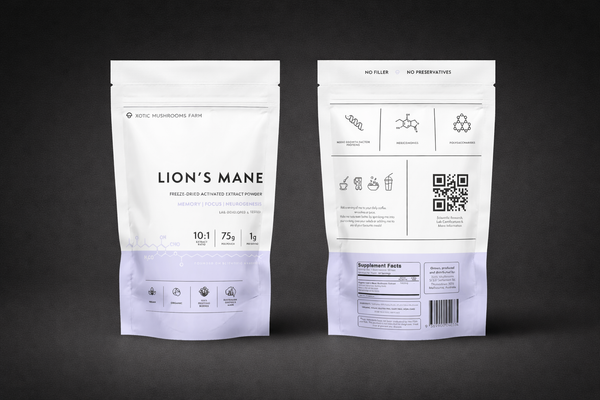
Packaging Considerations for Lion’s Mane ExtractPackaging plays a critical role in maintaining the quality and performance of Lion’s Mane extract. While formulation and...
20 August 2026
Packaging Considerations for Lion’s Mane ExtractPackaging plays a critical role in maintaining the quality and performance of Lion’s Mane extract. While formulation and...
 20 August 2026
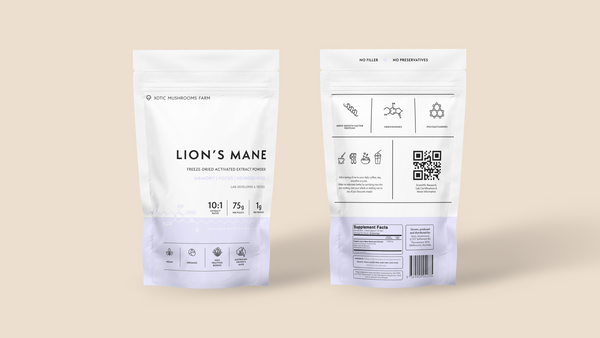
Shelf Stability of Lion’s Mane Extract PowderShelf stability plays a central role in how well a Lion’s Mane extract powder performs over time. For...
20 August 2026
Shelf Stability of Lion’s Mane Extract PowderShelf stability plays a central role in how well a Lion’s Mane extract powder performs over time. For...
 20 August 2026
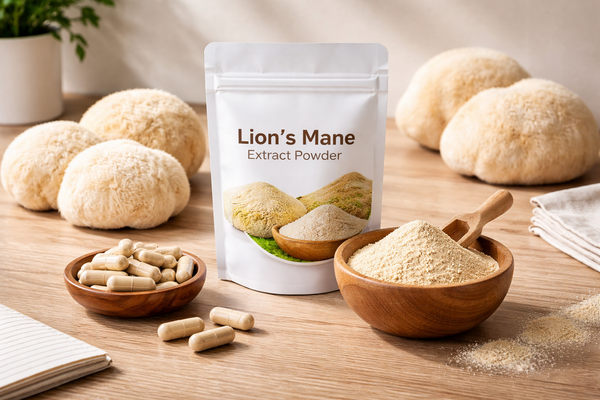
Lion’s Mane Powder for Nootropic Supplement LinesNootropic supplements have become one of the fastest growing segments within the nutraceutical industry. These products are commonly...
20 August 2026
Lion’s Mane Powder for Nootropic Supplement LinesNootropic supplements have become one of the fastest growing segments within the nutraceutical industry. These products are commonly...
Get supply and pricing updates
Product specs, new extract batches, and bulk pricing for supplement brands and distributors.