Lion’s Mane Powder for Nootropic Supplement Lines

Nootropic supplements have become one of the fastest growing segments within the nutraceutical industry. These products are commonly formulated to support focus, mental performance, and daily cognitive wellness. As the category continues to expand, functional mushrooms have become a frequent ingredient choice in many nootropic formulations.
Among these ingredients, Lion’s Mane mushroom is widely used across capsules, powders, and functional beverage products. For supplement brands developing nootropic product lines, selecting the right Lion’s Mane ingredient and formulation format plays an important role in product design.
Understanding how Lion’s Mane powder and extract ingredients function within nootropic formulations helps brands develop products that balance ingredient concentration, manufacturing efficiency, and long-term product stability.
Why Lion’s Mane Is Used in Nootropic Formulations
Lion’s Mane mushroom is widely incorporated into nootropic supplement products due to its compatibility with modern formulation practices and its versatility across multiple supplement formats. For brands developing nootropic product lines, Lion’s Mane extract can function as a foundational ingredient within capsules, powders, and beverage-style supplements.
Key reasons Lion’s Mane is commonly used in nootropic formulations include:
- Compatibility with multi-ingredient formulations: Lion’s Mane extract blends well with other mushroom extracts, botanical ingredients, and nutritional compounds used in nootropic products.
- Availability in concentrated extract powders: Lion’s Mane is commonly produced as concentrated extract powders, which allow supplement brands to incorporate meaningful ingredient levels within practical serving sizes.
- Versatility across supplement formats: Lion’s Mane extract can be incorporated into capsule supplements, powdered drink mixes, and functional beverage products without significant formulation limitations.
- Efficient dosage planning: Concentrated extract powders make it easier for formulation teams to achieve target dosage levels while maintaining manageable serving sizes.
- Stable ingredient behaviour in manufacturing: Lion’s Mane extract powders typically maintain consistent particle characteristics, which supports reliable blending and capsule filling during production.
- Compatibility with botanical and nutritional ingredients: Lion’s Mane extract can be combined with a wide range of complementary ingredients used in nootropic formulations.
These characteristics allow formulation teams to incorporate Lion’s Mane extract into a wide range of product designs while maintaining flexibility in dosage planning and manufacturing requirements.
Common Nootropic Supplement Formats Using Lion’s Mane

Different supplement formats influence how Lion’s Mane extract is incorporated into nootropic formulations. Product format decisions affect dosage planning, ingredient compatibility, and manufacturing requirements.
1. Capsules
Capsules remain one of the most common formats used in nootropic supplement lines.
They provide accurate serving sizes and convenient dosing for consumers. Capsule formulations often combine Lion’s Mane extract with other botanical ingredients or nutritional compounds within the same formulation.
Using concentrated extracts such as 15:1 Lion’s Mane extract allows manufacturers to maintain practical serving sizes while fitting the formulation within standard capsule capacities.
Capsules also offer relatively straightforward manufacturing processes, which makes them an efficient option for supplement brands launching new nootropic products.
2. Powdered Nootropic Blends
Powdered nootropic blends allow brands to incorporate Lion’s Mane extract into drink mixes designed for daily use.
These powders are typically mixed with water, smoothies, or coffee style beverages and may include combinations of mushroom extracts, botanical ingredients, and nutritional compounds.
Powder blends allow greater flexibility in ingredient inclusion because serving sizes can be larger compared with capsules. This makes them suitable for formulations that include several ingredients within the same product.
However, formulation teams must carefully evaluate flavour balance, powder density, and blending performance to ensure consistent ingredient distribution throughout the product.
3. Functional Nootropic Beverage Mixes
Functional beverage powders have become increasingly popular in the nootropic category.
These products often combine Lion’s Mane extract with ingredients used in daily beverage products such as cacao, coffee alternatives, or botanical extracts.
Beverage formulations require careful ingredient planning to ensure the product mixes evenly in liquid and maintains balanced flavour characteristics.
Because of these additional formulation considerations, beverage products typically require more extensive testing during development compared with capsule supplements.
Lion’s Mane Powder vs Extract in Nootropic Supplements

Although Lion’s Mane powder can be used in supplement products, many nootropic formulations rely on concentrated Lion’s Mane extract powders. This comparison below helps supplement brands evaluate which Lion’s Mane ingredient format best supports their formulation goals, product format, and dosage requirements when developing nootropic supplement lines:
| Comparison Factor | Lion’s Mane Mushroom Powder | Lion’s Mane Extract Powder |
|---|---|---|
| Basic Definition | Produced by drying Lion’s Mane mushrooms and milling them into a fine powder. | Produced through controlled extraction processes that concentrate compounds from the mushroom material. |
| Processing Method | Minimal processing. The mushroom is dried and ground into powder. | The mushroom undergoes extraction where cell walls are broken down and compounds are concentrated. |
| Concentration of Compounds | Lower concentration per gram because the entire mushroom matrix is retained. | Higher concentration because the extraction process concentrates compounds from the mushroom. |
| Extract Ratio | No extract ratio because the powder is simply ground mushroom. | Expressed using ratios such as 10:1 or 15:1 indicating how much raw mushroom was used to produce the extract. |
| Serving Size Requirements | Larger serving sizes are typically required to deliver meaningful mushroom quantities. | Smaller serving sizes can deliver similar mushroom equivalent due to higher concentration. |
| Formulation Efficiency | Less efficient for capsule products because higher powder quantities are needed. | Highly efficient for capsule formulations due to concentrated ingredient density. |
| Capsule Compatibility | May require multiple capsules per serving if higher quantities are needed. | Easier to incorporate into standard capsule sizes while maintaining target dosage levels. |
| Use in Nootropic Products | Occasionally used in beverage blends or functional food style products. | Widely used in capsule supplements, powdered nootropic blends, and functional beverage formulations. |
| Ingredient Stability in Formulations | Can vary depending on raw mushroom quality and processing methods. | Typically more consistent due to controlled extraction and standardised ingredient production. |
| Manufacturing Consistency | Greater batch variation may occur depending on mushroom cultivation and drying conditions. | More consistent batch to batch performance when produced by controlled extraction processes. |
| Suitability for Premium Supplements | Less common in high potency nootropic supplements due to lower concentration. | Often preferred in premium supplement formulations where potency and dosage efficiency are important. |
Ingredient Pairings Commonly Used in Nootropic Formulations

Lion’s Mane extract is frequently combined with other ingredients when developing nootropic supplements.
These combinations allow brands to design multi-ingredient formulations that align with broader supplement categories.
| Ingredient Category | Example Pairings | Purpose in Formulation |
|---|---|---|
| Functional Mushrooms | Cordyceps, Reishi, Chaga | Multi-mushroom supplement blends |
| Botanical Ingredients | Adaptogenic herbs | Botanical wellness formulations |
| Nutritional Compounds | Vitamins, minerals | Daily nutritional blends |
| Beverage Ingredients | Coffee alternatives, cacao | Functional beverage powders |
When developing these formulations, manufacturers evaluate ingredient compatibility to ensure stable blending and consistent ingredient distribution.
How Lion’s Mane Extract Supports Modern Nootropic Product Design
Modern nootropic supplements are typically designed around ingredients that can be incorporated easily into capsules, powdered blends, and functional beverage products. Lion’s Mane extract powders are particularly well suited to these formulations because they provide concentrated mushroom material in a stable and versatile ingredient format.
This concentration allows formulation teams to develop products that maintain strong ingredient density while keeping serving sizes practical for consumers.
Compared with raw mushroom powder, extract powders offer several formulation advantages. Their higher concentration allows supplement manufacturers to create compact formulations that fit efficiently within capsule formats. They also integrate well with other ingredients commonly used in nootropic products, making them suitable for multi-ingredient blends.
In powder formulations, extract ingredients generally provide better blending performance and more uniform distribution during manufacturing. Because of these characteristics, Lion’s Mane extract powders have become a widely used ingredient in the development of modern nootropic supplement products.
Dosage Planning for Lion’s Mane Nootropic Products

Determining the appropriate dosage of Lion’s Mane extract is a critical step during supplement formulation. Dosage planning requires careful evaluation of several formulation factors to ensure that the final product maintains practical serving sizes while delivering consistent ingredient levels.
Key factors influencing dosage planning include:
- Product format: The chosen supplement format, such as capsules, powder blends, or beverage mixes, affects how much Lion’s Mane extract can be included in each serving.
- Extract concentration: Higher concentration extracts allow manufacturers to incorporate smaller quantities of powder while maintaining meaningful ingredient levels.
- Extract ratio: Ratios such as 15:1 Lion’s Mane extract indicate how concentrated the extract is relative to the original mushroom material.
- Ingredient compatibility: When Lion’s Mane is combined with other compounds in multi ingredient formulations, dosage levels must be balanced across all ingredients.
- Capsule capacity limitations: Capsule products must fit the formulation within standard capsule sizes while maintaining target dosage levels.
- Serving size considerations: Powder supplements and beverage mixes may allow larger serving sizes compared with capsule products.
- Product positioning: Some nootropic supplements focus on single-ingredient formulations, while others combine Lion’s Mane with additional functional ingredients.
Using concentrated extracts allows supplement brands to maintain practical serving sizes while incorporating meaningful mushroom content. For example, a 15:1 Lion’s Mane extract enables manufacturers to deliver concentrated mushroom material within relatively small powder quantities, making it suitable for capsule and powder-based formulations.
Key Formulation Considerations for Mushroom-Based Nootropic Supplements
Developing mushroom-based nootropic supplements requires careful formulation planning to ensure the final product performs reliably during manufacturing, storage, and consumer use. Several formulation factors influence the stability and performance of Lion’s Mane supplement products.
Important formulation considerations include:
- Ingredient compatibility: Lion’s Mane extract must blend effectively with other ingredients in multi-ingredient formulations to maintain even distribution throughout the product.
- Powder density and particle size distribution: Consistent powder density and particle size help ensure smooth blending and reliable capsule filling during production.
- Ingredient stability during storage: Mushroom extracts and accompanying ingredients must remain stable throughout packaging, transportation, and retail storage conditions.
- Moisture sensitivity: Powdered ingredients can be sensitive to humidity, so formulation design and packaging must protect the product from excess moisture.
- Taste balance in beverage formulations: Powdered drink products require flavour planning to ensure the final product remains palatable when mixed with liquids.
- Capsule filling efficiency: Capsule formulations require powders with suitable flow properties to maintain consistent capsule weights during manufacturing.
- Manufacturing consistency: Ingredients and formulations must perform consistently across large scale production batches to maintain product quality and reliability.
Careful planning across these factors helps ensure that Lion’s Mane nootropic supplements maintain consistent ingredient distribution and remain stable during storage and distribution.
Manufacturing Considerations for Nootropic Formulations

Manufacturing requirements vary depending on the supplement format being produced. When developing Lion’s Mane nootropic products, manufacturers must evaluate several factors to ensure reliable production performance and consistent ingredient distribution.
Key manufacturing considerations include:
- Powder flow properties: Capsule formulations require powders with stable flow characteristics to ensure accurate and consistent capsule filling during production.
- Particle size consistency: Extract powders must maintain uniform particle characteristics to support reliable mixing and manufacturing performance.
- Ingredient distribution in blends: Powder blends and beverage mixes require even ingredient distribution so that each serving delivers consistent ingredient quantities.
- Powder density and blending behaviour: Manufacturers assess powder density and mixing behaviour to prevent separation or uneven ingredient distribution within the product.
- Moisture sensitivity management: Powder formulations must be protected from excess moisture that may cause clumping or affect ingredient stability.
- Manufacturing equipment compatibility: Formulations must perform reliably with existing capsule filling machines, powder mixers, and packaging equipment.
- Batch to batch consistency: Ingredients must maintain stable composition across production batches to ensure product uniformity.
- Supplier reliability: Reliable ingredient suppliers provide Lion’s Mane extracts with consistent quality and concentration, supporting stable manufacturing processes.
Careful attention to these manufacturing considerations helps ensure that Lion’s Mane nootropic supplements remain consistent, stable, and suitable for large scale production.
Why Extract Quality Matters in Nootropic Products
The quality of the Lion’s Mane extract used in a formulation can significantly influence the performance, consistency, and reliability of the finished supplement product. High quality extracts provide predictable ingredient concentration and stable manufacturing behaviour, which are essential when producing supplements at commercial scale.
Several factors contribute to extract quality, including the sourcing of the raw mushroom material, the use of controlled extraction processes, and the ability to maintain consistent extract ratios across production batches.
Laboratory testing procedures also play an important role in verifying ingredient purity, safety, and composition. In addition, strong manufacturing quality control systems help ensure that extracts maintain consistent characteristics throughout the production process.
Reliable extract manufacturers prioritise these factors so that supplement brands receive ingredients suitable for formulation, large-scale manufacturing, and long-term product development.
Choosing the Right Lion’s Mane Extract for Nootropic Product Development

Selecting the right Lion’s Mane extract ingredient is an important step when developing nootropic supplements. Supplement brands evaluating potential suppliers should review several factors to ensure the ingredient meets formulation, manufacturing, and quality expectations.
Key factors to consider include:
- Raw mushroom sourcing practices: Confirm that the extract is produced from high quality Lion’s Mane fruiting bodies rather than grain-based mycelium substrates.
- Extraction methods used during production: Reliable suppliers use controlled extraction techniques designed to concentrate compounds while preserving ingredient integrity.
- Consistency of extract ratios: Stable extract ratios across production batches help ensure predictable ingredient concentration in finished supplement formulations.
- Laboratory testing and verification procedures: Analytical testing should confirm ingredient purity, safety, and batch consistency before extracts are used in supplement production.
- Manufacturing transparency and documentation: Trusted manufacturers provide clear information about extraction processes, ingredient sourcing, and quality control procedures.
- Long-term ingredient supply stability: A reliable supplier should maintain consistent production capacity and dependable supply chains for supplement brands.
- Batch-to-batch ingredient consistency: Extracts should maintain uniform composition and concentration across production runs to support consistent product formulations.
Working with experienced extract suppliers allows supplement brands to develop formulations with greater confidence in ingredient quality and manufacturing reliability. Manufacturers such as Xotic Mushrooms produce Lion’s Mane extract powders using controlled extraction processes supported by analytical testing procedures.
More information about testing procedures and ingredient verification can be reviewed on the Xotic Mushrooms lab testing and analysis page, which outlines the analytical processes used to confirm ingredient quality.
Final Thoughts
Lion’s Mane has become an increasingly common ingredient in modern nootropic supplement formulations due to its versatility across capsules, powders, and beverage products.
For supplement brands developing nootropic product lines, understanding how Lion’s Mane powder and extract ingredients function within different formulations helps ensure consistent product design and manufacturing reliability.
Working with experienced extract suppliers such as Xotic Mushrooms allows brands to access Lion’s Mane extract ingredients produced using controlled extraction processes and verified testing procedures.
Source Lion's Mane extract powder at scale
Consistent extract quality, full testing, and white label supply built for growing brands.
Talk to our supply teamRelated articles
 20 August 2026
Packaging Considerations for Lion’s Mane ExtractPackaging plays a critical role in maintaining the quality and performance of Lion’s Mane extract. While formulation and...
20 August 2026
Packaging Considerations for Lion’s Mane ExtractPackaging plays a critical role in maintaining the quality and performance of Lion’s Mane extract. While formulation and...
 20 August 2026
Shelf Stability of Lion’s Mane Extract PowderShelf stability plays a central role in how well a Lion’s Mane extract powder performs over time. For...
20 August 2026
Shelf Stability of Lion’s Mane Extract PowderShelf stability plays a central role in how well a Lion’s Mane extract powder performs over time. For...
 17 August 2026
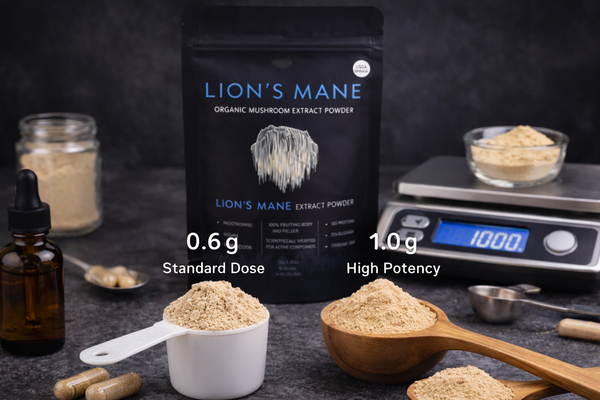
Dosage and Potency in Lion’s Mane Extract PowdersLion’s Mane mushroom extract has become a widely used ingredient in modern supplement formulations. As functional mushroom products...
17 August 2026
Dosage and Potency in Lion’s Mane Extract PowdersLion’s Mane mushroom extract has become a widely used ingredient in modern supplement formulations. As functional mushroom products...
Get supply and pricing updates
Product specs, new extract batches, and bulk pricing for supplement brands and distributors.