How Brands Incorporate Lion’s Mane into Consumer Products

As functional ingredients move from trend cycles into long-term consumer demand, brands are increasingly judged not by what they include, but by how intelligently they incorporate those ingredients into real products. Lion’s Mane has reached this stage of maturity.
It is no longer novel, yet it continues to appear across successful consumer portfolios. The difference between brands that extract long-term value from Lion’s Mane and those that struggle lies in strategy, not biology.
This article examines how brands incorporate Lion’s Mane into consumer products in ways that support consistency, scalability, and sustained market relevance.
How Brands Strategically Incorporate Lion’s Mane Into Products
Most brands fail not because of the ingredient they choose, but because of how they use it. Below are the core ways successful brands strategically incorporate Lion’s Mane into products that scale, convert, and retain customers:
1. As a Core Functional Ingredient
Many brands position Lion’s Mane as the central functional driver of a product. This approach is most common in cognitive, focus, and daily wellness categories, where the ingredient becomes part of the product’s identity rather than a supporting detail.
When Lion’s Mane is treated as a core ingredient, branding, dosage strategy, and format selection are aligned around routine use. Products are framed for consistency rather than immediacy, which supports repeat purchase and long-term adoption. This approach works particularly well for brands building authority in cognitive wellness or mental performance categories.
2. As a Supporting Ingredient in Blends
Other brands incorporate Lion’s Mane as part of a broader functional blend. In these cases, it supports complementary ingredients such as vitamins, minerals, amino acids, or botanical extracts. The goal is not to spotlight Lion’s Mane alone, but to strengthen the overall formulation narrative.
This strategy allows brands to broaden appeal without over-relying on a single ingredient. It also reduces risk, as product performance does not hinge entirely on one functional input. Lion’s Mane’s compatibility with a wide range of ingredients makes it particularly suitable for this blended approach.
3. Across Multiple Product Formats
One of the most strategic uses of Lion’s Mane is cross-format incorporation. Brands often introduce it first in a flagship product, then extend it into additional formats such as capsules, powders, RTMs, beverages, or functional foods.
This reuse creates portfolio coherence. Consumers begin to associate Lion’s Mane with the brand itself, not just one SKU. From a commercial standpoint, this reduces development costs and shortens time to market when launching new products.
Product Categories Where Brands Commonly Use Lion’s Mane
Lion’s Mane does not perform equally across all product types. Below are the consumer product categories where brands most effectively use Lion’s Mane to support routine use, consistency, and long-term brand growth:
1. Supplements and Capsules

Capsules remain a primary entry point due to simplicity and consumer familiarity. Brands favour Lion’s Mane here because extract form allows manageable capsule sizes and consistent dosing. This category supports education-led positioning and subscription-based models.
2. Ready-to-Mix and Powdered Products
Powders and RTMs allow brands to integrate Lion’s Mane into lifestyle routines. These formats appeal to consumers seeking flexibility and customisation. From a branding perspective, powders support premium positioning through flavour profiles, packaging, and functional storytelling.
3. Beverages and Liquid Formats
Functional drinks and RTDs represent a more competitive space, but Lion’s Mane’s mild sensory profile makes it viable. Brands that succeed here focus on stability, taste balance, and routine-based consumption rather than novelty.
4. Functional Foods and Snacks
Bars, bites, and nutrition-forward foods allow Lion’s Mane to appear in everyday contexts. Brands using this approach tend to emphasise convenience and accessibility rather than overt supplementation.
Incorporation Decisions That Matter Most to Brands
The success of Lion’s Mane in consumer products depends on a series of practical decisions:
a) Extract vs Whole Mushroom Format

Commercial brands overwhelmingly choose lion’s mane extract over whole mushroom powder. Extracts offer greater consistency, lower inclusion requirements, and fewer sensory issues. Whole powders introduce fibre-related texture problems and variability that become difficult to manage at scale.
b) Inclusion Rates and Sensory Control
Effective brands resist the temptation to maximise inclusion. Instead, they optimise for taste, texture, and consumer acceptance. Lion’s Mane’s functional relevance does not depend on extreme dosing, which allows brands to preserve product experience.
c) Standardisation and Consistency
Consistency is a brand asset. Products that change taste, texture, or performance over time undermine trust. Brands that prioritise standardised extracts reduce QA burden and protect long-term credibility.
Common Brand Mistakes When Incorporating Lion’s Mane
Here are the most common brand mistakes when incorporating Lion’s Mane that affect formulation stability, sensory performance, and perceived efficacy long before consumers notice the problem:
- Overloading Formulations: Excessive inclusion rates compromise sensory quality without delivering proportional benefit. This often results in poor repeat purchase.
- Chasing Trends Instead of Fit: Some brands adopt Lion’s Mane because competitors do, rather than because it aligns with their portfolio. This leads to weak positioning and confused messaging.
- Ignoring Manufacturing Reality: Formulations that look strong on paper can fail during scale-up. Brands that overlook processing, stability, or supply consistency often face costly reformulation after launch.
Implications for Brand Strategy and Portfolio Growth

Brands that incorporate Lion’s Mane strategically gain flexibility. A single ingredient can support multiple SKUs, formats, and use cases, allowing portfolios to grow without constant reinvention.
Lion’s Mane also supports education-driven branding. Its association with routine, cognition, and long-term wellbeing aligns well with modern consumer expectations, particularly in markets that favour evidence-led positioning over hype.
Implications for White Label Buyers and Manufacturers
For white label buyers, Lion’s Mane offers a relatively low-friction entry into functional products when sourced correctly. Its predictable behaviour simplifies formulation and reduces development timelines.
Manufacturers benefit from ingredients that perform consistently across runs. Stable inputs reduce QA interventions, improve scheduling, and strengthen relationships with brand partners.
Turning Lion’s Mane Into a Long-Term Brand Asset
Incorporating Lion’s Mane effectively is not about trend participation. It is about building products that perform consistently, scale smoothly, and retain consumer trust over time. Xotic Mushrooms supplies formulation-ready Lion’s Mane extracts designed for consumer products, white label programs, and scalable manufacturing.
Brands looking to integrate Lion’s Mane across supplements, powders, beverages, or functional foods can rely on Xotic Mushrooms for consistent quality, clear documentation, and dependable supply. Partner with Xotic Mushrooms to turn Lion’s Mane from an ingredient choice into a lasting brand advantage.
Source Lion's Mane extract powder at scale
Consistent extract quality, full testing, and white label supply built for growing brands.
Talk to our supply teamRelated articles
 20 August 2026
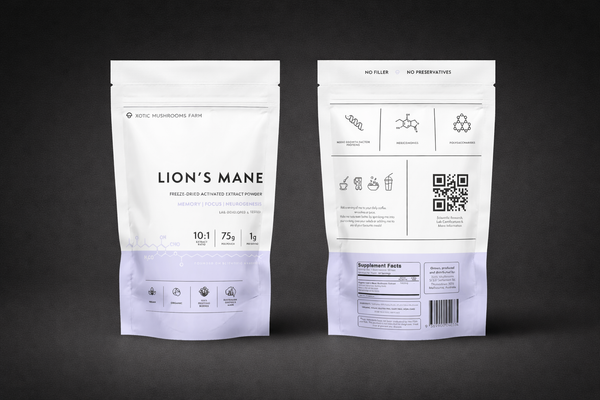
Packaging Considerations for Lion’s Mane ExtractPackaging plays a critical role in maintaining the quality and performance of Lion’s Mane extract. While formulation and...
20 August 2026
Packaging Considerations for Lion’s Mane ExtractPackaging plays a critical role in maintaining the quality and performance of Lion’s Mane extract. While formulation and...
 20 August 2026
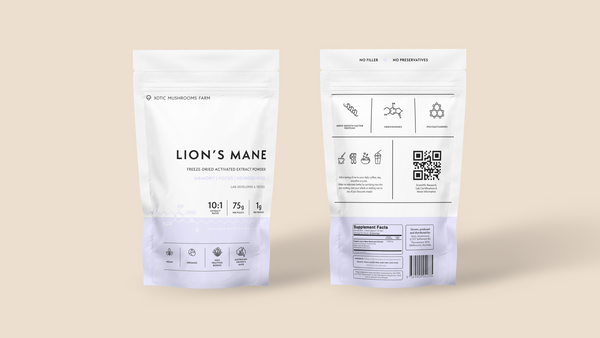
Shelf Stability of Lion’s Mane Extract PowderShelf stability plays a central role in how well a Lion’s Mane extract powder performs over time. For...
20 August 2026
Shelf Stability of Lion’s Mane Extract PowderShelf stability plays a central role in how well a Lion’s Mane extract powder performs over time. For...
 20 August 2026
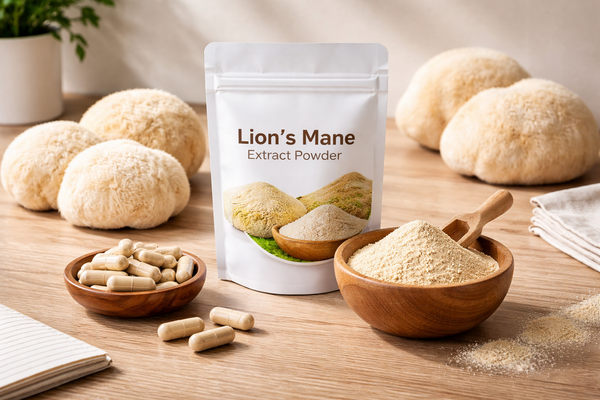
Lion’s Mane Powder for Nootropic Supplement LinesNootropic supplements have become one of the fastest growing segments within the nutraceutical industry. These products are commonly...
20 August 2026
Lion’s Mane Powder for Nootropic Supplement LinesNootropic supplements have become one of the fastest growing segments within the nutraceutical industry. These products are commonly...
Get supply and pricing updates
Product specs, new extract batches, and bulk pricing for supplement brands and distributors.