Functional Recipe Applications for Lion’s Mane Extract

Functional recipes succeed when ingredients behave predictably inside real food and drink formats. Unlike supplements, recipes must deliver consistent taste, texture, and appearance every time they are prepared, whether in a test kitchen or at commercial scale.
This places far greater demands on ingredient choice. Lion’s Mane extract has become increasingly common in functional recipe development because it integrates cleanly across multiple formats while maintaining sensory balance and repeatability.
Its extract form allows developers to build recipes that perform reliably, scale efficiently, and remain appealing to consumers who value functionality without compromise.
How Lion’s Mane Extract Is Used in Functional Recipes
Functional recipes rely on ingredients that can adapt to different matrices without introducing instability. Lion’s Mane extract is selected not for novelty, but for how easily it fits into diverse recipe structures.
1. Beverage-Based Functional Recipes
Beverages are one of the most common entry points for functional ingredients, but they are also unforgiving. Separation, off-notes, or texture changes are immediately noticeable. Lion’s Mane extract integrates smoothly into smoothies, functional drinks, teas, and RTD-style recipes because it disperses more evenly than whole mushroom powders.
In smoothie-style recipes, it blends well with fruits, plant milks, and protein bases without adding grit. In teas and light beverages, its mild sensory profile allows flavour systems such as citrus, herbs, or coffee to remain dominant. For developers, this means recipes can be positioned as functional without sacrificing drinkability or requiring excessive masking.
2. Functional Snack and Bar Recipes
Snack recipes introduce different challenges, particularly around texture and binding. Bars, bites, and baked snacks require ingredients that do not disrupt structure or mouthfeel. Lion’s Mane extract integrates more cleanly than fibrous whole mushroom powders, which can create dryness or gritty textures.
In bar recipes, extract inclusion allows functional positioning without compromising chew or cohesion. In baked snacks, controlled inclusion levels help maintain consistency through mixing and heating. This makes Lion’s Mane extract suitable for snack formats intended for regular consumption rather than occasional novelty.
3. Ready-to-Mix and Powdered Recipe Formats

Powdered recipes demand both dry blend performance and reconstitution reliability. Lion’s Mane extract works well in drink mixes, wellness powders, and instant blends because it hydrates more evenly when mixed with liquids.
Lower inclusion rates reduce clumping and chalkiness, which are common issues in powdered functional recipes. This supports smoother mouthfeel and more consistent consumer experience, even when mixed casually at home. From a development perspective, extract form simplifies recipe standardisation across sachets, tubs, and single-serve formats.
4. Dairy and Dairy-Alternative Recipes
Yoghurts, shakes, and plant-based dairy alternatives are sensitive to texture and viscosity changes. Lion’s Mane extract can be incorporated without significantly altering mouthfeel when used thoughtfully.
Its compatibility with proteins and fats allows developers to maintain creaminess and stability in both traditional and plant-based dairy recipes. This flexibility supports innovation across fermented, blended, and chilled formats without requiring major process changes.
Recipe Design Principles When Using Lion’s Mane Extract
Before any functional recipe reaches consumers, its success is decided during formulation, not at launch. Below are the core design principles that ensure Lion’s Mane extract enhances recipes without compromising taste, texture, or repeatability:
1. Managing Inclusion Levels in Recipes
Functional positioning does not require heavy-handed dosing. In recipes, small changes in inclusion can have large sensory effects. Lion’s Mane extract allows developers to achieve functional intent at lower levels, preserving flavour clarity and texture.
Testing across a narrow inclusion range helps identify thresholds where taste or mouthfeel begins to shift. Staying below these limits ensures recipes remain enjoyable and repeatable.
2. Flavour Pairing and Masking Strategies
Although Lion’s Mane extract is relatively mild, thoughtful flavour pairing improves recipe performance. It integrates particularly well with cacao, vanilla, coffee, nut, and fruit profiles. In savoury or neutral recipes, herbs and mild spices help maintain balance.
Because aggressive masking is rarely required, ingredient lists can remain simpler and cleaner, which supports modern functional food positioning.
3. Heat, Moisture, and Processing Tolerance
Recipes involving heating or baking require ingredients that tolerate processing stress. Lion’s Mane extract performs more consistently than whole mushroom formats under controlled heat exposure, making it suitable for baked snacks and warm beverage preparations.
That said, processing conditions should always be validated during development to ensure stability and consistency through production.
Functional Recipe Categories Where Lion’s Mane Performs Best

Not every functional ingredient works equally well across all recipe formats. Below are the recipe categories where Lion’s Mane extract consistently performs best in terms of flavour integration, texture control, and scalable production:
1. Morning and Daytime Recipes
Smoothies, breakfast drinks, and wellness blends benefit from Lion’s Mane’s association with routine and daily use. These recipes prioritise clean taste and smooth texture, both of which are supported by extract form.
2. Wellness and Lifestyle Recipes
Low-sugar, plant-based, and clean-label recipes often require functional ingredients that do not overpower the base product. Lion’s Mane extract fits well within these frameworks due to its subtle sensory impact.
3. Performance and Nutrition Recipes
Protein blends, hydration recipes, and meal-support formats benefit from ingredients that integrate without disrupting macros or texture. Lion’s Mane extract supports these applications by remaining functionally present without dominating the recipe.
Common Mistakes in Functional Recipe Development

Even well-formulated recipes can fail when functional ingredients are applied without accounting for real-world behaviour. Below are the most common mistakes that undermine functional recipe performance when using Lion’s Mane extract:
- Using whole mushroom powder instead of extract: Introduces excess fibre that disrupts texture, mixability, and sensory balance.
- Overloading the recipe: Higher inclusion rates often compromise flavour, mouthfeel, and consumer acceptance without improving performance.
- Ignoring matrix-specific behaviour: Assuming the extract behaves the same in liquids, powders, and baked formats leads to inconsistency.
- Overcomplicating formulations: Excess functional ingredients dilute positioning and increase instability.
- Failing to test at scale: Recipes that perform in small batches may break down during commercial production if not validated.
Building Functional Recipes That Perform Every Time
Functional recipes must work beyond the test kitchen. They must deliver the same taste, texture, and performance every time they are made. Xotic Mushrooms supplies recipe-grade Lion’s Mane extract designed for real food and beverage applications, with clean flavour, consistent behaviour, and manufacturing-ready reliability.
If you are developing beverages, RTM mixes, snacks, or dairy-style products, partner with Xotic Mushrooms to source Lion’s Mane extract that supports repeatable recipes, confident scaling, and long-term product success.
Source Lion's Mane extract powder at scale
Consistent extract quality, full testing, and white label supply built for growing brands.
Talk to our supply teamRelated articles
 20 August 2026
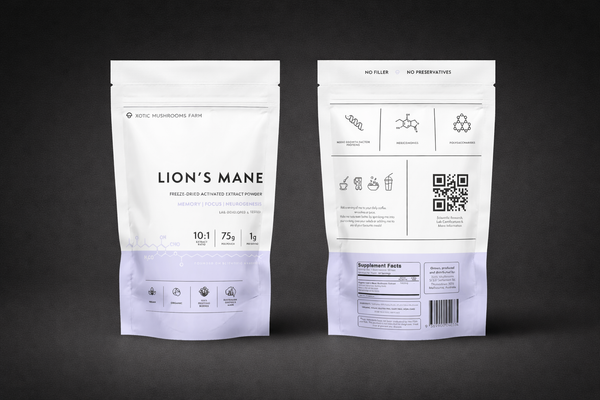
Packaging Considerations for Lion’s Mane ExtractPackaging plays a critical role in maintaining the quality and performance of Lion’s Mane extract. While formulation and...
20 August 2026
Packaging Considerations for Lion’s Mane ExtractPackaging plays a critical role in maintaining the quality and performance of Lion’s Mane extract. While formulation and...
 20 August 2026
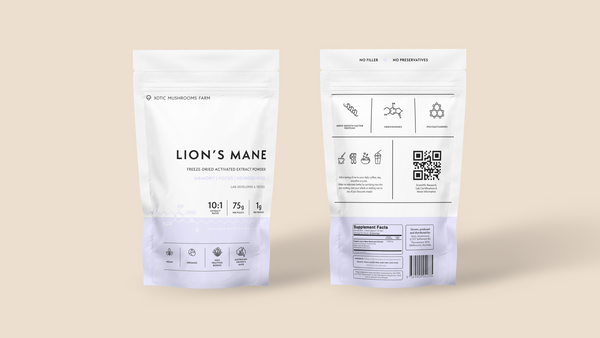
Shelf Stability of Lion’s Mane Extract PowderShelf stability plays a central role in how well a Lion’s Mane extract powder performs over time. For...
20 August 2026
Shelf Stability of Lion’s Mane Extract PowderShelf stability plays a central role in how well a Lion’s Mane extract powder performs over time. For...
 20 August 2026
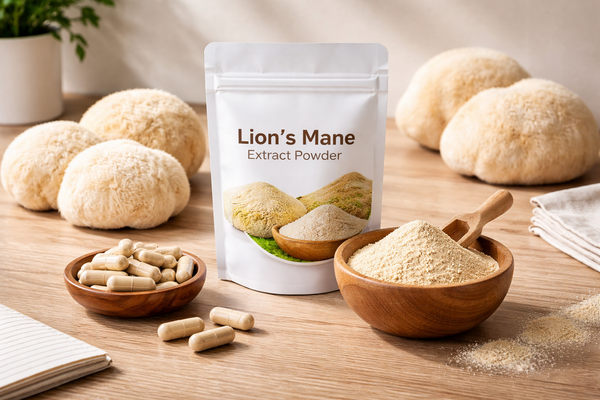
Lion’s Mane Powder for Nootropic Supplement LinesNootropic supplements have become one of the fastest growing segments within the nutraceutical industry. These products are commonly...
20 August 2026
Lion’s Mane Powder for Nootropic Supplement LinesNootropic supplements have become one of the fastest growing segments within the nutraceutical industry. These products are commonly...
Get supply and pricing updates
Product specs, new extract batches, and bulk pricing for supplement brands and distributors.