What Makes Lion’s Mane Ideal for Supplement Formulation

In supplement development, ingredient choice is rarely about popularity alone. Many ingredients show promise on paper but fail once manufacturing begins due to instability, inconsistent behaviour, or impractical dosing requirements. Formulators quickly learn that long-term success depends on predictability, efficiency, and repeatable performance at scale.
Lion’s Mane has become a staple in cognitive and wellness supplements because it meets these formulation demands consistently. Its extract behaviour, compatibility with common formats, and support for standardisation make it well-suited to scalable supplement programs.
This article examines why Lion’s Mane performs so reliably from a formulation and manufacturing perspective.
Why Formulation Suitability Matters More Than Ingredient Appeal
Formulators quickly learn that an ingredient’s real value is revealed during production, not concept development. Formulation suitability determines whether a product can be:
- Controls capsule and serving size limits: Ingredients that require high inclusion rates quickly lead to oversized capsules or impractical daily servings.
- Determines blend uniformity and dosing accuracy: Poorly behaving ingredients increase the risk of segregation, inconsistent fills, and variable potency.
- Impacts manufacturing efficiency: Stable, predictable ingredients reduce downtime, rework, and production adjustments during scale.
- Influences quality assurance workload: Formulation-friendly inputs lower the need for corrective actions and repeated testing.
- Affects long-term scalability: Ingredients that perform well at pilot scale but fail at volume create cost and reliability issues.
- Protects commercial viability: Practical formulation performance often matters more than theoretical appeal when products must be produced repeatedly and profitably.
Lion’s Mane stands out because it aligns well with these operational realities. Its success in supplements reflects formulation practicality as much as functional positioning.
Why Lion’s Mane Performs So Well in Supplement Formulation

The consistent inclusion of Lion’s Mane across supplement categories is not accidental. It reflects a set of physical, chemical, and operational characteristics that simplify product development:
1. Reliable Behaviour in Extract Form
Lion’s Mane performs best when used as an extract rather than a raw powder. Properly produced extracts demonstrate predictable behaviour during blending, encapsulation, and storage. They tolerate standard manufacturing processes without excessive degradation or loss of functional integrity.
This reliability reduces the need for formulation workarounds. Formulators are not forced to adjust excipients, modify processing conditions, or redesign formats to accommodate unstable inputs. Over time, this predictability saves both time and cost.
2. Efficient Inclusion Rates
One of the most practical advantages of Lion’s Mane extracts is their ability to deliver functional relevance at relatively modest inclusion rates. Compared to whole mushroom powders, extracts concentrate soluble compounds into a smaller volume.
This efficiency directly affects capsule size, tablet weight, and powder serving requirements. Smaller inclusion rates make it easier to design consumer-friendly products while controlling packaging, shipping, and material costs.
For brands producing multiple SKUs, this efficiency also allows Lion’s Mane to be used flexibly across formulations without forcing major redesigns.
3. Good Solubility and Blend Compatibility
Lion’s Mane extracts typically exhibit good solubility characteristics relative to many botanical or fungal ingredients. This improves blend uniformity and reduces the risk of segregation during mixing and filling.
In capsule and powder production, consistent flow and dispersion are critical. Ingredients that clump, settle, or separate increase the likelihood of dosage inconsistency and production delays. Lion’s Mane’s physical behaviour helps mitigate these issues, particularly in automated manufacturing environments.
4. Support for Standardisation and Consistency

Supplement programs rely on standardisation to maintain quality and compliance. Lion’s Mane extracts lend themselves well to standardisation because compound ranges can be measured, documented, and repeated across batches.
This consistency simplifies specification setting, COA review, and quality assurance processes. It also supports stable label claims and reduces the risk of formulation drift over time.
For white label and contract manufacturing programs, this reliability is especially valuable, as it supports repeat orders without constant reformulation.
5. Neutral Sensory Profile
Taste and aroma are often overlooked in supplement formulation until they become a problem. Strong bitterness, odour, or aftertaste can limit format options or require additional masking agents.
Lion’s Mane extracts generally have a neutral sensory profile, particularly when compared to other medicinal mushrooms. This makes them easier to incorporate into capsules, sachets, and blended powders without sensory interference.
Reduced need for masking simplifies formulations and helps preserve clean label positioning.
6. Compatibility With Multi-Ingredient Formulations
Modern supplements rarely rely on single ingredients. Lion’s Mane integrates well alongside vitamins, minerals, amino acids, and other nootropic compounds without creating stability or interaction issues.
This compatibility allows Lion’s Mane to function as either a core ingredient or a supporting component within broader formulations. It also reduces the risk of unexpected interactions during storage or shelf-life testing.
Extract Form vs Raw Powder in Supplement Design

While Lion’s Mane can be supplied as either raw powder or extract, extract form is generally preferred for mushroom supplement formulation.
Whole mushroom powders retain the full biomass, including insoluble fibre such as chitin. This increases bulk without proportionally increasing functional output. As a result, powders often require higher inclusion rates to achieve formulation targets, leading to larger capsules and reduced consumer acceptability.
Extracts remove much of the insoluble material, concentrating the soluble fraction. This improves dosing efficiency, reduces capsule fill requirements, and improves blend behaviour. From a formulation standpoint, extracts offer greater control and predictability.
Capsule, Powder, and Tablet Formulation Considerations
Lion’s Mane performs differently depending on the delivery format, but remains adaptable across common supplement forms.
- In capsules: Extract powders typically exhibit good flow and packing characteristics, supporting consistent fill weights and reduced weight variation. This simplifies encapsulation and reduces rejects.
- In powders: Lion’s Mane integrates smoothly into blends, provided moisture levels are controlled. Its relatively neutral taste supports inclusion in functional blends without dominating flavour profiles.
- In tablets: Extract behaviour during compression is generally manageable, though binder selection and compression force must still be optimised like any botanical ingredient. Compared to fibrous powders, extracts offer improved compressibility.
Manufacturing and Scale Advantages
From a manufacturing perspective, Lion’s Mane aligns well with automated systems. Its physical properties reduce clogging, segregation, and downtime during production runs.
Scale amplifies formulation challenges. Ingredients that behave inconsistently at small volumes often become problematic at commercial scale. Lion’s Mane’s stable behaviour reduces scale-related risk, supporting smoother transitions from pilot to full production.
This scalability is one reason Lion’s Mane appears frequently in white label programs, where consistency across clients and volumes is critical.
Regulatory and Labelling Compatibility

Regulatory clarity influences formulation decisions. Ingredients that require complex declarations or ambiguous claims increase compliance risk.
Lion’s Mane fits comfortably within existing supplement frameworks, with clear ingredient naming conventions and established expectations around use. This reduces friction during label review and market entry.
For brands operating across multiple channels, including pharmacies and practitioner networks, this clarity supports broader distribution opportunities.
Common Formulation Mistakes With Lion’s Mane
Despite its advantages, Lion’s Mane can still be misused in formulation. One common error is relying on under-standardised inputs, which undermines consistency and complicates QA.
Another mistake is overloading formulations with Lion’s Mane without clear positioning, diluting its role and increasing cost without proportional benefit. Treating Lion’s Mane as interchangeable with other mushrooms can also lead to suboptimal formulations, as each mushroom behaves differently in production.
Final Thoughts
Lion’s Mane continues to earn its place in supplement formulation because it performs where it matters most: consistency, efficiency, and scalability. When the right extract is used, formulation becomes simpler, standardisation becomes achievable, and long-term manufacturing risk is reduced.
If you are developing or scaling a supplement range, ingredient choice should not be left to chance. Xotic Mushrooms supplies formulation-ready Lion’s Mane extracts designed for commercial use, with documented performance, reliable specifications, and supply built for repeat production.
Partner with a supplier that understands extraction, standardisation, and real-world manufacturing demands, and build products that perform consistently from the first batch to the thousandth.
Source Lion's Mane extract powder at scale
Consistent extract quality, full testing, and white label supply built for growing brands.
Talk to our supply teamRelated articles
 28 July 2026
Choosing Lion’s Mane for Premium Extract ManufacturingIn premium extract manufacturing, ingredient choice is not driven by popularity or short-term market trends. It is shaped...
28 July 2026
Choosing Lion’s Mane for Premium Extract ManufacturingIn premium extract manufacturing, ingredient choice is not driven by popularity or short-term market trends. It is shaped...
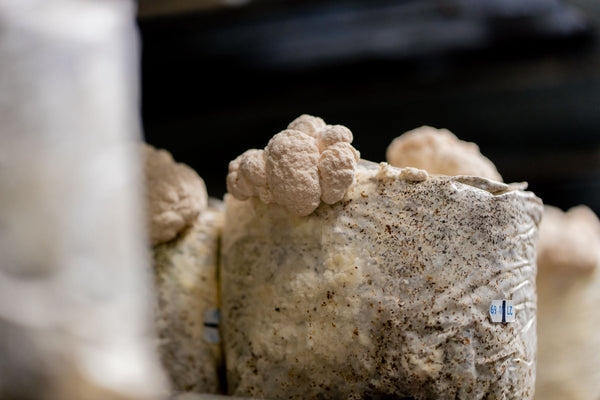 27 July 2026
Lion’s Mane Mushroom Characteristics That Matter to BrandsBrands rarely succeed by choosing ingredients based on appeal alone. What matters is how an ingredient performs once...
27 July 2026
Lion’s Mane Mushroom Characteristics That Matter to BrandsBrands rarely succeed by choosing ingredients based on appeal alone. What matters is how an ingredient performs once...
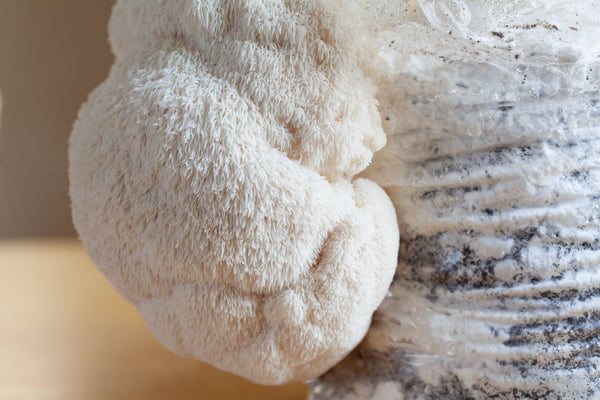 24 July 2026
How Lion’s Mane Compares to Reishi and CordycepsChoosing between Lion’s Mane, Reishi, and Cordyceps is not about which mushroom is “better” in isolation. For brands,...
24 July 2026
How Lion’s Mane Compares to Reishi and CordycepsChoosing between Lion’s Mane, Reishi, and Cordyceps is not about which mushroom is “better” in isolation. For brands,...
Get supply and pricing updates
Product specs, new extract batches, and bulk pricing for supplement brands and distributors.