Scaling Lion’s Mane Growing for Commercial Supply

Scaling Lion’s Mane cultivation is essential for brands seeking reliable, high-quality functional mushroom ingredients. Commercial demand for cognitive and wellness products requires mushrooms that are not only potent but also consistently available.
By refining growing practices, maintaining strict environmental controls, and implementing scalable systems, producers can meet brand expectations while preserving functional density and bioactive content.
Understanding how to scale production ensures white-label partners can deliver consistent, market-ready extracts for capsules, powders, and beverages without compromising quality or reliability.
Why Scaling Matters for White-Label Brands
Reliable supply is the backbone of functional product success, and scaling Lion’s Mane cultivation directly supports consistent quality and consumer trust. Here is why:
- Meeting large-volume demand: Controlled, scalable cultivation ensures a reliable supply of Lion’s Mane for launches, seasonal surges, and multi-market expansion, allowing brands to forecast ingredient availability across multiple SKUs and batch runs.
- Consistent functional density: Standardised growing conditions maintain predictable polysaccharide and beta-glucan levels, supporting accurate dosing and reliable formulation in functional foods and cognitive supplements.
- Supply chain reliability: Scalable operations reduce risks from environmental fluctuations, seasonal changes, or agricultural variability, ensuring uninterrupted ingredient supply for launches, reorders, and multi-market distribution.
- Optimised production efficiency: Large-scale operations benefit from streamlined processes and resource management, lowering per-unit cost and supporting sustainable commercial growth.
- Enhanced quality assurance: Scaling under controlled conditions simplifies QA and regulatory compliance, providing consistent documentation and verified bioactive content.
- Faster response to market trends: High-capacity production allows brands to adapt quickly to demand shifts or new product launches without compromising consistency.
- Reduced operational risk: Diversifying production across multiple controlled batches mitigates crop failure or yield variability, protecting brand supply continuity.
- Supports long-term partnerships: Reliable, scalable output fosters stronger trust between brands and white-label suppliers, promoting repeat collaborations and consistent product performance.
Techniques for Scaling Lion’s Mane Cultivation

Efficient, repeatable growing methods are key to scaling production without compromising potency or quality:
1. Modular Growing Systems
Scalable cultivation often begins with modular growing units such as climate-controlled rooms, vertical trays, or containerised systems. These units allow production to expand incrementally while maintaining uniform environmental conditions. Modular systems support batch tracking and ease maintenance, enabling predictable yields and consistent mushroom quality.
2. Environmental Automation
Automated control of temperature, humidity, and light ensures that each growing unit replicates optimal conditions. Automation reduces human error, maximises fruiting body development, and stabilises functional compound production, including beta-glucans and polysaccharides, across all batches.
3. Substrate Optimisation
Substrate composition and preparation are critical for scalable output. Sterilised, nutrient-rich substrates reduce contamination risk and promote uniform mushroom growth. Standardising substrate preparation ensures that each batch produces predictable biomass and consistent bioactive content, critical for commercial extraction.
4. Quality Monitoring and Batch Testing
Ongoing quality checks, including weight, moisture, and bioactive content, enable producers to identify deviations quickly. This monitoring ensures functional density remains within target ranges, extraction yields are predictable, and regulatory compliance requirements are met. Batch testing also builds trust with white-label partners by providing verifiable data on every production run.
Benefits of Commercial-Scale Lion’s Mane Supply

Scaling Lion’s Mane production brings measurable advantages for functional food and cognitive brands:
- Predictable extraction yields: Standardised, high-quality raw material enhances extraction efficiency, reduces waste, and ensures powdered or capsule formulations consistently deliver bioactive potency, supporting brand claims and consumer confidence.
- Reduced contamination risk: Sterile substrates, controlled growing conditions, and automated environments minimise microbial load, improving safety, smoothing QA processes, and accelerating regulatory approvals.
- Brand confidence: Reliable, scalable supply allows brands to launch and grow products without compromising formulation, while consistent functional density supports repeat purchases and reinforces credibility in the market.
- Flexibility for multi-format applications: Commercial-scale Lion’s Mane integrates seamlessly into powders, capsules, and functional beverages, preserving solubility, texture, flavour, and bioactive potency across diverse product lines.
- Optimised production timelines: Large-scale operations streamline harvesting, drying, and processing schedules, enabling brands to meet market demand and seasonal peaks efficiently.
- Cost efficiency: Predictable, scalable production lowers per-unit costs and reduces formulation adjustments, supporting sustainable commercial growth.
- Regulatory and QA readiness: Consistent material simplifies labelling, testing, and compliance processes, ensuring documentation and specifications are repeatable and verifiable.
- Supports innovation: Scalable, reliable Lion’s Mane supply allows brands to experiment with new blends, formulations, and functional applications without risking supply gaps or inconsistency.
Core Metrics Influenced by Cultivation
Let’s look at the measurable outcomes brands care about when sourcing Lion’s Mane extract at scale:
1. Functional Density
Controlled cultivation ensures mushrooms reach maximum polysaccharide and beta-glucan content per gram. High functional density allows brands to achieve desired potency with lower inclusion rates, improving capsule size, formulation efficiency, and overall product usability without compromising functional performance.
2. Yield Efficiency
Standardised growing conditions promote uniform mushroom development, maximising both biomass and extractable compounds. Efficient yields lower the cost per gram, support larger batch production, and give white-label brands the ability to confidently forecast supply while maintaining consistent functional quality across all SKUs.
3. Batch-to-Batch Consistency
Precise monitoring of environmental conditions and substrate preparation minimises variability from temperature, humidity, or cultivation differences. This ensures that functional density is uniform across batches, supporting predictable extraction, reliable product formulation, and repeatable outcomes for cognitive or functional food applications.
4. Shelf Stability
Optimised moisture content and structural integrity of harvested mushrooms reduce degradation during storage and shipping. Shelf-stable biomass ensures Lion’s Mane extract powders maintain functional potency, bioactive quality, and safety over time, supporting longer product shelf life and reducing returns or consumer complaints.
5. Compliance and Traceability
Documented cultivation protocols and controlled growing environments allow full traceability from farm to finished extract. Verified metrics simplify quality assurance, labelling, and regulatory documentation, enabling white-label brands to meet audit requirements confidently while demonstrating transparency and product integrity.
Why Choose Xotic Mushrooms

Here’s why leading brands partner with Xotic Mushrooms to source scalable, premium Lion’s Mane extract:
- Expert white-label partner: Decades of experience in functional mushroom cultivation and extraction.
- Controlled commercial operations: Climate-controlled rooms and modular setups allow scalable production.
- Standardised bioactive content: Polysaccharides and beta-glucans are consistent across batches.
- Organically grown Australian mushrooms: Traceable, certified ingredients for premium products.
- Scalable extraction processes: Supports small and large batch white-label production efficiently.
- QA and lab verification: Third-party testing ensures regulatory compliance and transparency.
- Flexible powder-to-extract ratios: suitable for capsules, beverages, or functional powders.
- Full documentation and traceability: Every batch is logged for audit readiness and brand assurance.
Conclusion
Scaling Lion’s Mane cultivation is essential for brands aiming to produce reliable, high-quality functional mushroom products. Controlled environmental conditions, standardised substrates, and modular growing systems ensure consistent bioactive content, extraction efficiency, and consumer trust.
By partnering with Xotic Mushrooms, white-label brands gain access to scalable, traceable, and lab-verified Lion’s Mane extract, ensuring that every product delivers predictable functional performance and commercial success.
Source Lion's Mane extract powder at scale
Consistent extract quality, full testing, and white label supply built for growing brands.
Talk to our supply teamRelated articles
 5 August 2026
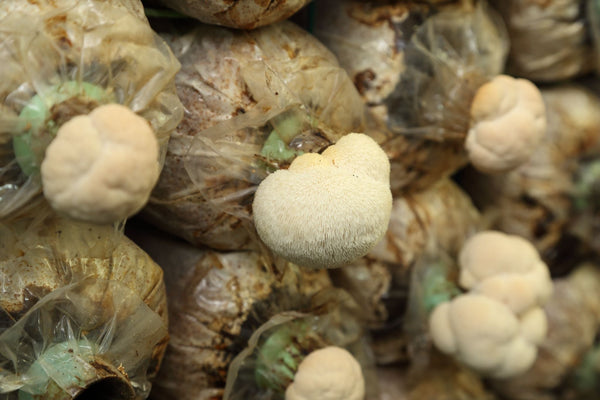
Quality Control in Lion’s Mane CultivationEnsuring consistent quality in Lion’s Mane cultivation is critical for supplement and functional food brands. Variability in bioactive...
5 August 2026
Quality Control in Lion’s Mane CultivationEnsuring consistent quality in Lion’s Mane cultivation is critical for supplement and functional food brands. Variability in bioactive...
 28 July 2026
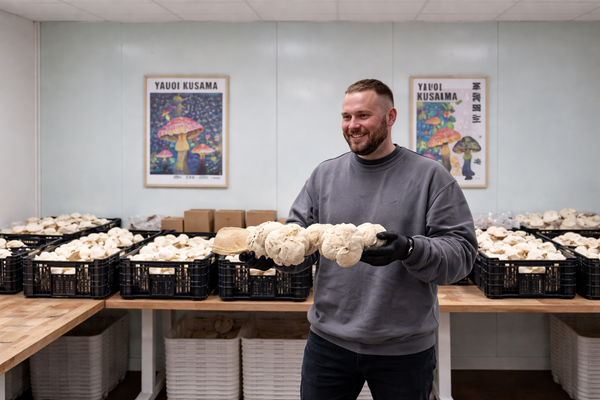
Growing Lion’s Mane for Consistent Extract RatiosUnderstanding how to grow Lion’s Mane for consistent extract ratios is essential for brands developing functional foods, cognitive...
28 July 2026
Growing Lion’s Mane for Consistent Extract RatiosUnderstanding how to grow Lion’s Mane for consistent extract ratios is essential for brands developing functional foods, cognitive...
 28 July 2026
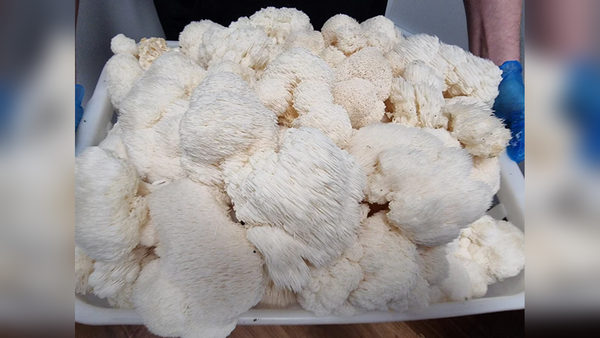
Harvest Timing and Its Effect on Lion’s Mane PotencyUnderstanding when to harvest Lion’s Mane is a critical factor for white-label brands seeking consistent functional potency. Harvest...
28 July 2026
Harvest Timing and Its Effect on Lion’s Mane PotencyUnderstanding when to harvest Lion’s Mane is a critical factor for white-label brands seeking consistent functional potency. Harvest...
Get supply and pricing updates
Product specs, new extract batches, and bulk pricing for supplement brands and distributors.