Bioactive Compounds in Lion’s Mane Extract Explained

Bioactive compounds in Lion’s Mane extract are the reason this mushroom has become a staple ingredient in modern functional formulations. Rather than being assessed as a traditional food or culinary mushroom, Lion’s Mane extract is evaluated based on the compounds it contains, how reliably those compounds can be preserved, and how consistently the ingredient performs once it enters a finished product.
In commercial and white-label contexts, compound discussions are not about making claims. They are about understanding ingredient behaviour, extract integrity, and formulation suitability.
This article explains the key bioactive compounds found in Lion’s Mane extract, where they originate, how extraction influences their availability, and why manufacturing discipline ultimately determines whether those compounds have practical relevance.
What Are Bioactive Compounds in Lion’s Mane?
Bioactive compounds are naturally occurring substances within plants and fungi that interact with biological systems when consumed as part of a food or supplement. In the context of Lion’s Mane extract, bioactive compounds are not evaluated in isolation or for theoretical effects, but for their presence, stability, and consistency within a commercial ingredient.
Unlike raw mushroom powders, which retain a broad range of structural material, extract powders are produced specifically to concentrate and preserve certain compounds while improving usability in formulation. This is why discussions around Lion’s Mane extract focus on compound groups rather than macronutrients or standard food-style nutrition panels.
For manufacturers and formulators, the relevance of bioactive compounds lies in whether they can be consistently sourced, retained through processing, and verified through testing. Without those conditions, compound references remain academic rather than functional.
Key Bioactive Compounds Found in Lion’s Mane Extract

Lion’s Mane contains several classes of bioactive compounds, each with a different role in the body. The most studied and functionally relevant groups are erinacines, hericenones, and polysaccharides including beta-glucans:
1. Hericenones
Hericenones are a group of compounds most commonly associated with the fruiting body of Lion’s Mane. They are frequently referenced in ingredient discussions because of their presence in fruiting body–derived extracts and their association with nervous system–adjacent research contexts.
From a formulation perspective, hericenones matter less as individual molecules and more as indicators of raw material selection and processing quality. Their presence in an extract depends heavily on the use of fruiting body inputs, controlled extraction temperatures, and careful drying methods. Excessive heat or poor processing can degrade these compounds, reducing their relevance in a finished ingredient.
For brands, hericenones help frame Lion’s Mane as a brain-focused ingredient, but only when supported by disciplined sourcing and verifiable extraction practices.
2. Erinacines
Erinacines are compounds typically associated with mycelium-derived Lion’s Mane material. They are often discussed in research contexts related to nerve growth factor pathways, which has contributed to Lion’s Mane’s positioning in cognitive and nervous system–adjacent formulations.
In commercial extract production, the presence of erinacines depends on whether mycelium is used as an input, how it is cultivated, and how it is processed post-harvest. Not all mycelium-derived materials are equal, and variability in growth substrates and conditions can introduce inconsistencies if not tightly controlled.
For manufacturers, erinacines reinforce the importance of input transparency and documentation. Without clear sourcing and verification, compound references offer limited practical value in formulation.
3. Polysaccharides and Beta-Glucans
Polysaccharides are structural compounds naturally present in mushrooms, with beta-glucans being one of the most widely recognised subgroups. In Lion’s Mane extract powder, polysaccharides are often retained and concentrated through hot water or dual extraction processes.
From a formulation standpoint, beta-glucans are useful not because of isolated percentages, but because their presence reflects extraction efficiency, raw material quality, and batch consistency. They are commonly used as internal markers when assessing extract integrity rather than as headline features for consumer-facing claims.
For functional food and supplement manufacturers, polysaccharides contribute to ingredient stability and compatibility across capsules, powders, and beverage formats when properly extracted.
4. Supporting Antioxidant and Minor Compounds
Lion’s Mane also contains smaller amounts of phenolic compounds, sterols, and other minor constituents. These compounds contribute to the overall complexity of the extract but are typically considered secondary in formulation decision-making.
Their relevance lies in supporting extract completeness rather than driving product positioning. In commercial contexts, they are rarely standardised independently and are instead treated as part of the broader extract matrix.
How These Compounds Work Together

The true functional value of Lion’s Mane lies in the synergy between its bioactive compounds. Erinacines support nerve growth and repair, hericenones assist with NGF signalling, and polysaccharides contribute immune and anti-inflammatory support.
This combination allows Lion’s Mane to support the brain and nervous system from multiple angles. Neural growth is supported alongside reduced oxidative stress and improved immune balance. Rather than acting as a quick cognitive enhancer, Lion’s Mane supports long-term neurological resilience.
This synergy also explains why Lion’s Mane is often described as a foundational nootropic. It supports the systems that underpin focus, memory, and clarity rather than temporarily amplifying neurotransmitter activity.
Why Extraction Method and Source Matter
Not all Lion’s Mane extracts are created equal. The presence and concentration of bioactive compounds depend on several factors including cultivation method, source material, and extraction technique.
Fruiting body only extracts prioritise hericenones and polysaccharides but typically lack erinacines. Mycelium-based extracts may contain erinacines, but quality varies depending on whether the mycelium is grown on grain or liquid culture.
Grain-grown mycelium often results in products diluted with starch, reducing the effective concentration of bioactive compounds. Liquid cultured mycelium allows for higher purity and more controlled compound production.
Extraction method is equally important. Hot water extraction is effective for polysaccharides, while alcohol or dual extraction is often required to access certain diterpenes. Without proper extraction, many bioactive compounds remain inaccessible.
Transparency around extraction ratios and methods is a strong indicator of product quality.
Fruiting Body vs Mycelium: Understanding the Difference
Fruiting body and mycelium are distinct parts of the mushroom organism, each producing different compounds. Fruiting bodies are the visible mushrooms harvested above ground, while mycelium is the root-like network responsible for nutrient absorption and growth.
Lion’s Mane fruiting bodies are valued for hericenones and beta-glucans. Mycelium is valued for erinacines. Products that do not specify their source often rely on consumer misunderstanding.
A balanced extract may include both components, but this should be clearly stated. Without this clarity, it is impossible to determine the functional profile of a product.
What to Look for in a High Quality Lion’s Mane Extract

Selecting a quality Lion’s Mane extract requires more than reading the front label. Several indicators can help identify a well-formulated product:
- Source material clearly identified: The product should specify whether it uses fruiting body, mycelium, or a defined combination, as each delivers a different bioactive compound profile.
- Transparent extraction method and ratios: High-quality extracts disclose how compounds are extracted and concentrated, allowing assessment of bioavailability rather than relying on vague strength claims.
- No fillers or grain starch: Especially important for mycelium extracts, as grain-grown substrates dilute bioactive compounds and reduce overall functional potency.
- Verified beta-glucan testing: Independent testing for beta-glucan levels helps confirm polysaccharide quality and ensures functional mushroom content rather than generic fibre.
- Clear country of origin and cultivation standards: Controlled growing environments and traceable sourcing support consistency, purity, and long-term product safety.
Why Bioactive Compounds Are Referenced in NGF Context
Nerve growth factor, or NGF, is often mentioned in discussions around Lion’s Mane, not as a promised outcome, but as a scientific framework that explains ingredient positioning. NGF is a protein involved in neuron growth, maintenance, and signalling, and its established biological role has influenced how Lion’s Mane is categorised among functional mushrooms.
For brands and formulators, NGF relevance provides context rather than claims. It helps explain why Lion’s Mane is selected for brain-focused and nervous system–adjacent products, distinguishing it from mushrooms more commonly used for energy, calm, or immune positioning.
Importantly, NGF is not presented as something a finished product delivers or activates. Referencing NGF allows for credible, research-aware communication without crossing into therapeutic territory.
Why Lab Testing Matters for Bioactive Integrity
Bioactive compounds only matter when their presence can be verified. Third-party laboratory testing provides objective confirmation that an extract aligns with stated specifications, is free from contaminants, and performs consistently across batches.
For brands and white-label buyers, lab documentation supports internal quality assurance, regulatory confidence, and supplier accountability. It ensures that compound discussions are grounded in measurable reality rather than assumptions or marketing language.
Without independent testing, even well-described extracts become difficult to defend at scale.
Who This Information Is Most Relevant For
This compound-level explanation is most relevant for brands sourcing Lion’s Mane extract, formulators developing functional products, white-label and private-label buyers evaluating suppliers, and informed purchasers validating ingredient quality.
It is designed to support due diligence rather than persuasion.
Final Perspective on Bioactive Compounds in Lion’s Mane
Bioactive compounds in Lion’s Mane extract are only meaningful when they are consistently present, preserved through processing, and verified through testing. Hericenones, erinacines, polysaccharides, and supporting compounds all contribute to Lion’s Mane’s role as a functional ingredient, but none function independently of manufacturing discipline.
For commercial applications, the true value of Lion’s Mane extract lies in how it is sourced, extracted, documented, and supplied. When these factors are prioritised, Lion’s Mane extract becomes a credible, explainable, and scalable ingredient suitable for long-term product development rather than short-term trends.
Source Lion's Mane extract powder at scale
Consistent extract quality, full testing, and white label supply built for growing brands.
Talk to our supply teamRelated articles
 20 August 2026
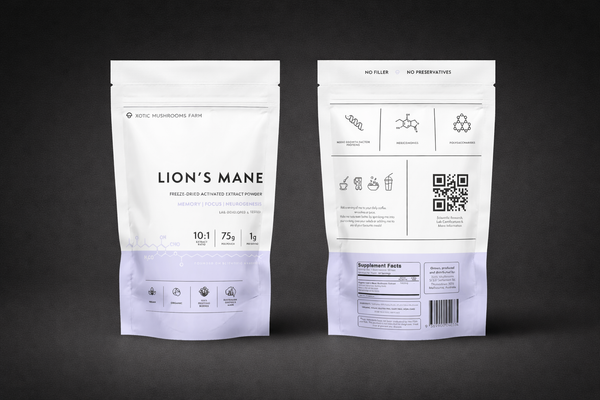
Packaging Considerations for Lion’s Mane ExtractPackaging plays a critical role in maintaining the quality and performance of Lion’s Mane extract. While formulation and...
20 August 2026
Packaging Considerations for Lion’s Mane ExtractPackaging plays a critical role in maintaining the quality and performance of Lion’s Mane extract. While formulation and...
 20 August 2026
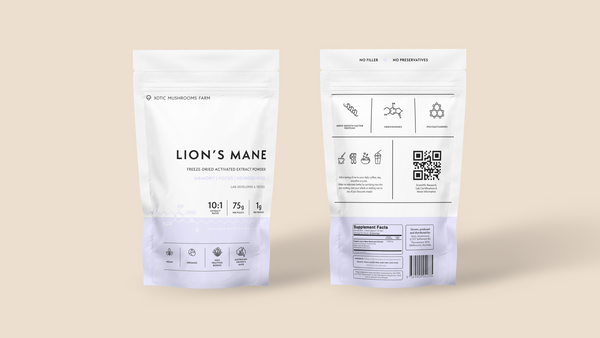
Shelf Stability of Lion’s Mane Extract PowderShelf stability plays a central role in how well a Lion’s Mane extract powder performs over time. For...
20 August 2026
Shelf Stability of Lion’s Mane Extract PowderShelf stability plays a central role in how well a Lion’s Mane extract powder performs over time. For...
 20 August 2026
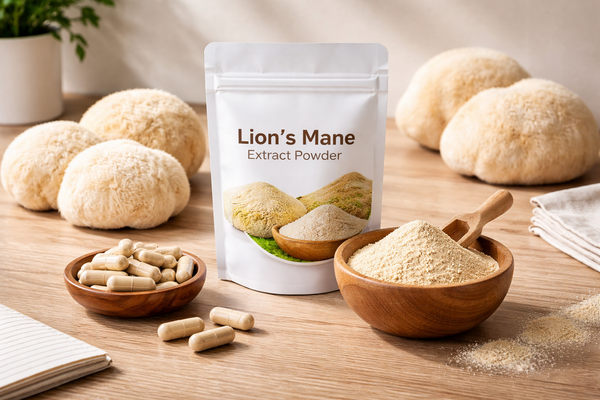
Lion’s Mane Powder for Nootropic Supplement LinesNootropic supplements have become one of the fastest growing segments within the nutraceutical industry. These products are commonly...
20 August 2026
Lion’s Mane Powder for Nootropic Supplement LinesNootropic supplements have become one of the fastest growing segments within the nutraceutical industry. These products are commonly...
Get supply and pricing updates
Product specs, new extract batches, and bulk pricing for supplement brands and distributors.